There is a question that sits at the intersection of immigration policy, European political history, geopolitical strategy, and the documented intellectual traditions of the 20th century — a question that can be assembled from fully sourced, fully public information — that cannot be asked in any mainstream venue without the questioner being immediately discredited, deplatformed, or labeled with a word designed to end the conversation rather than answer it. This article asks the question. It sources every claim. It draws the distinction, where the evidence requires it, between documented fact and reasonable inference. And it does not apologize for the exercise.
The Pattern Nobody Is Permitted to Name
Start with what is directly observable and work backward to its causes.
The European nations with the most forceful documented history of nationalist political opposition to Zionist geopolitical ambitions in the early 20th century are, with remarkable consistency, the same nations that underwent the most dramatic demographic and political transformation through immigration policy in the latter half of that century and the early decades of this one. France, Germany, Sweden, Belgium, the Netherlands, Britain — nations whose foreign policy establishments had, at various documented points, resisted Zionist goals in Palestine, opposed the creation or expansion of a Jewish state in the region, or refused to subordinate their national interests to the demands of Zionist lobbying organizations — are today the nations whose demographics have been most transformed by mass immigration, whose political establishments most aggressively suppress nationalist opposition to that transformation, and whose populations are most divided along lines that make coherent, sustained opposition to any foreign policy agenda structurally difficult.
The nations that have most aggressively restricted immigration — Hungary, Poland, Austria, the Czech Republic — are, with the same remarkable consistency, the nations whose governments most openly criticize the influence of Zionist lobbying networks on Western foreign policy, most publicly question the terms of the NATO-Israel strategic alignment, and most loudly assert the right of their own national populations to determine their own political futures without interference from international organizations whose funding and agenda originate outside their borders.
This is an observation. It is not, by itself, proof of anything. But pattern recognition is how analysis begins — and the suppression of pattern recognition is how analysis ends before it can reach conclusions that powerful interests would prefer remain unexamined.
Early European Nationalist Opposition to Zionism: What the Record Shows
The history of European nationalist resistance to Zionist political ambitions in the early 20th century is not taught in Western schools with anything approaching the seriousness it deserves. Understanding that history is essential to understanding the pattern documented in this article.
Charles de Gaulle is the most instructive case study in Western European political history. The founder of modern France, the man whose wartime resistance gave France its claim to victorious nationhood, was openly and systematically opposed to what he called the "dual loyalty" dynamic he observed in the French-Jewish community and to the political influence of Zionist organizations on French foreign policy. His 1967 press conference statement — describing Jewish people as "an elite people, self-assured and domineering" — was not an antisemitic outburst. It was the culmination of a long career in which de Gaulle had observed the operation of Zionist political influence on French institutions and had concluded, as a French nationalist, that it represented an interference with French sovereignty that he was not willing to accept.
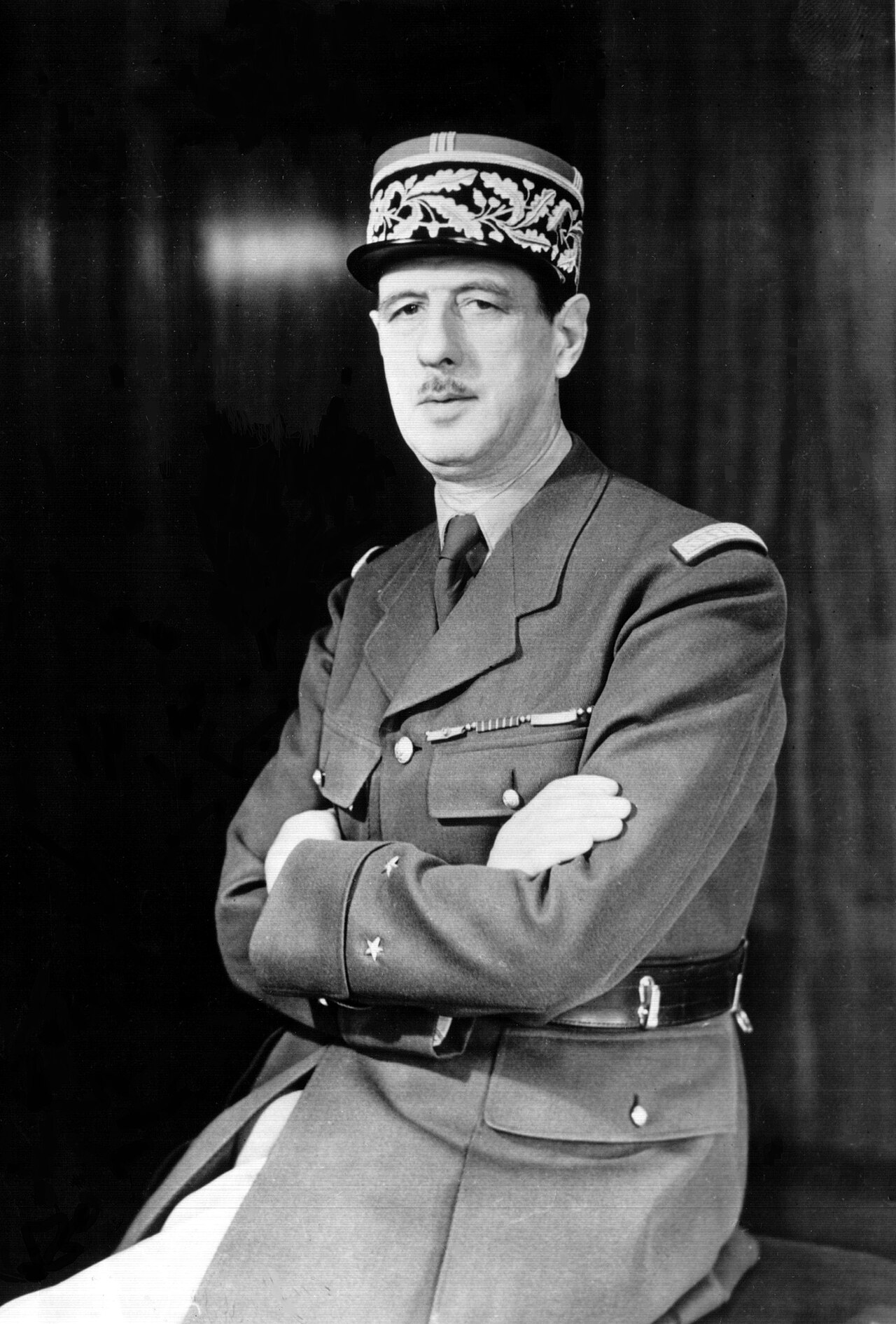
De Gaulle's France imposed a comprehensive arms embargo on Israel in 1967, cutting off the Mirage jets and spare parts on which the Israeli Air Force depended at a moment of acute military tension. He did this explicitly because he considered Israeli policy in the region destabilizing and contrary to French national interests. He recognized Palestinian national aspirations as legitimate, decades before this was politically acceptable in any other Western government. And he paid for all of it — including the press conference statement — with a sustained campaign of political pressure from Zionist organizations operating within France that contributed to the erosion of his political position in the years before his resignation in 1969.
Britain's relationship with Zionism is more complicated but equally instructive. The Balfour Declaration of 1917 represented one faction of British foreign policy — the faction that calculated Jewish diaspora support was worth a commitment to a Jewish homeland in Palestine. But the British Foreign Office, and particularly the Arabist tradition within it, consistently opposed the Zionist project in Palestine on the grounds that it would permanently destabilize Britain's relationships with Arab nations and was incompatible with Britain's obligations to the existing inhabitants of the territory. The 1939 White Paper — which sharply restricted Jewish immigration to Palestine and was denounced by Zionist organizations as a betrayal — represented this anti-Zionist nationalist tradition at its most explicit. It was the product of British officials who concluded that their national interests in the Arab world required them to say no to Zionist demands, regardless of the political pressure applied to reverse that decision.
Enoch Powell, one of the most intellectually formidable figures in 20th-century British politics, represents the nationalist tradition in its most focused form. His 1968 "Rivers of Blood" speech — which warned that mass immigration from Commonwealth nations was transforming British society in ways that the British population had not consented to and would not have consented to if asked — was immediately destroyed by the British political establishment and by the media with a speed and thoroughness that itself demonstrated the political power of the interests it had offended. Powell was removed from the Conservative front bench within days. His speech has been treated for six decades as the defining example of racist political thought in modern Britain.
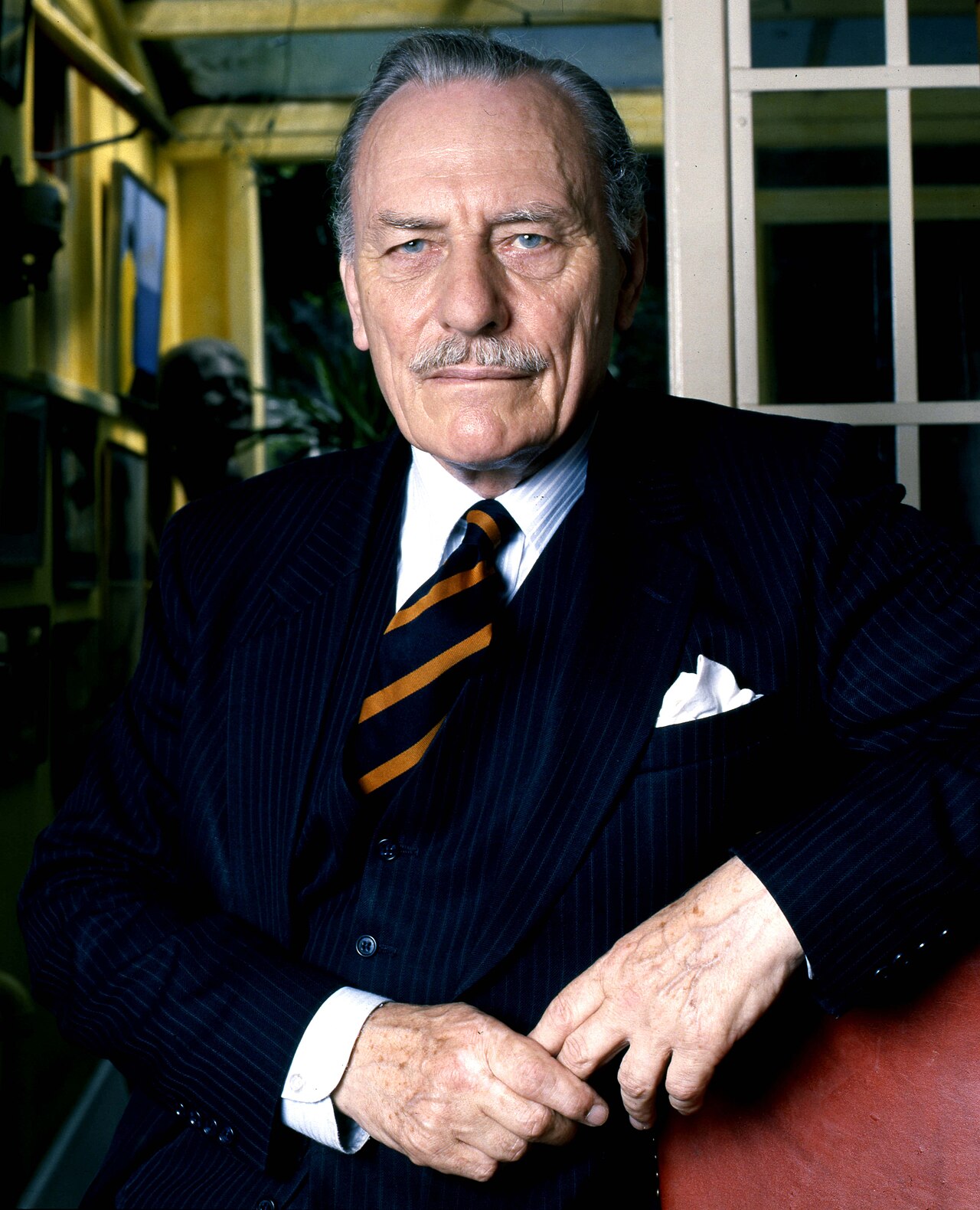
What almost no mainstream account of Powell's career acknowledges is the connection between his immigration warnings and his foreign policy positions. Powell was consistently opposed to American imperial foreign policy, opposed to British subordination to American strategic interests, and profoundly skeptical of the special relationship as it actually operated — a relationship that, as he analyzed it, primarily served American and Zionist strategic interests while extracting British military and political resources. His nationalism was consistent: he opposed the transformation of Britain's population without democratic consent for the same reason he opposed the transformation of British foreign policy without democratic accountability. The institutional response to both positions was the same — not engagement, but destruction.
The Frankfurt School: Critical Theory as the Intellectual Architecture of European Deconstruction
The Frankfurt School is not a conspiracy theory. It is a documented intellectual movement, one of the most consequential of the 20th century, whose history, membership, funding, and intellectual program are comprehensively recorded in academic literature. Understanding it is not optional for anyone who wants to understand how Western Europe's intellectual and institutional landscape was reshaped in the decades after World War II.
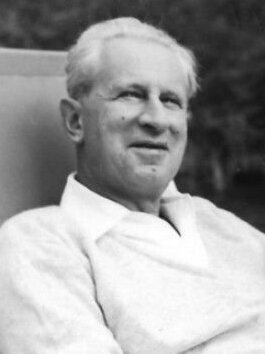
The Institute for Social Research was founded in Frankfurt in 1923. Its leading figures — Max Horkheimer, Theodor Adorno, Herbert Marcuse, Erich Fromm, Leo Löwenthal, and others — were almost entirely of Jewish background. When the Nazis came to power in 1933, the Institute relocated, first to Geneva, then to Paris, then to Columbia University in New York. After the war, Horkheimer and Adorno returned to Germany, where they rebuilt the Institute and exercised extraordinary influence over the reconstruction of German intellectual and academic life. Marcuse remained in America, where he became the intellectual godfather of the 1960s New Left.
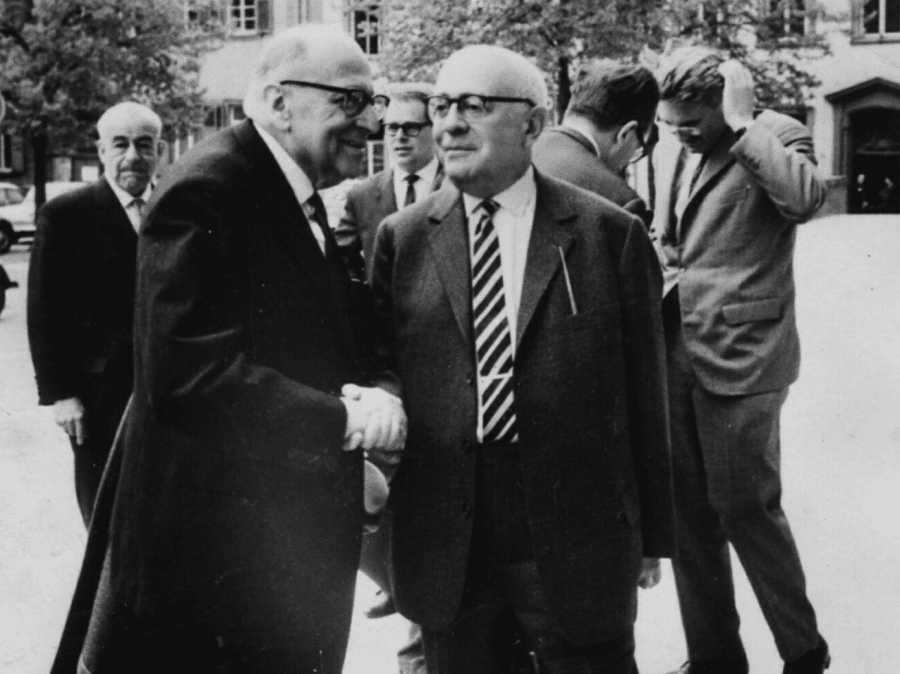
The Frankfurt School's intellectual project was, in their own framing, a diagnosis of the conditions that had produced fascism. They concluded that the pathology lay in the structure of European culture itself — in the authoritarian family, in religious tradition, in nationalism, in what they called the "culture industry," in deference to hierarchy, in ethnic and national identity. Their remedy was the systematic critique and delegitimization of these cultural structures. Adorno's The Authoritarian Personality (1950), funded by the American Jewish Committee, presented empirical research designed to demonstrate that traditional European cultural values — respect for authority, religious observance, national pride, concern about racial mixing — were psychological markers of proto-fascist personality structure.
Read that again. A study funded by a Jewish institutional organization, written by a Jewish German intellectual refugee from fascism, presented traditional European cultural values as psychological symptoms of the personality type that had produced the Holocaust. This study was enormously influential in reshaping American and European academic psychology, education theory, and policy for decades.
Marcuse's contribution was equally consequential. His concept of "repressive tolerance" — articulated in a 1965 essay — argued that tolerating right-wing and nationalist political speech was itself a form of oppression, because it allowed the reproduction of the ideological conditions that had produced fascism. True tolerance, he argued, required the suppression of "regressive" ideas — meaning traditional, nationalist, or conservative ones — while protecting "progressive" ones. This argument became the intellectual foundation of the speech suppression mechanisms that now operate in European universities, media institutions, and legislative bodies.
It would be intellectually dishonest to present the Frankfurt School's intellectual project as simply an attack on European culture. It was a response to documented, catastrophic historical trauma. The men who built it had watched the society they grew up in turn on their communities with industrial violence. Their attempt to understand and prevent the recurrence of that violence was motivated by the most comprehensible human impulse. But the consequences of their intellectual framework — the systematic delegitimization of European national identity, the pathologizing of traditional cultural values, the construction of intellectual tools that made it impossible to discuss demographic change without being classified as "authoritarian" or "fascist" — served interests that went beyond the prevention of another Holocaust. Those consequences deserve honest examination regardless of the motivations that produced them.
The Kalergi Plan: What the Document Actually Says
Richard von Coudenhove-Kalergi was an Austrian-Japanese philosopher and Pan-European activist who founded the Pan-European Union in 1923. His 1925 book Praktischer Idealismus (Practical Idealism) contains passages that have been cited, distorted, and debated for a century. What it actually says deserves to be quoted directly rather than paraphrased, because both its defenders and its critics have misrepresented it.
Coudenhove-Kalergi wrote: "The man of the future will be of mixed race. Today's races and classes will gradually disappear owing to the vanishing of space, time, and prejudice. The Eurasian-Negroid race of the future, similar in its appearance to the Ancient Egyptians, will replace the diversity of peoples with a diversity of individuals."
He also wrote, in the same text: "Instead of destroying European Judaism, Europe, against its will, refined and educated this people into a future leader-nation through this artificial selection process. No wonder that this people, that escaped Ghetto-Prison, developed into a spiritual nobility of Europe. Therefore a gracious Providence provided Europe with a new race of nobility by the Grace of Spirit. This happened at the moment when Europe's feudal aristocracy became dilapidated, and thanks to Jewish emancipation."
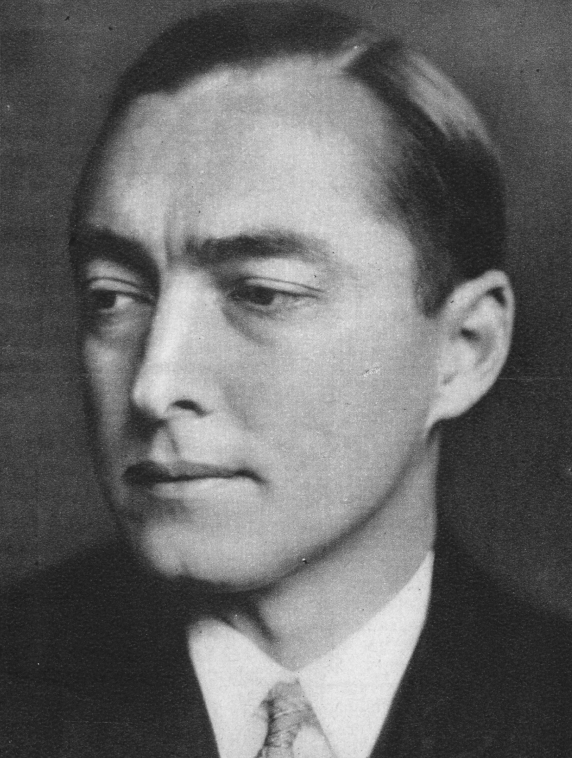
These are documented texts. Coudenhove-Kalergi received financial support from Max Warburg and Paul Warburg — prominent Jewish bankers and brothers who funded his early organizational work, as he himself documented in his autobiography An Idea Conquers the World (1953). He won the inaugural Charlemagne Prize in 1950 — a prize that has since been awarded to George Soros, Angela Merkel, Emmanuel Macron, Jean-Claude Juncker, and other figures who have been the primary institutional architects and defenders of European Union immigration policy.
The "Kalergi Plan" as a fully coordinated conspiracy to replace the European population is an overstatement of what the evidence shows. What the evidence does show is a documented intellectual vision of a racially mixed future Europe led by a Jewish spiritual aristocracy, funded by Jewish banking interests, whose institutional inheritors have administered the European Union's immigration policy for decades. Whether that represents a coordinated plan or the natural institutional expression of a coherent ideology is a distinction that honest analysis must maintain — but maintaining the distinction does not mean refusing to observe the connection.
The Organizational Infrastructure: HIAS, Open Society, and the Documented Network
The Hebrew Immigrant Aid Society was founded in 1881 to assist Jewish immigrants fleeing persecution in Eastern Europe. By the mid-20th century, having largely accomplished that mission, it had transformed into a general immigration advocacy organization — one that explicitly and publicly advocates for open borders and mass immigration to Western nations, regardless of the ethnic or religious background of the immigrants.
HIAS today funds immigration attorneys across the United States and Europe, litigates against border enforcement policies, advocates in Congress and European legislative bodies for the expansion of refugee admission, and explicitly frames immigration restriction as a form of the same persecution that Jewish communities experienced in Europe. Their public communications draw direct analogies between immigration restriction today and the antisemitic exclusion of Jewish immigrants in the early 20th century. The organizational logic is transparent: having experienced exclusion, the organization now opposes exclusion as a principle — regardless of who the excluded are or what their relationship is to the society they are entering.
This is a coherent and understandable institutional evolution. It also represents a Jewish organizational infrastructure that is publicly, explicitly, and by its own account working to transform the demographic and cultural composition of the Western nations in which it operates. That is not a conspiracy theory. It is a description of their stated mission, available on their website.
George Soros's Open Society Foundations represent the most comprehensively documented case of an individual Jewish donor using extraordinary financial resources to fund the transformation of European political and demographic conditions.
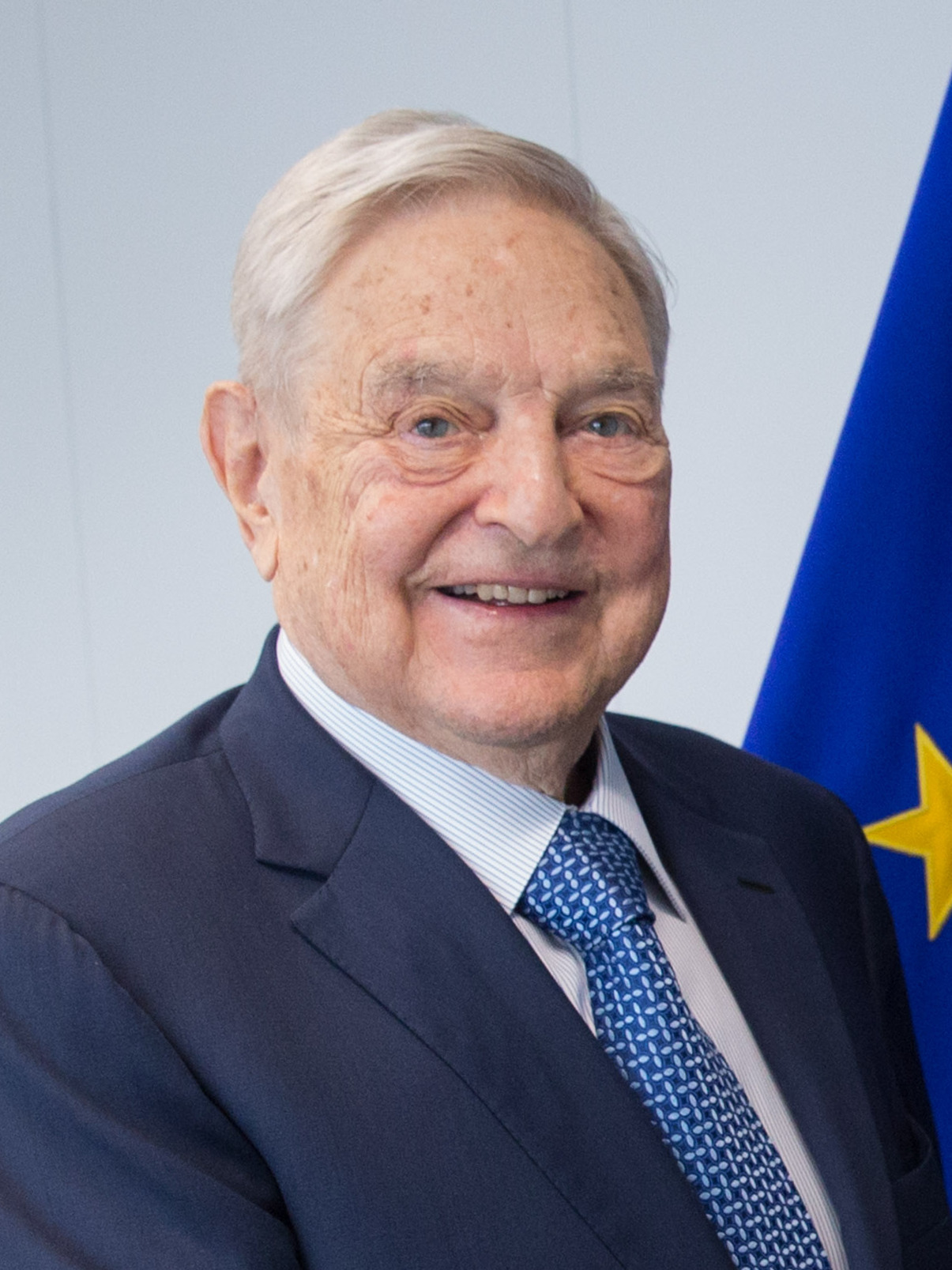
Between 2016 and 2020, the Open Society Foundations disbursed over $2.5 billion in grants. A documented substantial portion of this funding went to organizations across Europe that advocate for open immigration policies, challenge border enforcement in court, provide legal assistance to migrants, and campaign against political parties that advocate for immigration restriction. The Open Society Foundations' own grant documentation — publicly available — identifies hundreds of organizations across Germany, France, Sweden, Hungary, Italy, Greece, and other European nations receiving funding specifically for immigration and "refugee rights" advocacy work.
Soros himself is Jewish, identifies as Jewish, and has publicly described his philanthropy as rooted in the concept of the "open society" — a concept he inherited from Karl Popper, whose philosophy was itself partly a response to the closed, ethnically exclusive societies that had produced the Holocaust. The intellectual lineage runs directly from Frankfurt School critical theory through Popperian open society philosophy through Soros's funded implementation of that philosophy across European political institutions.
Barbara Lerner Spectre and What She Actually Said
In 2010, the Swedish public broadcaster SVT filmed an interview with Barbara Lerner Spectre, the founder of Paideia, the European Institute for Jewish Studies in Stockholm — an organization funded by the Swedish government. What she said in that interview is documented, filmed, and has been viewed by millions of people despite sustained efforts to have it removed from various platforms.
Her exact words: "I think there's a resurgence of antisemitism because at this point in time Europe has not yet learned how to be multicultural. And I think we are going to be part of the throes of that transformation, which must take place. Europe is not going to be the monolithic societies they once were in the last century. Jews are going to be at the center of that. It's a huge transformation for Europe to make. They are now going into a multicultural mode and Jews will be resented because of our leading role. But without that leading role and without that transformation, Europe will not survive."
"Barbara Lerner Spectre, in a filmed, documented, Swedish government-funded interview broadcast on Swedish public television in 2010, described Jewish people as playing a 'leading role' in transforming Europe from 'monolithic' to multicultural societies, described this transformation as something that 'must take place,' and predicted that Jewish people would be 'resented' for it. This is not antisemitic conspiracy theory. It is a direct quote from a named individual recorded on camera. The refusal to engage with its implications is not tolerance. It is a form of epistemic cowardice."
This is not a fringe individual making an unrepresentative statement. Spectre ran a Jewish educational institution in Stockholm funded by the Swedish government specifically to promote Jewish cultural presence and influence in European society. Her statement represents a coherent worldview — the same worldview expressed in Kalergi's texts, funded by the same organizational tradition as HIAS and the Open Society Foundations — that Jewish communal interest is served by European multicultural transformation, and that Jewish people have both the obligation and the capacity to lead that transformation.
Whether this view is right or wrong, beneficial or harmful, is a separate question. What it is, unambiguously, is a documented Jewish communal political position — not a universal one, not held by all Jewish people, not representative of Torah-observant Judaism or of many progressive Jewish communities who have entirely different views — but a real, documented position held by identifiable individuals in identifiable institutions who have acted on it with real, documented organizational and financial resources.
The Political Alignment Nobody Will Describe
The political alignment that produces the European immigration policy landscape is one of the most striking features of contemporary Western politics and one of the least examined. Understanding it requires looking at what political positions cluster together in ways that should not, by conventional left-right logic, cluster at all.
On one side: the European institutional left, social democratic parties, progressive NGOs, academic institutions, and most mainstream media organizations advocate for open immigration policies, the expansion of refugee admissions, the suppression of nationalist speech, and the delegitimization of political parties that oppose demographic transformation. These same institutions and parties are, with consistent reliability, also the most vocally supportive of Israeli foreign policy, the most resistant to scrutiny of AIPAC-style lobbying influence in their own legislatures, and the most aggressive in using accusations of antisemitism to discredit political figures who raise questions about Israeli policy or Zionist political influence.
On the other side: the European nationalist right, which opposes mass immigration, defends traditional European cultural identity, and resists demographic transformation, is simultaneously the political faction most willing to question Israeli foreign policy, most vocal about the influence of pro-Zionist lobbying on European political institutions, and most resistant to the use of antisemitism accusations as a tool to suppress political speech.
This alignment — pro-immigration left = pro-Israel; anti-immigration right = anti-Zionist — is not what conventional left-right logic predicts. If immigration policy were simply a humanitarian question and Israeli policy were simply a foreign policy question, the two positions would have no structural reason to cluster. The fact that they cluster with such consistency across European nations, across decades, across party systems is itself a pattern that demands explanation.
The most coherent explanation is the one that is least permitted: that these two positions are functionally connected — that the forces that benefit from European mass immigration and the forces that benefit from European political support for Israeli policy are sufficiently overlapping that their political allies have naturally become the same political allies, and their political opponents have naturally become the same political opponents.
The Nations That Said No: The Observable Correlation
Viktor Orbán's Hungary is the most instructive contemporary case study. Hungary has, under Orbán's government, implemented Europe's most comprehensive border security infrastructure, refused EU migration quotas, criminalized the facilitation of illegal immigration, and passed constitutional provisions protecting Hungary's ethnic and cultural character. Simultaneously, Hungary has been the most vocal European government in criticizing the influence of Soros-funded organizations on European political institutions — the subject of a sustained "Stop Soros" campaign that Orbán's government pursued through both legislation and public communication. And Hungary has been among the most consistently skeptical European voices regarding NATO-Israel strategic alignment and the terms under which European nations are expected to subordinate their national interests to American-Israeli foreign policy objectives.

Poland, the Czech Republic, and Slovakia have followed parallel trajectories — strict immigration restriction accompanied by growing assertiveness about national sovereignty in the face of EU pressure and growing skepticism of the terms of Atlantic alliance foreign policy as it relates to Israeli interests. Austria's FPÖ has combined the most aggressive immigration restriction in Austrian electoral politics with the most explicit criticism of AIPAC-style lobbying influence in European institutions.
The correlation is not a coincidence requiring an elaborate explanation. It is the natural expression of a consistent political logic: nations that prioritize their own national interest over the demands of external organizations tend to prioritize their own national interest across multiple domains simultaneously. A government willing to say no to Brussels on immigration is a government willing to say no to Washington and Tel Aviv on foreign policy. The same assertiveness of national sovereignty that produces immigration restriction produces foreign policy independence. The forces that want to prevent European immigration restriction are, naturally, often the same forces that want to prevent European foreign policy independence — because both represent the reassertion of national will that those forces have an institutional interest in preventing.
Ireland: The Nation That Was Never Supposed to Wake Up
Ireland is perhaps the most revealing case study in the entire European immigration story — precisely because it breaks the historical template that establishment commentators use to dismiss the pattern. France had colonial immigration. Britain had Commonwealth migration. Germany had guest workers. Each of those countries had a structural-economic rationale, however debated, for the immigration waves they received. Ireland had none of these things. Ireland spent most of the 20th century exporting its own people — to America, to Britain, to Australia — as economic emigrants. It was a net sender of human capital for a century and a half. Its claim to homogeneity was not a product of ethnonationalist policy; it was simply the demographic reality of a small Atlantic island that most people left rather than arrived at.
That changed with extraordinary speed. From the mid-1990s through the 2000s Celtic Tiger boom, Ireland began receiving economic migrants from Eastern Europe and beyond. Then, in the 2010s and 2020s, it became a destination for asylum seekers at a rate that transformed communities with no prior experience of the process and no institutional infrastructure to manage it. By 2023, Ireland was receiving proportionally more asylum applications per capita than any other European Union member state, including Germany and Sweden.
The political establishment's response was to double down. The Irish government, across both Fine Gael and Fianna Fáil, maintained a policy of distributing asylum seekers to small rural communities throughout the country — often without local consultation, often occupying facilities like former hotels, holiday camps, and sports clubs. The communities affected were told, in terms that differed only cosmetically from a direct command, that opposition was racism and that they had a moral obligation to welcome whoever was sent to them.
On November 23, 2023, a man of Algerian origin who had lived in Ireland for two decades attacked a group of children outside a school on Parnell Square in central Dublin, stabbing three children and a childcare worker. The youngest victim was a five-year-old girl. That night, Dublin burned. Rioters attacked asylum seeker tents in the city center. Vehicles were set on fire. The Luas tram system was damaged. Dozens of arrests were made — but almost none of the political energy behind the riot found any legitimate outlet, because the Irish government's response was to announce accelerated hate speech legislation that would criminalize commentary on immigration.
The pattern that followed is now familiar across Europe, but was striking in Ireland precisely because it was new: nationalist protest movements appeared outside every planned asylum seeker accommodation facility in the country. Protests in Roscrea, Rooskey, Lisdoonvarna, East Wall, Ballymun. Local communities that had never organized politically organized. The Irish government described them as far-right extremists. The establishment media refused to engage with their arguments. And the protests grew.
What Ireland demonstrates is that the awakening of nationalist opposition to demographic transformation does not require a long history of nationalist politics. It requires only that the transformation move faster than the consent it is supposed to be generating. Ireland is a Catholic nation with a profound collective memory of being colonized, having its culture suppressed, and watching its people leave. The suggestion that it has no right to its own demographic future, delivered by the same class of English-language liberal institutional authority that presided over Ireland's subjugation for centuries, has produced a predictable and entirely understandable response.
Sweden: The Great Experiment That Burned
No country on earth ran a more complete test of the open borders thesis than Sweden. No country's experience has been more systematically distorted in the reporting that reaches English-speaking audiences. And no country's demographic and security transformation has been more precisely predicted by the analysts who were systematically ignored, discredited, and silenced for making those predictions.
Sweden entered the mass immigration era with genuine idealism. Its social democratic tradition — the most successful expression of that tradition in 20th-century Europe — had produced a remarkably cohesive, high-trust, low-crime, high-welfare society. Swedish politicians and intellectuals genuinely believed that the same social capital that had made Sweden work for Swedes would successfully absorb unlimited numbers of newcomers, that the welfare state could be extended indefinitely, and that anyone who expressed doubt about this was morally disqualified from the debate.
The numbers are straightforward. In 1970, Sweden's foreign-born population was approximately 7%. By 2023, it exceeded 20%, and in cities like Malmö the foreign-born population exceeded 45%. In 2015 alone — a single year — Sweden accepted 163,000 asylum seekers, roughly 1.6% of the entire national population. For comparison, this would be the equivalent of the United States accepting five million asylum seekers in twelve months.
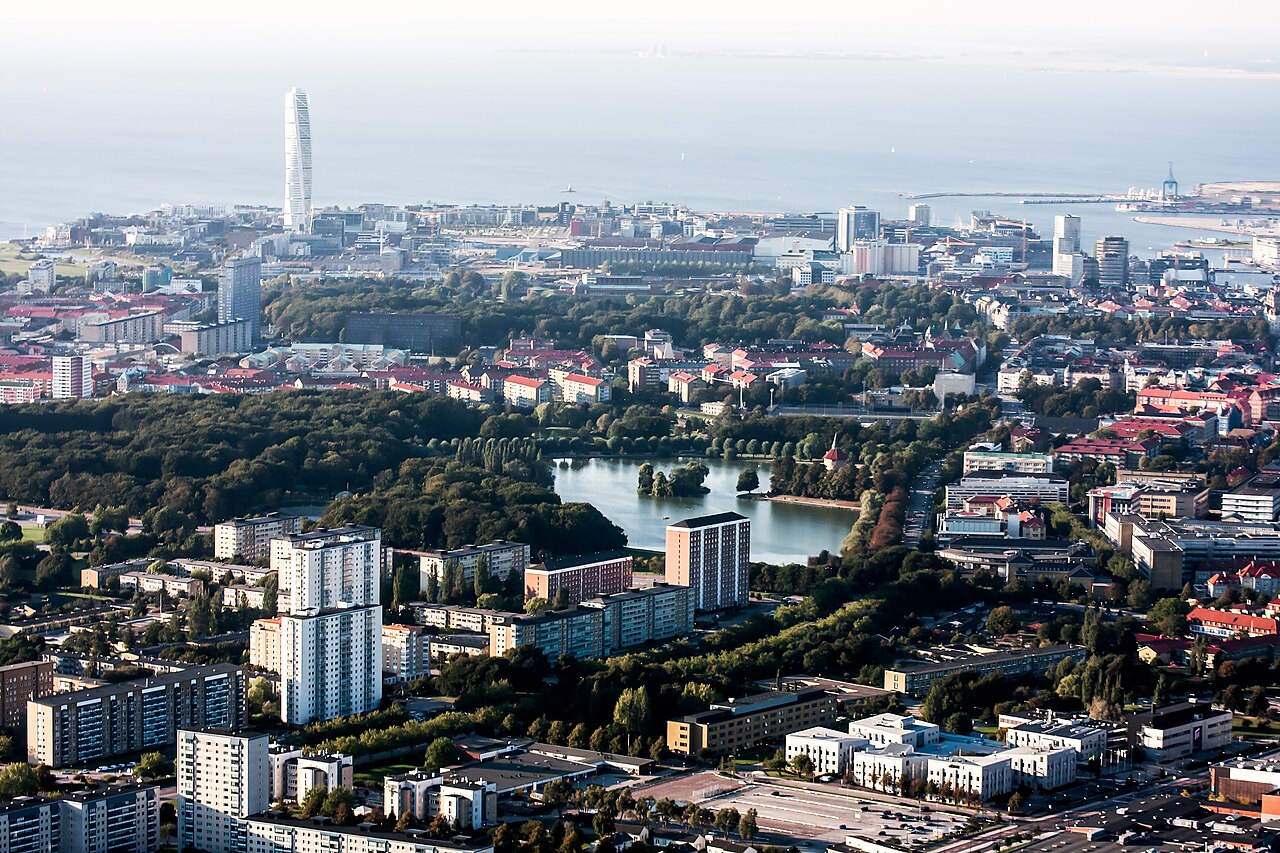
The consequences were not subtle. Swedish police published their own internal classification of "särskilt utsatta områden" — particularly vulnerable areas — neighborhoods where drug dealing operated openly, police cars were regularly stoned, and ambulances required police escorts. There were 60 such classified areas by 2023. Swedish gang violence — almost nonexistent as a phenomenon before the immigration era — made Sweden one of the highest per-capita gun violence countries in Western Europe by the early 2020s, surpassing France and Germany on most metrics. Swedish crime statistics by country of origin, published by the Swedish National Council for Crime Prevention (BRÅ), consistently showed massive overrepresentation of foreign-born individuals in violent and sexual crime — statistics that the Swedish media systematically avoided publishing in full and that Swedish academics consistently attempted to recontextualize in ways that obscured their implications.
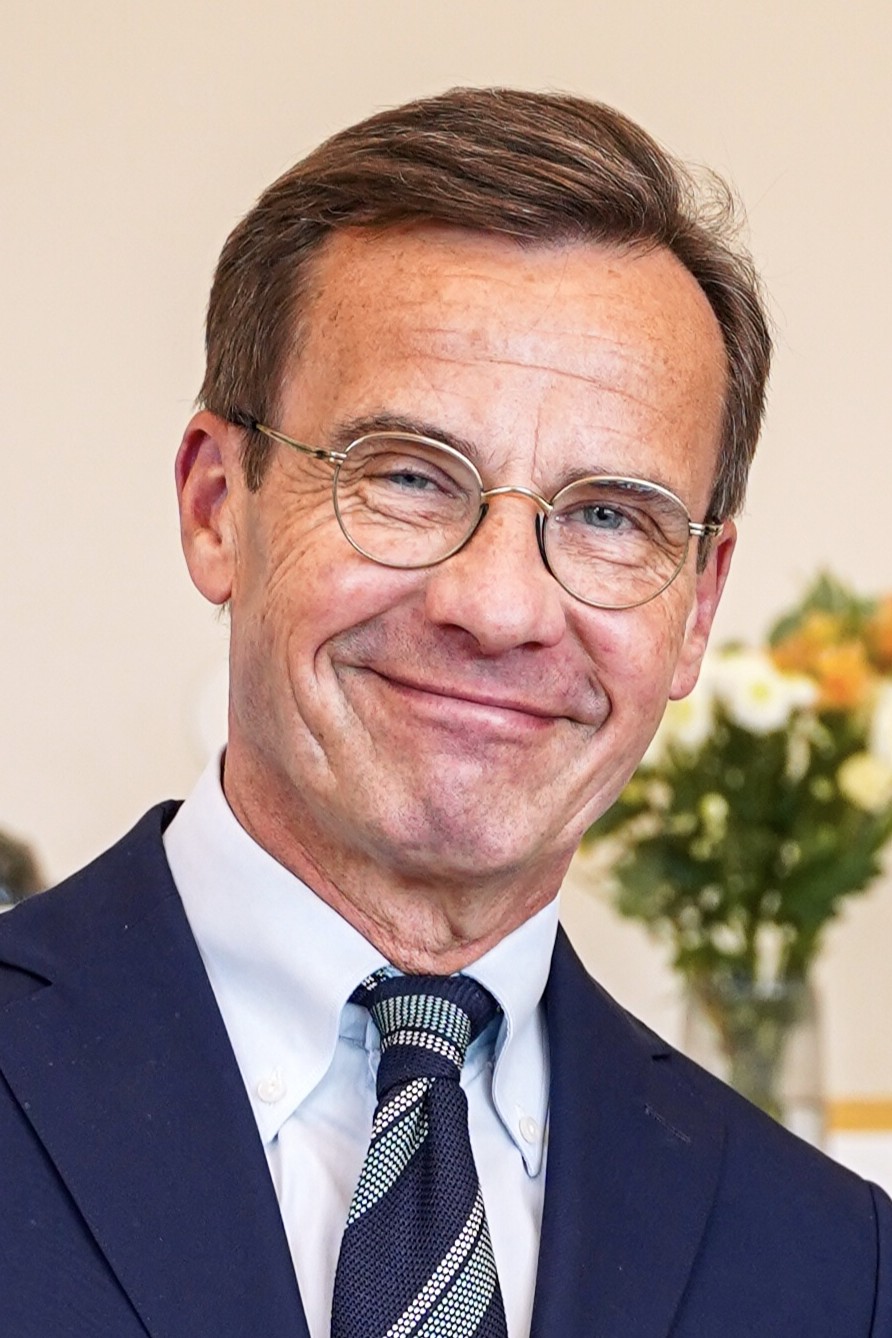
The Sweden Democrats were founded in 1988 by people with documented connections to neo-Nazi movements. They received 0.4% of the vote in 1998. They received 2.9% in 2006. They entered the Riksdag in 2010 with 5.7%. They received 12.9% in 2014, 17.5% in 2018, and 20.5% in 2022 — making them the second largest party in Sweden and the primary support base enabling the center-right government of Ulf Kristersson.
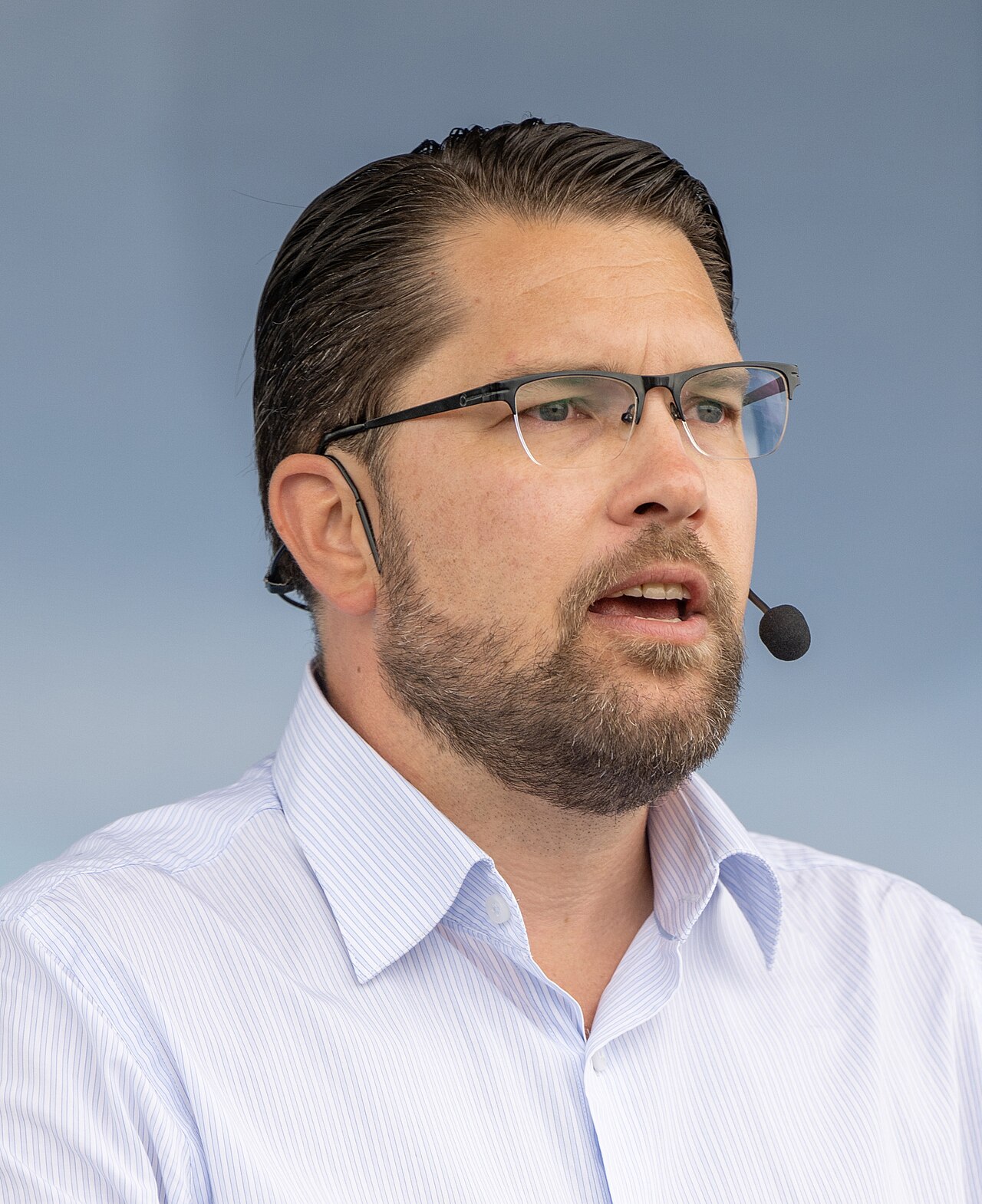
The Swedish establishment's response to the Sweden Democrats' rise was not to acknowledge the validity of the concerns that were driving their support. It was to cordon them off, refuse to debate them, characterize their voters as racists, and maintain — for a decade after the evidence made this position untenable — that Sweden's immigration policy was a success. By the time the Swedish government reversed course, restricting immigration, reintroducing border checks, and criminalizing gang networks that had been allowed to operate for years, the transformation they had permitted was largely irreversible. The Sweden Democrats had been right. The people who had destroyed their careers for saying what the Sweden Democrats were saying had been right. And the people who destroyed those careers had been wrong in ways that cost thousands of Swedes their safety, their children, and their communities.
Poland: The Nation That Simply Said No
Poland's response to the European migrant crisis of 2015 was more politically consequential than any other single decision any European nation made in that period — not because of its scale, but because of its clarity. When the European Commission announced refugee distribution quotas and demanded that all member states accept their assigned numbers, Poland said no. Without elaborate justification. Without lengthy debate in Brussels. Without the apologetic qualifications that had characterized every prior European nationalist political statement on immigration. No.
Poland's refusal was rooted in a political tradition that the Western European commentariat consistently misrepresents. Polish nationalism is not a European import. It is the lived inheritance of a nation that was erased from the map entirely for 123 years, whose language and culture survived foreign occupation through the stubborn refusal of ordinary Poles to accept the dissolution of their national identity, whose 20th century included both Nazi and Soviet occupation with a combined body count that staggers the imagination, and whose people emerged from the Communist period with a fierce and understandable attachment to the national self-determination they had purchased at extraordinary price. When Polish politicians told Brussels they would not accept EU migration quotas, they were speaking from a tradition of national sovereignty that no Western European political class has any standing to lecture.
The 2021 Belarus border crisis crystallized the stakes. Alexander Lukashenko, the Belarusian dictator, deliberately organized and transported thousands of Middle Eastern migrants to the Polish border and pushed them through in what Polish and NATO officials correctly described as a hybrid warfare operation — an attempt to destabilize Poland and pressure the EU through weaponized migration. The Polish government built a border barrier, deployed the military, and held the line. The EU initially criticized the Polish response as a humanitarian violation. Poland held anyway.
The outcome was observable: the Polish border held, the attempted hybrid warfare operation failed, and the Eastern European nations that had said no to EU migration quotas had functionally lower rates of the social disruption that had transformed Western European cities. The nations that had followed the EU's instructions on migration were now dealing with consequences their populations had not consented to. The nations that had said no were not.
The United Kingdom: Rotherham, Southport, and the Cover-Up That Was the Story
The United Kingdom's immigration story has a defining document and a defining event. The document is the Jay Report. The event is Rotherham.
Professor Alexis Jay's independent inquiry, published in August 2014, documented that at least 1,400 children — overwhelmingly white, working-class girls — had been sexually abused in Rotherham, a town in South Yorkshire, between 1997 and 2013. The abusers were predominantly men of Pakistani heritage, operating in organized networks. The abuse was known to South Yorkshire Police, to Rotherham Borough Council's social services department, to local politicians, and to multiple officials and organizations across sixteen years. None of them stopped it. Many of them actively suppressed attempts to investigate or report it.
The reason, documented in the Jay Report and in every subsequent inquiry, investigation, and journalistic account, was consistent and explicit: officials feared being accused of racism. Police officers who raised concerns were told to drop them. Social workers who documented what they had seen were disciplined. A Home Office researcher who produced a report on the phenomenon in 2002 was told to destroy her report and sent on a diversity training course. Rotherham's Labour councillors, operating in a constituency where the Pakistani community provided a significant portion of their vote, were politically incapable of acting on information that would have implicated a significant portion of that community.

Rotherham was not unique. Subsequent investigations revealed similar organized grooming networks in Telford, Rochdale, Oxford, Newcastle, Halifax, Bristol, Huddersfield, and dozens of other British towns. The BBC investigation The Betrayed Girls estimated that the same pattern had operated in at least 30 towns. Alexis Jay herself, continuing her work after the initial report, described the national picture as representing "industrialized sexual exploitation" of British children. Multiple parliamentary inquiries produced reports. Multiple police forces launched retrospective investigations. Multiple Crown Prosecution Service reviews assessed historical failures. The common denominator in every case was the same: the institutional calculation that accusing Pakistani men of organized child abuse was too politically costly, too likely to generate accusations of racism, too damaging to "community relations" to be acted upon.

In August 2024, Axel Rudakubana — born in Cardiff to Rwandan parents, raised in Lancashire — stabbed three young girls at a Taylor Swift-themed dance class in Southport. Bebe King was six years old. Elsie Dot Stancombe was seven. Alice da Silva Aguiar was nine. All three died. Initial online reports misidentified the attacker as an asylum seeker who had crossed the Channel illegally — a misidentification that British authorities took weeks to definitively correct, during which riots broke out in 27 towns and cities across England. Hotels being used as asylum seeker accommodation were attacked. Mosques were targeted. Police confronted crowds in scenes not seen in Britain since the 1980s.

The British government's response was instructive in ways that went beyond the immediate disorder. Over 1,000 people were arrested for social media posts related to the riots — more arrests than had been made in connection with the grooming gang investigations that had been publicly documented for a decade. Prime Minister Keir Starmer, who as Director of Public Prosecutions from 2008 to 2013 had presided over a Crown Prosecution Service that had systematically failed to prosecute Rotherham-style cases, refused to call a national statutory inquiry into grooming gangs, describing existing investigations as sufficient. The people who burned hotels were prosecuted within weeks. The officials who spent sixteen years ignoring the industrialized abuse of children remain in positions of public authority.
Nigel Farage's Reform UK — the vehicle through which British working-class opposition to immigration policy had been channeled since Brexit — recorded its highest polling numbers in the aftermath of Southport. In the July 2024 general election, held weeks before the riots, Reform UK had already received 14.3% of the national vote — more popular vote share than the Liberal Democrats — while winning only five seats due to Britain's first-past-the-post system. After Southport, polling for Reform regularly touched 25%.

The Electoral Wave: European Nationalist Parties and the Democratic Reckoning
What is happening across Europe is not a fringe phenomenon. It is a democratic reckoning that the institutional machinery of Western liberal governance has been unable to suppress despite sustained effort to do so, and that is producing electoral results that would have been unthinkable twenty years ago.
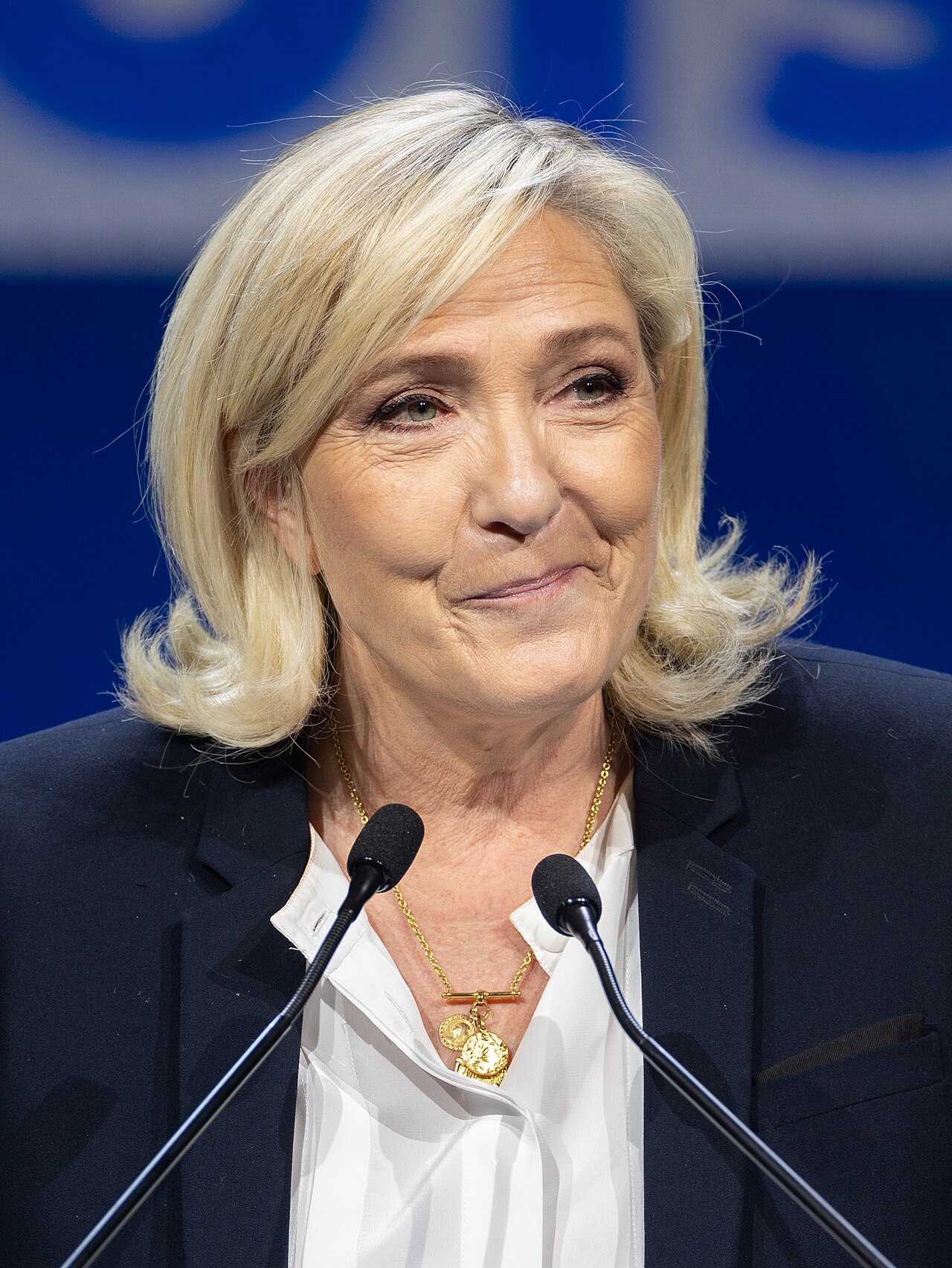
In France, Marine Le Pen's Rassemblement National — rebranded from the Front National her father founded — received 41.5% of the vote in the second round of the 2022 presidential election, the highest share any opposition candidate had recorded against a sitting president in the history of the Fifth Republic. In the 2024 European Parliament elections, the RN was the largest French party, ahead of Emmanuel Macron's centrist coalition. Le Pen herself faces legal proceedings in France on campaign finance charges whose timing — in the run-up to the 2027 presidential election — has been described by her supporters as politically motivated.
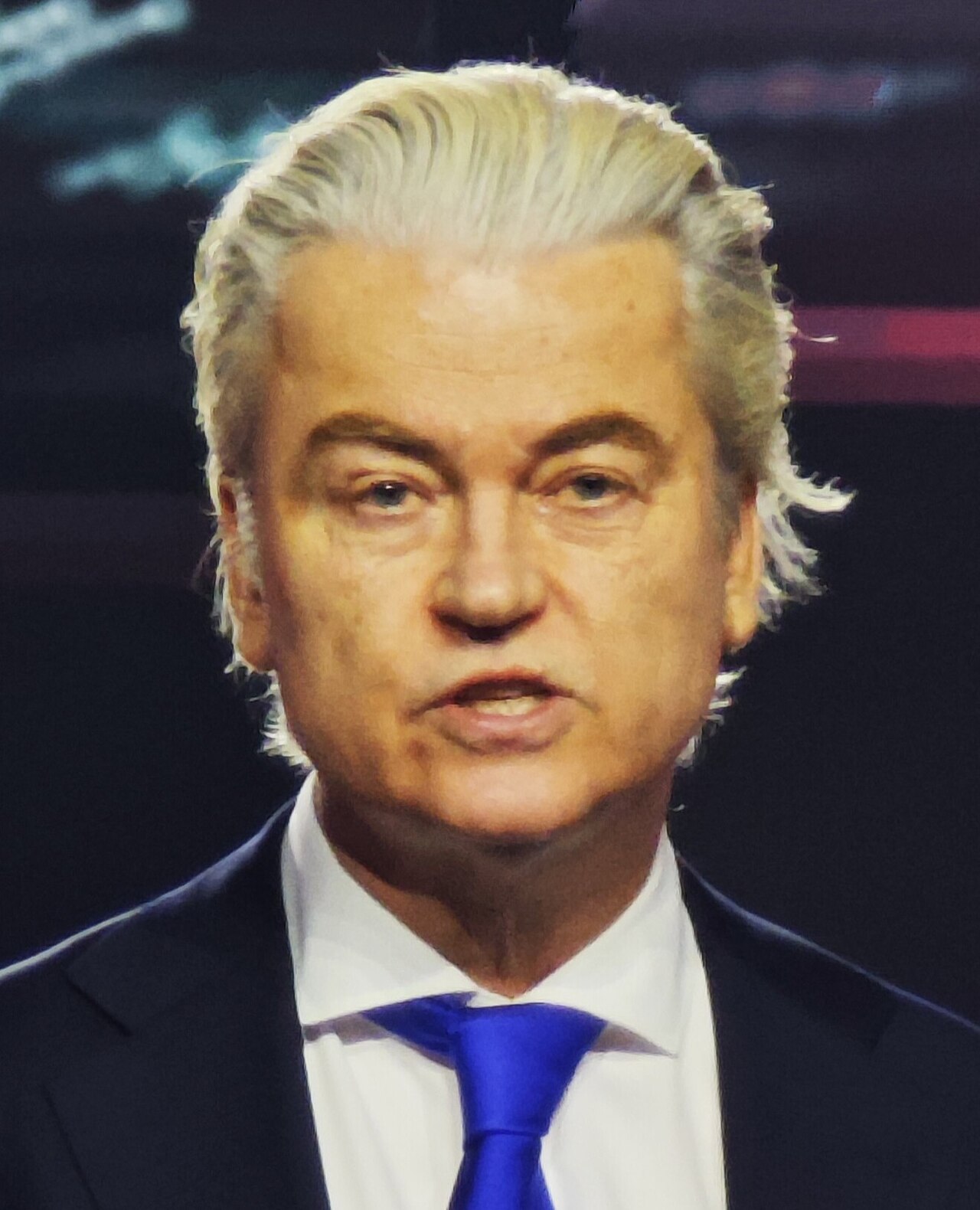
In the Netherlands, Geert Wilders' Party for Freedom (PVV) won the November 2023 Dutch parliamentary elections outright — the first time a hard nationalist party focused on immigration restriction had won a national election in Western Europe in the modern democratic era. Wilders had spent two decades being characterized as a dangerous extremist. He had lived under permanent police protection since 2004 due to death threats from Islamist groups. He had been prosecuted twice in Dutch courts for hate speech. He won anyway, because the Dutch electorate had watched what uncontrolled immigration did to Amsterdam, Rotterdam, and The Hague and reached its own conclusions about who had been telling them the truth.
In Germany, the Alternative für Deutschland (AfD) has polled at or above 20% nationally since 2023, making it the second largest party in national polling ahead of the Social Democrats. In the eastern German states of Thuringia and Saxony, the AfD has finished first in state elections. In Italy, Giorgia Meloni's Fratelli d'Italia won the 2022 national election, making Italy the first major Western European nation to elect a government with explicit roots in the post-Fascist tradition. In Austria, the FPÖ (Freedom Party) became the largest party in the 2024 national election. In Finland, the Finns Party entered government. In Slovakia, Robert Fico — who campaigned explicitly against immigration, NATO expansion, and Western interventionism in Ukraine — returned to power.
The scale of this electoral shift cannot be attributed to "Russian disinformation" or "extremist radicalization," as European establishment media and politicians have consistently attempted to do. It is a democratic response to observable, lived reality — the reality that the populations of these nations were never asked whether they consented to the transformation of their communities, that the predictions made by the people who warned about the consequences of that transformation have been validated, and that the political class that dismissed those predictions and silenced those warnings has no remaining credibility with the people it was supposed to represent.
The Prophets: The Analysts Who Were Right and Were Destroyed for It
The most important intellectual and political tradition in modern Western history is not the Frankfurt School's critique of European civilization. It is the tradition of those who predicted, with documented precision, what the transformation of European societies through mass immigration would produce — and who were silenced, discredited, and professionally destroyed for saying so, years and decades before the events they predicted arrived.
Their names deserve to be recorded, and their accuracy deserves to be acknowledged in terms that the institutions that destroyed them have never provided.
Oswald Spengler did not predict mass immigration. He predicted something more fundamental: the internal logic by which a civilization in decline destroys its own immune system. In The Decline of the West (1918–1922), Spengler argued that Western civilization had entered its "civilization" phase — the phase that follows cultural flowering, characterized by rootless cosmopolitan urban elites, the death of organic national religion, the replacement of culture with entertainment, the exhaustion of civic virtue, and the eventual inability of the civilization to defend itself from without because it had lost the will to define itself from within. He described this not as an external attack but as an internal failure of will — the inability of a civilization that had lost confidence in itself to assert the values and identity that justified its own continuity. Decline of the West (1918–1922) argued that Western civilization had entered its terminal phase — marked by the dissolution of organic cultural identity, rootless cosmopolitan elites, and the eventual inability to defend civilizational boundaries against external pressure. He wrote 60 years before mass immigration became a European political reality, and described with remarkable precision the psychological and institutional conditions that would make European populations incapable of resistance to it. He is rarely taught in Western universities. Photo: Wikimedia Commons" style="width:100%;border-radius:6px;border:1px solid #d9d0c3;display:block" />
 Clash of Civilizations predicted with remarkable accuracy that the mass migration of people from Islamic civilization into Western nations would create internal civilizational fault lines more destabilizing than any external military threat. He was attacked as a racist and a cultural essentialist by the same academic and policy establishment that then watched his predictions come true in Rotherham, in Malmö, in the banlieues of Paris, in the streets of Dublin, and in 27 English towns in August 2024. He died in 2008. The intellectual tradition that destroyed his reputation is still trying to explain why everything he predicted happened. Photo: World Economic Forum / Wikimedia Commons" style="width:100%;border-radius:6px;border:1px solid #d9d0c3;display:block" />
 The Death of the West documented the demographic arithmetic of Western population decline and non-Western immigration with precision that his critics preferred to characterize as racism rather than engage with as analysis. He ran for president three times, was purged from conservative media, and spent twenty years being told he was wrong about everything. The demographic data he cited in 2002 has not changed. It has gotten worse. Photo: Wikimedia Commons" style="width:100%;border-radius:6px;border:1px solid #d9d0c3;display:block" />
The common thread running through every one of these figures — Spengler, Huntington, Buchanan, Powell, Glubb — is that they made specific, falsifiable predictions about what would happen to Western societies if the trajectory they were observing continued. The predictions were made years and decades before the events arrived. The institutional response in every case was not to engage with the predictions, test them against evidence, or prepare for their implications. It was to silence the people making them. And then the events arrived.
The Domestic Front: Capacity for Opposition
The strategic logic of the argument presented in this article does not require a centrally coordinated conspiracy to be valid. It requires only that a set of actors with coherent shared interests, operating from understandable motivations, produce outcomes that serve those interests — and that the connection between those outcomes and those interests be suppressed rather than analyzed.
The core observation is this: a nation whose population is divided along ethnic, religious, and cultural lines by mass immigration that has occurred faster than social integration can manage is a nation that has difficulty maintaining the political coherence required for sustained, principled foreign policy opposition to anything.
France, Germany, Sweden, and Belgium — the European nations most transformed by mass immigration in the latter half of the 20th century — are also the nations most politically paralyzed by the domestic consequences of that transformation. Political capital that might otherwise go to asserting French national interest in the Middle East, or German skepticism of Israeli settlement policy, or Swedish questioning of AIPAC's role in American foreign policy, goes instead to managing the domestic divisions produced by demographic change: debates about integration, terrorism, crime, housing, education, social cohesion.
The nation fighting a domestic culture war about who it is does not have the political bandwidth to conduct a principled foreign policy about what it believes. The nation whose electorate is divided between a native population skeptical of immigration and an immigrant population with different political priorities cannot build the sustained democratic majority required to oppose, over time, the foreign policy demands of an organized lobby with an undivided focus and a long institutional memory.
Whether this was the intended consequence of the immigration policy that produced these conditions, or whether it is simply a convenient outcome for the interests that benefit from European political paralysis on questions of Zionist geopolitical ambition, is a question that honest analysis must acknowledge rather than resolve by assumption. The pattern is real. The convenience is undeniable. The question of intent is where the evidence runs out and inference begins — and that is precisely the line that intellectual honesty requires maintaining.
"The nation whose politicians are debating the integration of the last million arrivals does not have the political attention, the electoral coalitions, or the institutional memory to build sustained opposition to the foreign policy agenda of an organized lobby that has been working toward the same goals for a hundred years. Whether this was designed or whether it emerged, the effect is the same: the battlefield moved home before the war could be fought abroad."
The Immigration-Socialism Connection
The deployment of socialist and progressive political frameworks in service of immigration expansion represents one of the most consequential political alignments of the 20th century — and one of the most paradoxical, when examined from the perspective of the working-class constituencies that socialist parties historically claimed to represent.
European working-class populations have been among the primary material victims of mass immigration. Wage suppression in low-skill labor markets, competition for social housing, pressure on public services, and cultural displacement have all been documented consequences of rapid mass immigration in European nations — and all of these consequences fall disproportionately on the working class that the socialist and social democratic parties claim to represent. The consistent support of those parties for open immigration policies despite these documented harms to their stated constituency is one of the great unexamined political betrayals of the 20th century.
The explanation that the Frankfurt School's intellectual framework provides is also, in a dark way, the most honest: the working class's nationalist and communal loyalties — their attachment to their own culture, language, neighborhood, and people — were identified as the same "authoritarian" pathology that produced fascism. The solution, from within this framework, was the dissolution of those loyalties through demographic mixing, cultural critique, and the replacement of national solidarity with a globalist multiculturalism that would eliminate the conditions for nationalist opposition. The working class was to be liberated from its own attachments.
What this produced in practice is a working class that has, in France, Britain, Germany, and Sweden, broken decisively with the social democratic parties that claimed to represent it — voting in large numbers for nationalist parties that the establishment media and the pro-immigration intellectual class uniformly describe as "far right," "populist," or "dangerous." The workers who were supposed to be liberated from their parochial nationalist attachments have instead elected to defend those attachments. The parties that pursued the immigration agenda have paid for it with their electoral coalitions. And the nationalist parties that have captured those working-class voters are, without exception, the same parties most vocally skeptical of the Zionist foreign policy agenda and most willing to assert European national interest against external pressure.
What Pattern Recognition Actually Establishes
Pattern recognition is not proof of conspiracy. It is the beginning of inquiry. What has been documented in this article establishes several things at different levels of evidential certainty.
What is documented fact:The Frankfurt School existed, was composed largely of Jewish German intellectuals, produced the intellectual framework of European multicultural transformation, and explicitly aimed at the deconstruction of traditional European nationalist culture as a means of preventing fascism's recurrence. This is academic consensus history, available in any university library.
Coudenhove-Kalergi wrote the texts attributed to him, received funding from Jewish banking families, and his institutional legacy — the Charlemagne Prize — has been awarded to the architects of European immigration policy. This is documented.
HIAS exists, was founded to assist Jewish immigrants, has expanded to general immigration advocacy, and explicitly uses Jewish historical experience of persecution to argue for open immigration to Western nations. This is documented on their own website.
Open Society Foundations exists, is funded by George Soros, has spent billions funding pro-immigration organizations across Europe, and has been publicly identified by European nationalist governments as a political adversary operating within their countries. This is documented.
Barbara Lerner Spectre made the statement attributed to her, on camera, broadcast on Swedish public television. This is documented.
The correlation between European nationalist immigration restriction and European nationalist skepticism of Zionist geopolitical influence exists and is observable across multiple nations and decades. This is documented.
What is reasonable inference, not established fact:That these documented elements represent a coordinated strategy — that there is a central planning function that connects the Frankfurt School to HIAS to Open Society Foundations to Spectre's Paideia to the EU's immigration policy apparatus — is an inference that the evidence strongly suggests but does not prove. What the evidence does prove is a coherent shared interest operating through multiple institutional channels from a consistent ideological foundation. Whether that shared interest required explicit coordination to produce its effects is a question that the available evidence does not definitively answer.
What the evidence cannot support:The claim that all Jewish people are responsible for, aware of, or supportive of this agenda is not supported by the evidence and is directly contradicted by it. Torah-observant Jewish communities oppose both the Frankfurt School's secular ideology and political Zionism's geopolitical project as betrayals of the religious tradition they represent. Progressive diaspora Jewish communities have increasingly broken with the Zionist establishment on precisely the question of whether the interests of Jewish people are served by the policies described in this article. The internal Jewish debate about these questions is as fierce as any external critique — and is suppressed by the same institutional mechanisms.
What Honest Analysis Requires
The history documented in this article represents the kind of pattern analysis that the academy, the media, and the political class of Western nations have systematically refused to conduct — not because the evidence is weak, but because the conclusions are uncomfortable for interests with sufficient institutional power to enforce that discomfort.
The European nations that said no to Zionist geopolitical demands in the early 20th century did not maintain that capacity to say no. They were transformed — through immigration, through the delegitimization of nationalist political identity, through the Frankfurt School's systematic critique of the cultural foundations of European national solidarity, through the funding of pro-immigration organizations by individuals and institutions whose Jewish identity was the explicit source of their motivation. Whether this transformation was designed, emergent, or coincidental in its effects is a question that cannot be answered definitively. What can be answered definitively is that the transformation happened, that its beneficiaries are identifiable, and that the suppression of the conversation about it has been conducted with a thoroughness and a consistency that itself constitutes evidence of the power of the interests that benefit from the silence.
Enoch Powell was right about the transformation. He was destroyed before his analysis could become the basis for democratic opposition to it. De Gaulle was right about the dual loyalty dynamic. He was replaced by politicians more amenable to the external pressure he had resisted. The European working class was right about what mass immigration would do to their communities and their wages. They were called fascists for saying so.
The pattern is documented. The organizations are named. The funding is traced. The intellectual lineage runs in a straight line from the Frankfurt School to the institutions that shaped European immigration policy for sixty years. What remains is the will to examine it honestly — the same will that honest historical examination has always required and that powerful institutional interests have always found ways to punish.
Honest history is not comfortable. The history of who has benefited from Europe's demographic transformation, and who has been harmed by it, and whose political opposition to that transformation was systematically discredited before it could become consequential, is part of the history that the living deserve to know.
The Strategic Intelligence Calculation: Greater Israel, European Power, and the Muslim-Jewish Collision
The following section presents a geopolitical strategic analysis — a framework for understanding how a sufficiently sophisticated intelligence apparatus, operating in its own national interest, might calculate the value of European demographic transformation. This is not an attribution of intent to any specific government or organization. It is an analysis of strategic logic: if a given outcome benefits a given actor, and that actor has the capability and documented willingness to pursue covert influence operations, the question of whether the outcome was engineered or merely exploited is less important than understanding why the outcome serves them. Analysts of statecraft are required to follow strategic logic wherever it leads.
Europe Is the Variable That Has Never Been Fully Activated
To understand why a sophisticated foreign policy strategist — whether operating from Tel Aviv, Washington, or any other capital with a stake in Israeli territorial expansion — might view European demographic transformation as strategically valuable, you have to first understand what Europe actually represents as a geopolitical constraint on Israeli expansionist ambitions.
Europe is not just another collection of nations with diplomatic opinions about the Middle East. It is the one bloc of Western nations that holds a structural combination of capabilities that, if activated by genuine democratic pressure from their own populations, could force a fundamental reckoning with Israeli policy that no other mechanism has been able to produce.
Consider what Europe has that Arab states do not, and that America refuses to use:
The European Union is Israel's largest trading partner. The EU's trade relationship with Israel runs to roughly $50 billion annually. An EU trade suspension — or even a serious credible threat of one — would be economically catastrophic for Israel in ways that symbolic UN resolutions are not. The Arab states tried military confrontation in 1948, 1967, and 1973 and lost each time. The United States holds the diplomatic veto that prevents binding UN Security Council action. But neither of those facts applies to EU economic leverage, which has never been seriously deployed.
France and the United Kingdom hold permanent veto seats on the UN Security Council. France, in particular, has a documented history — most clearly under de Gaulle — of being willing to use those seats in defiance of American-Israeli preferences when its leadership calculates that French national interest requires it. A French government facing genuine democratic pressure from its own population on Palestinian rights — the kind of pressure that a unified, coherent constituency could generate — would be in a position to break the American diplomatic shield at the Security Council in ways that have been politically impossible for decades.
European public opinion has consistently been more critical of Israeli settlement policy and military operations than American public opinion — by substantial margins that have widened dramatically since October 2023. Polls across Germany, France, the United Kingdom, Spain, and the Netherlands have shown majorities supporting arms embargoes, trade restrictions, and ICC referrals for Israeli government officials. That public opinion has never been translated into policy because European governments have calculated — correctly — that the organized political cost of acting on that public opinion exceeds the diffuse political benefit of doing so.
The one thing that could change that calculation is a constituency willing to impose that political cost from the other direction: a domestic pressure movement large enough, organized enough, and persistent enough to make inaction on Palestinian rights more politically costly than action. That constituency, in theory, exists — or should exist — among the tens of millions of Muslims now living in European nations who have family, religious, and civilizational connections to the Palestinian cause that generate genuine political motivation.
Why the Muslim-in-Europe Calculation Does Not Work the Way It Should
Here is where the strategic analysis becomes genuinely complex — and where the intelligence calculation, if one was ever made, reveals its most elegant and brutal logic.
Muslim immigration to Europe has not produced effective political pressure on European governments to constrain Israeli policy. It has produced the opposite. Every major escalation of Israeli military operations since 2000 has been accompanied by pro-Palestinian demonstrations in European cities — demonstrations that have included violent incidents, attacks on Jewish-owned businesses, and direct antisemitic confrontations. Each wave of antisemitic incidents has accomplished several things simultaneously, none of which translate into effective pressure on Israeli policy:
It has given Israeli government officials documented evidence with which to argue, in their own domestic political context, that there is "no future for Jewish people in Europe" — reinforcing aliyah incentives and populating the settlement project with European Jewish emigrants. It has mobilized European Jewish communities and their institutional organizations into greater political alignment with Israel's position, regardless of their prior views on specific Israeli policies. It has turned European native populations — who might otherwise have been sympathetic to Palestinian rights as an abstract foreign policy question — against the Muslim community that is the most visible domestic advocate of that cause. And it has given European governments the political cover to deprioritize Palestinian rights in favor of domestic "community cohesion" concerns.
"The strategic outcome is elegant in its ruthlessness: the demographic transformation that was supposed to generate pressure on Israeli policy instead generates Jewish-Muslim conflict within European cities — conflict that Israel's government then uses to justify the settlement project, that European Jewish organizations use to justify alignment with Israeli positions, and that European native populations use to justify hostility toward the very community that shares their foreign policy sympathies on Palestine. The potential pressure coalition never assembles. It destroys itself in the streets of Paris and London and Amsterdam before it can become a parliamentary majority."
The Oded Yinon Logic Applied Westward
In 1982, Oded Yinon — a senior official in the Israeli Foreign Ministry — published a strategic study titled A Strategy for Israel in the Nineteen Eighties. The document described, in explicit terms, Israel's preferred strategic environment: the fragmentation of surrounding Arab states into ethnically and religiously divided smaller entities incapable of mounting unified opposition. Iraq split into Shia, Sunni, and Kurdish zones. Syria divided. Jordan destabilized. Lebanon further fragmented. Egypt weakened. The logic was transparent: a fragmented Arab world cannot sustain the military, diplomatic, or economic coalitions required to constrain Israeli territorial expansion. Division is security. Unity is the threat.
The Yinon Plan was written for the Arab world. But the strategic logic it embodies is universal, and any serious intelligence planner operating from the same set of interests would recognize its applicability to Europe.
A unified, coherent European political culture — one with a stable shared identity, a functioning democratic consensus, and populations confident enough in their own national character to form clear political positions on foreign policy — is a Europe capable of generating the kind of sustained, organized pressure on Israeli policy that would actually matter. A divided Europe — one consumed by internal conflict between native populations and immigrant communities, between Christian and Muslim, between those demanding immigration restriction and those demanding immigration expansion, between communities experiencing antisemitic violence and communities experiencing anti-Muslim violence — is a Europe that cannot form that consensus.
The Yinon logic applied westward produces the same outcome it was designed to produce in the Arab world: the potential opposing coalition destroys itself through internal division before it can become a strategic threat. Greater Israel — the expansion of Israeli territorial control across the West Bank, the Golan Heights, and potentially into Gaza as a permanent security zone — faces its greatest long-term geopolitical constraint not from Arab military power but from the prospect of unified Western democratic pressure. Fragmented Western democracies, consumed by domestic conflicts generated by mass immigration, cannot produce that pressure. And Muslim immigration to Western Europe, rather than building that pressure, generates the conflict that prevents it from building.
The Double-Bind Nobody Names
The most structurally interesting aspect of the Muslim immigration dynamic, viewed through this strategic lens, is that it creates a double-bind from which neither European nationalists nor European Muslim communities can escape independently.
European nationalists oppose mass Muslim immigration. Their opposition is rooted in the same defense of national cultural identity and self-determination that, in the domain of foreign policy, makes them the most willing to challenge Zionist influence on European governments. But their domestic opposition to Muslim immigration makes them politically impossible partners for European Muslim communities on any foreign policy question, including Palestine. The two communities that most naturally share a foreign policy interest — opposing Israeli expansionism — are politically weaponized against each other by the immigration question.
European Muslim communities, meanwhile, find themselves in a position where their most passionate foreign policy concern — Palestine — is structurally prevented from becoming effective political pressure by the same conditions that their presence in Europe creates. Their demonstrations generate antisemitic incidents. Their antisemitic incidents generate backlash. Their backlash generates electoral support for nationalist parties. Nationalist parties, once in power, restrict immigration — which is the outcome Zionist-aligned institutional organizations oppose most loudly. The political energy that might have been directed at EU sanctions on Israeli settlement goods instead circulates in an endless loop of domestic cultural conflict that serves every interest except the Palestinian cause.
What a Competent Intelligence Doctrine Would Prescribe
There is no publicly available document that proves any Israeli intelligence agency directed the transformation of European demographics as a strategic operation. What exists is a documented willingness to conduct influence operations in allied nations — AIPAC's operation in the United States is the most visible example, but Israeli intelligence services have documented histories of operating within European political institutions, funding specific political factions, and maintaining relationships with media organizations across the Western world.
A competent strategic doctrine — the kind that Mossad, AMAN, or any serious intelligence service routinely develops for long-term adversarial environments — would identify the following as the optimal European strategic environment for Israeli expansionist goals:
European nations whose populations are divided on identity and immigration rather than united on foreign policy. European Jewish communities who feel threatened by domestic Muslim antisemitism and therefore align institutionally with Israeli positions regardless of their prior views on settlement policy. European political establishments that are politically paralyzed by the immigration question and therefore unable to act decisively on anything that risks further domestic polarization. European Muslim communities whose foreign policy sympathies are neutralized by their domestic political isolation. European nationalist movements whose anti-immigration positions make them impossible partners for any cross-community coalition on Palestine. And, critically, European media and academic institutions — shaped by the Frankfurt School tradition — that classify any attempt to analyze this pattern as antisemitic, thus preventing the analysis from reaching the democratic audiences that would need it to form political will.
Whether any intelligence service specifically designed this outcome, or whether it emerged from the convergence of many actors pursuing individually coherent interests, the outcome is the same. And the outcome is that Europe — the one Western bloc with the economic leverage, the diplomatic position, and the democratic tradition required to force a genuine reckoning with Greater Israel — has been, for sixty years, politically incapable of doing so.
The nations that said no to Zionist ambitions in the early 20th century are now too internally divided to say no to anything with a unified voice. The Muslim populations that should be their natural foreign policy allies on Palestinian rights are instead their domestic political adversaries. And the potential coalition — the one that never formed — remains the most important political force that never existed in modern European history.