There is a hierarchy of suffering in 20th-century history that Western education has enforced with remarkable consistency. Some genocides are taught, memorialized, and made part of the permanent moral architecture of civilization. Others are buried — not because they were less horrific, not because the evidence is thinner, but because the political circumstances surrounding them made their full acknowledgment inconvenient to powerful interests at specific historical moments. The Holodomor — the deliberate starvation of the Ukrainian people by the Soviet state — is the most consequential example of this second category. And around its suppression, its perpetrators, and its long concealment, there is a set of historical facts that are simultaneously documented, significant, and almost entirely absent from the curriculum that shapes how most Americans understand the 20th century.
The Holodomor: What Actually Happened
The word Holodomor comes from the Ukrainian words for hunger and death. It means, literally, death by hunger. Between 1932 and 1933, the Soviet state under Joseph Stalin engineered conditions in Soviet Ukraine that resulted in the starvation of somewhere between 3.5 and 7 million people. The range in the estimates reflects the difficulty of demographic analysis across a period when the Soviet state was actively suppressing records and falsifying census data, not any genuine uncertainty about whether a mass killing occurred.
The mechanics of the famine were not accidental. They were policy. The Soviet government set grain quotas for Ukrainian farms that exceeded what those farms could physically produce. When farmers could not meet the quotas, Soviet brigades confiscated not just grain but all food in the household, including seed grain needed for the following year's planting. A blacklist system called the "Blackboard" designated villages that had failed to meet quotas, cutting off those communities from receiving any goods from the state. A January 1933 decree signed by Stalin and confirmed by internal Soviet memoranda blocked Ukrainian peasants from leaving their villages to seek food elsewhere. The borders of Soviet Ukraine were sealed. People were not starving because crops had failed. They were starving because the state had taken their food and prevented them from going anywhere to find more.
Key Statistics — The Scale of the Holodomor Consensus demographic estimate: 3.9 million Ukrainians killed (range 3.5M to 7M+), based on 2015 demographic studies. 28,000 people were dying per day at the peak of the famine in spring 1933. 33 countries have formally recognized the Holodomor as genocide — the United States Congress did so by resolution. Soviet grain exports continued throughout the famine's worst months.
A memorandum to Stalin dated March 15, 1933, written by Stanislav Kosior, admitted directly that the famine was being used as a means of teaching Ukraine's peasants a lesson. Soviet grain reserves contained enough food to prevent the deaths of millions. The decision not to use those reserves was made consciously, at the highest levels of Soviet power, in full awareness of the consequences.
Scholars who have reviewed the primary documents have reached conclusions ranging from deliberate genocide to criminal negligence of genocidal scale, with the majority of recent scholarship — including Anne Applebaum's Pulitzer-winning Red Famine and Robert Conquest's foundational Harvest of Sorrow — concluding that the deliberate targeting of Ukraine in particular, and Ukrainian national identity specifically, places the Holodomor clearly within the international definition of genocide. As of 2025, the United States Congress, the European Parliament, Canada, Australia, and more than thirty other governments have formally recognized it as such.
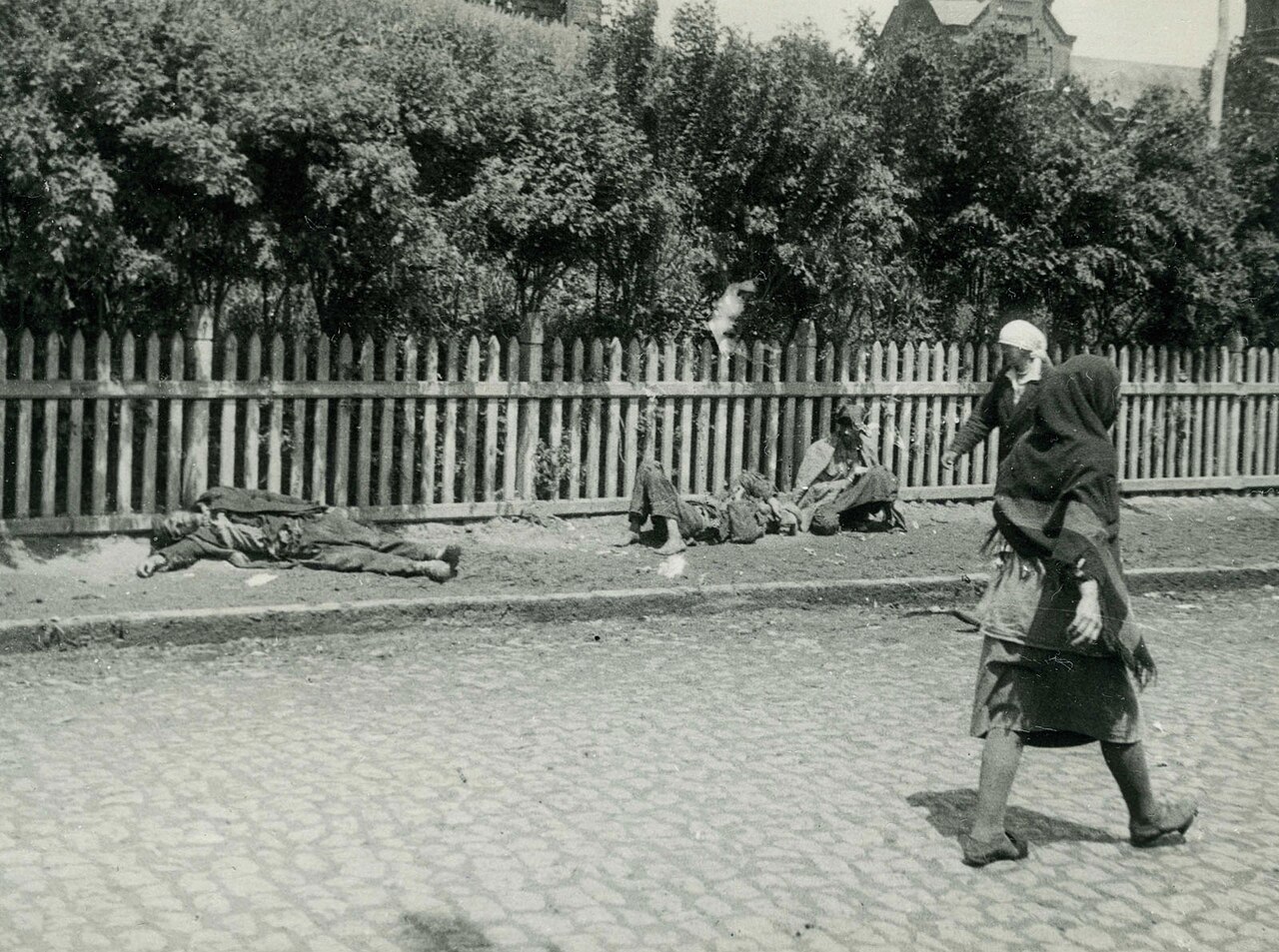
The Cover-Up: How the West Was Made to Look Away
The Holodomor was not unknown to the Western world as it was happening. It was known, reported on by a small number of courageous journalists, and then actively suppressed by the most prestigious media institution in the United States.
Walter Duranty was the Moscow bureau chief of the New York Times. In 1932 — the same year Stalin signed the decrees that would produce the mass starvation of millions — Duranty won the Pulitzer Prize for his reporting from the Soviet Union. His reporting was enthusiastically pro-Soviet. When reports of famine began emerging from Ukraine, Duranty wrote in the New York Times that there was no famine, only a "partial food shortage." He described reports of mass starvation as "exaggerated or malicious propaganda."
What makes Duranty's actions particularly damning is what he said privately. According to a British diplomatic report, Duranty acknowledged off the record that "as many as 10 million" may have perished across the Soviet Union and that "Ukraine had been bled white." He knew. He wrote the opposite. His prestigious platform and his Pulitzer Prize gave the Soviet denial international credibility at the precise moment when international pressure might have saved lives.
Key Source — CUNY Academic Works, Western Influence in the Cover-Up of the Holodomor "Stalin could not have successfully covered up the crimes in Ukraine without the active involvement of Western reporters, diplomats, and ambassadors. The personalities and political inclinations of the individuals who helped cover up or misrepresent the famine — who included the reporter Walter Duranty, left-wing political groups, the staff at the New York Times and Manchester Guardian, and officials at the British Foreign Office — reveal a deeper wedge in the issue of exposing the truth of the genocide."
Duranty's Pulitzer Prize has never been revoked. The New York Times has acknowledged that his reporting was "some of the worst reporting to appear in this newspaper." The Pulitzer Prize Board reviewed the matter in 2003 and decided no action was warranted. The millions of Ukrainians whose deaths Duranty helped conceal remain, in the formal accounting of American journalism's most prestigious award, unacknowledged by the institution most responsible for their erasure from Western consciousness during the years it mattered most.
The pattern of suppression continued long after 1933. The Holodomor remained largely absent from Western secondary school curricula through the 20th century. American history textbooks routinely covered the Holocaust in detail while omitting the Holodomor entirely — a disparity that reflects not the relative historical significance of the events but the relative political influence of the communities invested in their documentation and memorialization. It is not a comfortable comparison to make. It is, however, an accurate one.
The Camps Came First: Concentration Camps Under Lenin and Trotsky
One of the most consequential historical distortions in Western education is the presentation of the Nazi concentration camp system as something that emerged from a uniquely German pathology. It did not. The world's first modern ideologically driven concentration camp system was constructed by the Bolsheviks, beginning in 1918, years before the Nazi Party had won a single election. This is a documented fact, and it is crucial to understanding what the Soviet experiment actually was from its very first days — before Stalin, before the Great Terror, before the Holodomor.
The camps began in the first year of Bolshevik rule. In August 1918, Trotsky and Lenin were already debating the concept of forced labor camps for class enemies. Trotsky issued a direct order that any person arrested with weapons would be shot on the spot and all who agitated against Soviet authority would be sent to a concentration camp. The term he used, without any apparent awareness of its historical weight, was concentration camp. A secret Cheka directive formalized this. Former prisoner-of-war facilities emptied by the Treaty of Brest-Litovsk were repurposed almost immediately for the new class of enemy: the Russian citizen who had been designated a threat to the revolution. The formal decree creating the Soviet forced labor camp system was signed on April 15, 1919. The All-Russian Central Executive Committee tasked the Cheka secret police — founded by Felix Dzerzhinsky in December 1917 — with administering the camps. By the early 1920s, hundreds of camps existed across the Soviet state. The historian Richard Pipes documented that the Nazis in the early 1920s closely observed Soviet concentration camp practices with the explicit intention of emulating them once they came to power. The historical causation runs in a direction that the standard Western narrative reverses entirely.The Concentration Camp Timeline — Who Came First

The Solovetsky Islands camp is where the soul of the Gulag was established. The Bolsheviks took an island monastery in the White Sea, a place of Christian pilgrimage and prayer that had operated continuously since the 15th century, expelled its monks, and converted its sacred buildings into the first model camp of the Soviet forced labor system. The symbolism was not accidental. The monastery represented everything the Bolsheviks were determined to eradicate: religious life, Christian civilization, spiritual authority independent of the state. Its conversion into a concentration camp was an act of deliberate desecration as much as it was an act of administrative convenience.
Prisoners on the Solovetsky Islands were subjected to conditions that anticipated everything the Gulag would later become at industrial scale: forced labor in brutal Arctic conditions, systematic starvation as a control mechanism, torture, summary execution, and the complete stripping of civil identity. These were not improvised brutalities. They were policy. And they began not under Stalin but under Lenin, not as a wartime emergency but as the permanent operating system of the revolutionary state.
"The world's first modern ideological concentration camp system was Soviet. It was fifteen years old before Dachau opened. This is not a footnote. It is the foundation of the entire story."
Yagoda: The Man Who Built the Gulag
Genrikh Grigoryevich Yagoda is one of the most important figures in the history of Soviet state terror, and one of the most thoroughly obscured in Western historical education. Understanding who he was, what he built, and what ultimately happened to him is essential to understanding both the Soviet system's mechanics and the profound moral complexity of the history being examined here.
Yagoda was born Yenokh Gershevich Iyeguda in 1891 in Rybinsk, into a Jewish family. His name was changed to the more Russian-sounding Yagoda — which means berry in Russian. He trained as a statistician and worked as a pharmacist's assistant before joining the Bolsheviks in 1907. He worked for the father of Yakov Sverdlov, the first Soviet head of state, and married into the Sverdlov family, establishing connections that would accelerate his rise through the new state's security apparatus.
By 1923 he was Dzerzhinsky's deputy in the secret police. When Menzhinsky, Dzerzhinsky's successor, fell ill in 1929, Yagoda became the effective operational head of the Soviet security apparatus years before his formal appointment as NKVD chief in 1934. From 1930 he was formally in charge of the system of forced labor camps. What he built during those years was the Gulag as a functioning industrial system — not merely a collection of punitive camps but an economic infrastructure that the Soviet state came to depend upon for the construction of canals, railroads, mines, and entire cities in the most inhospitable regions of the country.
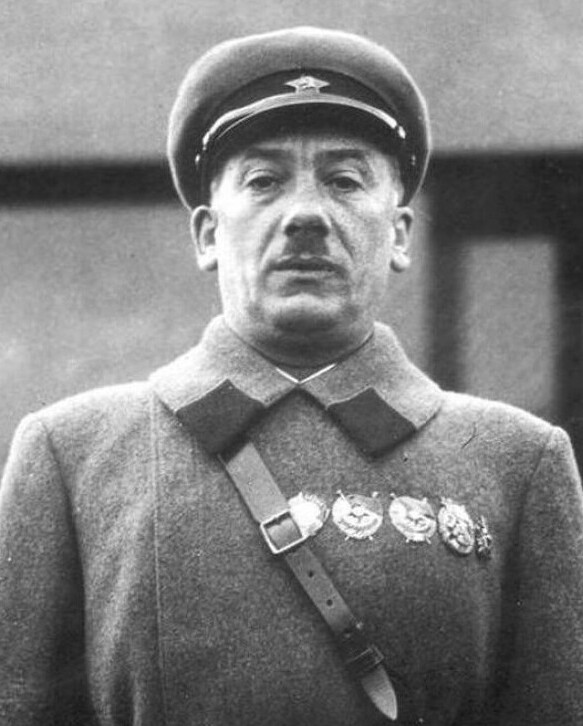
Britannica — Documented Record on Genrikh Grigoryevich Yagoda "From 1930 Yagoda was in charge of the system of forced-labour camps in the Soviet Union. As head of the NKVD from 1934, Yagoda prepared the first of the public purge trials in August 1936, in which Zinovyev, Kamenev, and a number of their associates confessed to astonishing charges and were immediately executed. The Gulag was vastly expanded under Yagoda's stewardship, and the use of slave labor became a major part of the Soviet economy. More than a quarter of a million people were arrested during 1934 and 1935 alone."
The White Sea Canal, completed in 1933, was the Gulag system's first major showcase project. Built almost entirely by forced labor under Yagoda's supervision, it was completed in 20 months through the labor of approximately 100,000 prisoners, of whom an estimated 12,000 to 25,000 died during construction. The canal was celebrated in Soviet propaganda as a triumph of socialist construction. It was built on human bones.
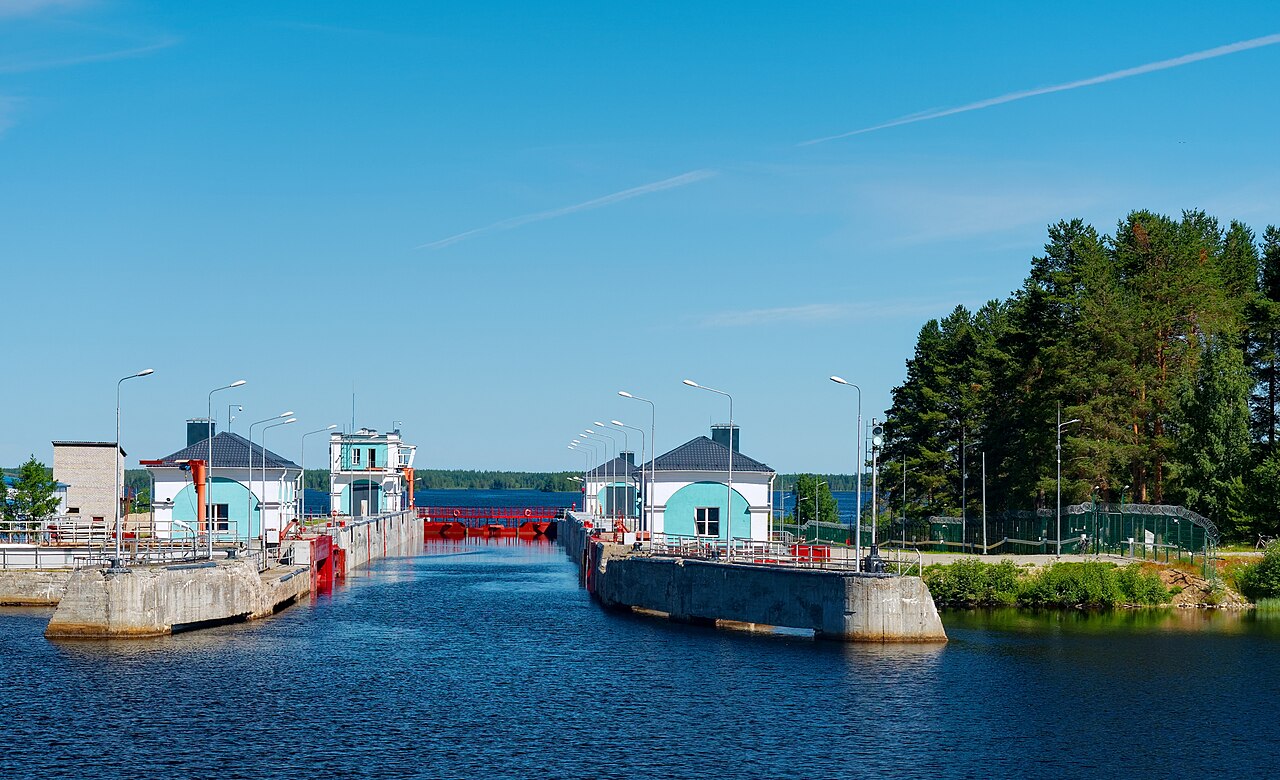
Yagoda's medical background informed one of the darkest aspects of his work. He established the NKVD's Kamera, a secret laboratory that experimented with poisons and drugs on prisoners. He used the laboratory for state assassinations, including evidence suggesting he had Maxim Gorky and Gorky's son poisoned.
Then comes the part of his story that the "Jewish conspiracy" framework cannot absorb without self-destruction. In 1936, Stalin removed Yagoda from his position. In 1937 he was arrested. In March 1938 he was brought to trial on fabricated charges and executed on March 15, 1938, at the Lubyanka prison he had run for years.
The man who built the Gulag, who oversaw the arrest and execution of hundreds of thousands, who constructed the machinery of Soviet terror, was consumed by that machinery. He was shot by the state he had served. His successors, Yezhov and then Beria, continued and expanded everything he had built. The instrument of terror outlasted its architect by fifteen years, claiming millions more lives after the man who gave it its institutional shape had himself become one of its victims.
The Israeli newspaper Ynet published a piece by journalist Sever Plocker that addressed Yagoda's historical significance directly and without evasion, describing him as perhaps the greatest Jewish murderer of the 20th century and noting with evident anguish that an Israeli student could graduate high school without ever hearing his name. That observation matters not as an indictment of Jewish people, but as an indictment of the selective historical curriculum that leaves this history in a void where it can only be discovered by the intellectually dishonest.
Solzhenitsyn: The Witness Who Would Not Be Silenced
Aleksandr Isayevich Solzhenitsyn was arrested at the front in February 1945 for writing derogatory remarks about Stalin in a private letter to a friend. He was sentenced to eight years in the Gulag. What emerged from those eight years, and from the additional years of exile that followed, was the most consequential literary and moral testimony of the 20th century.
Solzhenitsyn went into the camps as a committed Marxist. He came out a Christian. The transformation was not incidental to his testimony. It was the lens through which he understood what he had seen. The Gulag, in his account, was not merely a system of cruelty. It was a deliberate assault on the human soul, on the capacity for moral life, on the spiritual inheritance of a civilization that the Bolshevik project had set out to destroy and replace with something it believed was higher but that proved, in practice, to be vastly lower.
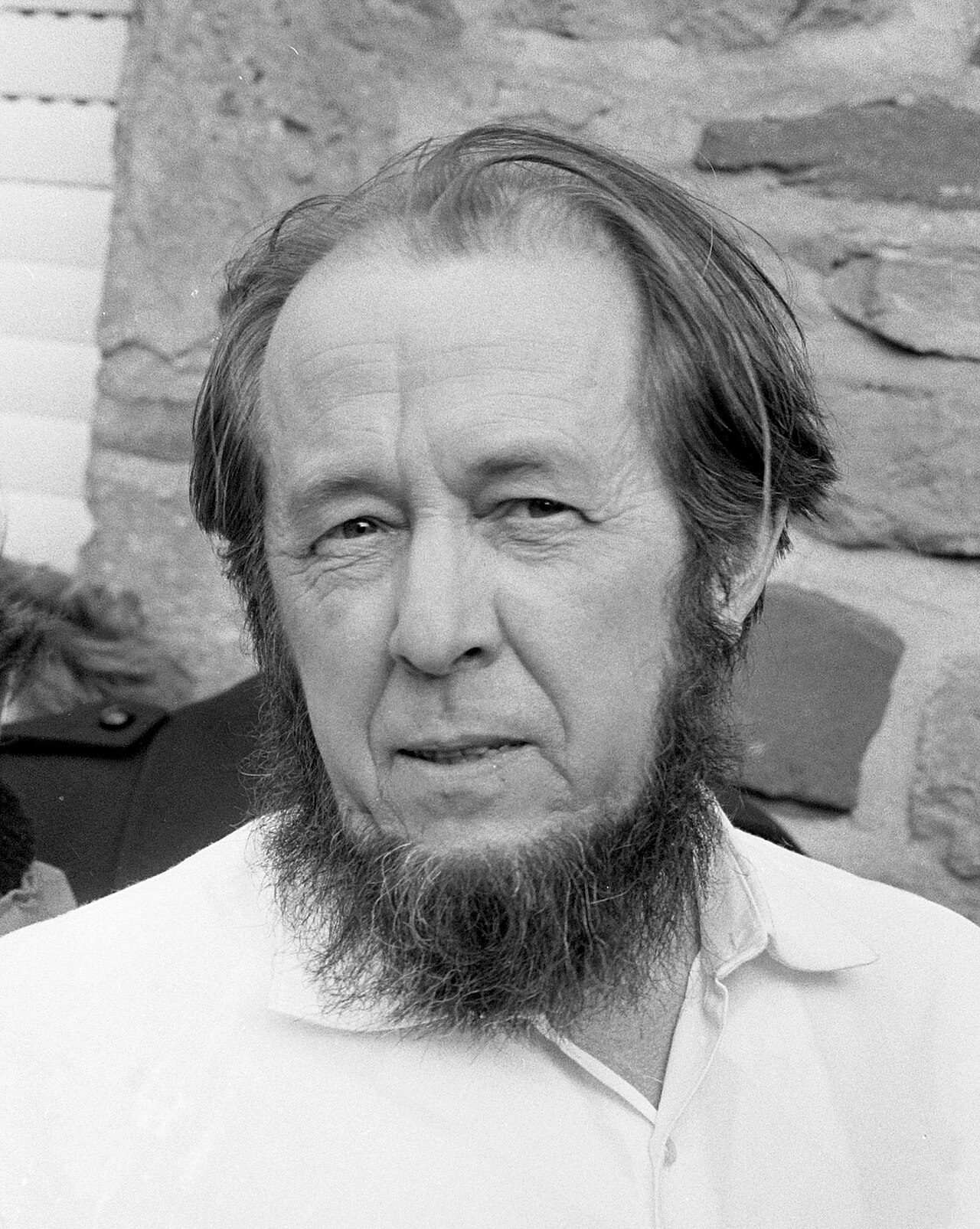
The Gulag Archipelago — Aleksandr Solzhenitsyn, 1973 — TIME Best Nonfiction Book of the 20th Century "The Gulag Archipelago is Solzhenitsyn's attempt to compile a literary-historical record of the vast system of prisons and labour camps that came into being shortly after the Bolsheviks seized power in Russia in 1917 and that underwent an enormous expansion during the rule of Stalin. The work mingles historical exposition and Solzhenitsyn's own autobiographical accounts with the voluminous personal testimony of other inmates that he collected and committed to memory during his imprisonment. The book shattered liberal assumptions about a democratic Lenin and exposed the chain-gang existence of the millions who had lived and died in the archipelago." — Britannica
The Gulag Archipelago, published in Paris in December 1973 after the KGB seized a manuscript copy inside the Soviet Union, is three volumes and more than 1,800 pages. It is based on Solzhenitsyn's own experience, on testimony he collected from more than 200 fellow prisoners — committing much of it to memory because writing it down was too dangerous — and on Soviet archives he was able to access. Time magazine called it the best nonfiction book of the 20th century. David Remnick of The New Yorker wrote that it was impossible to name a book that had a greater effect on the political and moral consciousness of the late 20th century.
What Solzhenitsyn documented was the entirety of the machinery. The arrest. The interrogation. The confession extracted through sleep deprivation, psychological torture, and threats against family members. The sham trial. The transportation in sealed cattle cars to camps thousands of miles from anywhere. The camp itself — with its internal hierarchies, its starvation rations calibrated precisely to produce maximum labor output before death, its informer networks, its arbitrary brutality. He documented the Solovetsky Islands, where the camps had begun. He documented Kolyma, in the Russian Far East, where gold mining in temperatures that reached minus 60 degrees Celsius killed prisoners at a rate that made the other camps look almost humane by comparison.
From 1929 until Stalin's death in 1953, an estimated 18 million people passed through the Gulag system. Estimates of those who died in the camps range from 1.2 million in the most conservative academic assessments to 6 million or more in broader analyses — separate from the executions, the deportations, the collectivization famines, and the Holodomor.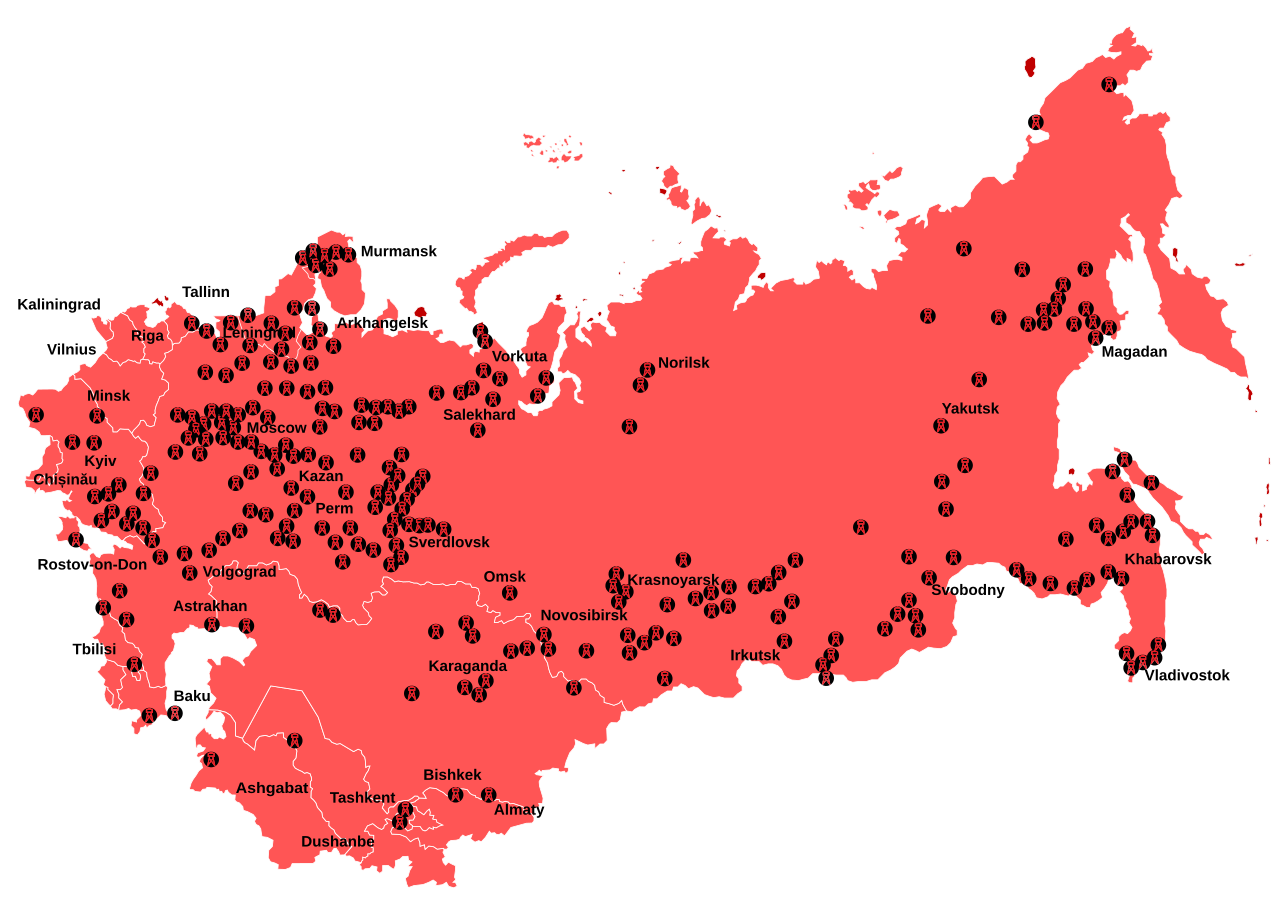
His later work, Two Hundred Years Together, published in Russia in 2001 and 2002, addressed the history of Russians and Jews across two centuries with a directness that produced both admiration and condemnation. Solzhenitsyn argued that the history required mutual accounting — that both Russians and Jews bore responsibility for the events of the revolutionary period in different ways, and that honest reckoning was the only foundation on which genuine understanding could be built. The book has never been published by a major American publishing house. It remains untranslated by any mainstream English-language press. Several scholars have attributed this to the political sensitivity of its contents.
His core moral teaching from The Gulag Archipelago deserves to be stated plainly because it is the antidote to every framework that would reduce this history to simple narratives of ethnic guilt: "The line dividing good and evil cuts through the heart of every human being." The Gulag was built by human beings who had convinced themselves they were building paradise. The lesson Solzhenitsyn drew from eight years inside the system they built was not that one ethnic group or one nation was uniquely capable of evil. It was that the capacity for the kind of evil he witnessed lives in all of us, and that the only protection against it is the moral and spiritual inheritance that the Bolsheviks had set out to destroy.
The Bolshevik Leadership Question: What the Historical Record Actually Shows
This is the part of the conversation that has been suppressed from one direction and weaponized from the other, making honest discussion genuinely difficult. The suppression and the weaponization are both forms of intellectual dishonesty, and both need to be named as such before the facts can be stated plainly.
The suppression: mainstream historical and educational institutions have treated the documented overrepresentation of Jewish individuals in early Bolshevik leadership as too sensitive to discuss directly, leaving the field to bad actors who use the fact in service of antisemitic frameworks that the fact itself does not support. The weaponization: antisemitic movements across the political spectrum have used this historical reality to argue that Bolshevism was a Jewish project, that the crimes of the Soviet state were Jewish crimes, and that Jewish people as a group bear collective responsibility for the Holodomor and the broader Soviet atrocity. This argument is factually wrong, intellectually dishonest, and morally contemptible.The documented historical reality, stated as plainly as the evidence warrants, is this: Jewish individuals were significantly overrepresented in the early Bolshevik leadership relative to their approximately 4% share of the Russian Empire's population. Of the 21 members of the Bolshevik Central Committee elected in August 1917, six were of Jewish background, including Trotsky, Zinoviev, and Kamenev. Of the first Politburo formed in March 1919, three of its seven full members were Jewish. In expanded Soviet cabinet positions through the early 1920s, Jews accounted for roughly 15 to 20% of senior posts.
Key Figures of Jewish Background in Early Bolshevik Leadership
These are factual biographical records from standard historical sources. Stating them is not antisemitism. Refusing to state them would be a different kind of dishonesty.
Why Jews Were Overrepresented: The Historical Explanation That Changes Everything
The question that antisemitic frameworks never seriously engage with — because engaging with it honestly destroys the framework — is why Jewish individuals were overrepresented in revolutionary movements across Europe in the late 19th and early 20th centuries. The answer transforms the demographic fact from evidence of a conspiracy into evidence of something far more comprehensible and far more human.
Jews in the Russian Empire lived under conditions of systematic state persecution. The Pale of Settlement restricted where Jews could live. Pogroms — organized violent attacks on Jewish communities — occurred with regularity, sometimes with the tacit support or active participation of the state. Jews were excluded from civil service, from most universities, from most professions. They were a population that had been told, across centuries, that the existing social order was their enemy and that it would never provide them justice.
Into that context came the revolutionary movement, which promised the elimination of all ethnic and religious hierarchies, the end of state discrimination, and a society in which a person's Jewish origin would be as irrelevant as anyone else's ethnicity. For significant numbers of educated, urbanized young Jews who had experienced state oppression as a direct personal reality, this promise was genuinely, powerfully attractive. They did not join the Bolshevik movement because they were Jewish. They joined it precisely because Bolshevism promised to make being Jewish no longer a liability in Russian society.
Stanislaw Krajewski, "Jews, Communism, and the Jewish Communists — Ten Theses" — Central European University "The correct question is not 'Why did they create communism?' or 'Why is communism Jewish?' but rather 'Why was communism so attractive to Jews?' It was not Judaism or Jewish traditions but the social situation that led Jews to communist movements. Communism is not a Jewish product. Jews were prominent among European communists for the same reason they were prominent in any movement that promised liberation from the conditions imposed on them by existing society."
A parallel that clarifies the logic: Black Americans were overrepresented in the American Communist Party in the 1930s and 1940s relative to their share of the general population, for similar reasons. The Communist Party was, in that period, the only major American political organization actively fighting for racial equality in the South. Overrepresentation in a political movement is almost always explained by the specific circumstances of the overrepresented group, not by any intrinsic property of the group itself.
Furthermore, the scholarly consensus is explicit: the overrepresentation existed at the leadership level, not in the general membership. Of roughly 23,000 Bolshevik party members on the eve of the February Revolution, approximately 364 were identified as Jewish — about 1.6%. The movement was not predominantly Jewish by any reasonable measure.
The Cruelest Irony: How the Soviet State Destroyed Jewish Religious Life
Here is the fact that the "Jewish Bolshevism" framework cannot accommodate without collapsing entirely: the Soviet state that these secular, atheist, thoroughly de-Judaized revolutionaries built was one of the most systematically destructive forces in the history of Jewish religious and cultural life in the 20th century — second only to the Holocaust.
The Yevsektsiya was the Jewish Section of the All-Union Communist Party, established in 1918 with Lenin's personal approval, run by Jews of secular revolutionary background, and dedicated to the total destruction of Torah-observant Jewish life in the Soviet Union. This was not peripheral to the Bolshevik project. It was central to it. The same individuals who are cited as evidence of Jewish control of the Soviet state were running an institutional campaign to annihilate the Judaism of the very communities from which they had come.
Documented Historical Record — The Yevsektsiya's Systematic Destruction, 1918 to 1930 Within twelve years of its founding, the Yevsektsiya had liquidated the centuries-old kehillah communal structure that organized Jewish religious life, closed over 1,000 cheders and yeshivas by 1923, orchestrated the closure of 99 synagogues in Soviet Russia in nine months in 1929 alone, reduced Ukrainian synagogues from over 1,400 in 1914 to 894 by late 1929, banned the teaching of Hebrew, closed Jewish schools, persecuted rabbis, and conducted show trials against Jewish religious institutions. The Yevsektsiya was dissolved by Stalin in 1930 — after which most of its leadership was purged, imprisoned, or executed.
This is the historical reality that renders the "Jewish Bolshevism" framework incoherent as an analytical tool. The people identified as Jewish Bolsheviks were not acting in the interests of Jewish people, Jewish religion, or Jewish culture. They were acting in the interests of an ideology — secular internationalist Marxism — that was explicitly hostile to Judaism, to Christianity, to all religious life, and to every form of ethnic or national identity. Their Jewish birth was biographical background, not ideological motivation. And the Jewish communities they came from were, in many cases, among the primary victims of the movement they helped build.
The Jewish Chronicle's account of this period is unambiguous: the Yevsektsiya's activists "orchestrated show trials against Jewish schools, closed synagogues, persecuted rabbis and ridiculed traditional belief — with zeal often exceeding that of the government itself." Torah-observant Jews — the authentic representatives of Jewish religious civilization — were no friends of Bolshevism, and Bolshevism was certainly no friend of theirs.
Trotsky: The Man Who Built the Red Army and Hated What He Was
Leon Trotsky is the figure most central to this historical discussion and also the most instructive case study in understanding what the Bolshevik Jewish revolutionaries actually were and were not.
Trotsky was born Lev Davidovich Bronstein in 1879 in Yanovka, Ukraine, to a moderately prosperous Jewish farming family. He was given a traditional Jewish upbringing before being sent to secular schools in Odessa and Nikolayev, where he encountered Marxist ideas in his teens. By the time he became politically active, he had entirely repudiated any Jewish identity. He did not practice Judaism, did not speak Yiddish as a political language, did not concern himself with Jewish community interests, and explicitly rejected any suggestion that his Jewish background was relevant to his political work.
He organized and commanded the Red Army through the Russian Civil War — one of the most brutal military campaigns of the 20th century, involving systematic atrocities against civilian populations. He implemented forced conscription, used hostage-taking as a military tool, and oversaw the Red Terror with the full administrative machinery at his disposal. He was, in the assessment of every serious historian of the period, a genuinely brilliant military organizer and a man capable of extraordinary ruthlessness in service of his ideological convictions.
Trotsky also attacked Zionism ferociously. When the Zionist movement in Russia began organizing in the early years of Soviet power, Trotsky was among its most aggressive opponents, viewing it as a distraction from the class struggle and an expression of the kind of nationalist particularism that Marxism was supposed to transcend.
The irony is complete and devastating. Trotsky — cited as evidence of Jewish power in the Soviet state — spent his career attacking Jewish religious life and Jewish nationalist aspirations, building an apparatus that would ultimately destroy both, and was then purged by Stalin in a campaign that was explicitly and publicly antisemitic in character. He was murdered in Mexico in 1940 by a Soviet agent, having been expelled from the country he helped build. The Soviet apparatus later killed or imprisoned the majority of the prominent early Jewish Bolsheviks — Zinoviev, Kamenev, Radek, and dozens more — during the purges of the 1930s.
"The men cited as evidence of Jewish control of Russia were killed by Russia. That single fact should end the analytical framework built around them — but somehow it never does."
Churchill's Warning: Zionism Versus Bolshevism, 1920
In February 1920, Winston Churchill published an article in the Illustrated Sunday Herald with the title "Zionism versus Bolshevism: A Struggle for the Soul of the Jewish People." The article is remarkable for its clarity, its historical prescience, and the intellectual honesty with which it engaged a question that most of his contemporaries were either ignoring or distorting.
Primary Source — Illustrated Sunday Herald, February 8, 1920, Winston Churchill "In violent opposition to all this sphere of Jewish effort rise the schemes of the international Jews. The adherents of this sinister confederacy are mostly men reared up among the unhappy populations of countries where Jews were persecuted on account of their race. Most, if not all, of them have forsaken the faith of their forefathers, and divorced from their minds all spiritual hopes of the next world... The struggle which is now beginning between the Zionist and Bolshevik Jews is little less than a struggle for the soul of the Jewish people."
Churchill's framing deserves careful reading, because he was making a distinction that the "Jewish Bolshevism" framework deliberately collapses. He distinguished between what he called "national Jews" — people of Jewish origin who maintained loyalty to their countries, their communities, and in many cases their faith — and what he called "international Jews" who had abandoned all of these in service of a revolutionary ideology hostile to civilization itself. His argument was that these were two fundamentally different phenomena, that conflating them was an injustice to the majority of Jewish people who had nothing to do with Bolshevism, and that Zionism represented the constructive alternative: a nationalism that channeled Jewish political energy toward building rather than destroying.
Churchill also noted something of great practical importance: that the association of Judaism with Bolshevism was producing antisemitic violence against Jewish communities throughout Russia and Eastern Europe, directed at people who were themselves victims of the Bolshevik regime rather than its beneficiaries. The pogroms carried out during the Russian Civil War against Jewish villages in Ukraine — many of them by the White Army forces Churchill broadly supported — were targeting communities that had no connection to the Bolshevik leadership. This was the injustice he was trying to address.
The Extraordinary Historical Parallel: As Bolshevism Collapsed, Zionism Rose
Churchill's 1920 article identified a genuine tension that history would resolve in a deeply ironic way. He framed Zionism and Bolshevism as rivals for the political allegiance of Jewish people. He was right. And the historical arc of the following three decades bore out his analysis in ways he could not have fully anticipated.
Bolshevism's treatment of its own Jewish participants tells the essential story. The Yevsektsiya was dissolved by Stalin in 1930 and its leadership systematically purged. Zinoviev and Kamenev were executed in 1936. Radek died in a labor camp in 1939. Trotsky was assassinated in 1940. By the late 1930s, the Jewish figures who had been so prominent in the early Bolshevik leadership had been systematically eliminated by the movement they helped build. Stalin's late-career antisemitism was explicit. In 1952 he told the Politburo that "every Jewish nationalist is the agent of the American intelligence service." The Doctors' Plot of 1952, which targeted prominent Jewish physicians with fabricated accusations of conspiracy, was a preview of what historians believe would have been a broader antisemitic purge had Stalin not died in 1953.
Simultaneously and not coincidentally, the Zionist movement was building toward its culminating achievement. The Balfour Declaration of 1917 had given international legitimacy to the concept of a Jewish homeland. The Holocaust had made the argument for it unanswerable in moral terms. And in May 1948, the State of Israel declared independence. Remarkably, the Soviet Union — the same state that had spent decades persecuting Zionism and sending Zionist activists to the Gulag — was the first country in the world to grant Israel de jure diplomatic recognition. Stalin calculated, incorrectly, that an Israeli state might weaken British influence in the region.
The parallel is not coincidental. Churchill had identified a genuine competition for the political soul of a people living under conditions of extraordinary pressure. By 1948, the competition had been decided. Bolshevism had consumed and then destroyed its own Jewish participants. Zionism had built a state. The movement that promised liberation through the abolition of all national and religious identity had delivered oppression, purge, and murder to the very people some of its most prominent leaders had come from. The movement that promised a national home had built one.
Churchill's Warning Has Shifted: When Political Zionism Became What It Replaced
Churchill declared Zionism the victor in his 1920 framing, and in the narrow historical sense he was right. But the warning he gave about Bolshevism — that it represented the abandonment of a people's foundational spiritual inheritance in service of a secular political project aimed at global transformation — now applies, with mounting documentary evidence, to what political Zionism has become in the century since he wrote it. Acknowledging this is not antisemitism. It is the same standard of intellectual honesty Churchill himself applied. And it is a standard that a significant and growing number of Jewish scholars, rabbis, and communities are applying loudly and at great personal cost.
Theodor Herzl, the founder of modern political Zionism, was a secular Viennese journalist. His 1896 pamphlet Der Judenstaat — The Jewish State — articulated a vision that was explicitly and fundamentally defensive: a persecuted people needed a homeland where they could live without the constant threat of the state turning against them. His 1902 novel Altneuland envisioned that homeland as a model of pluralism, where Arab and Jewish citizens would live as equals under a society built on the progressive European values of his time. The vision was a refuge, not an empire. A home, not a fortress of regional domination.
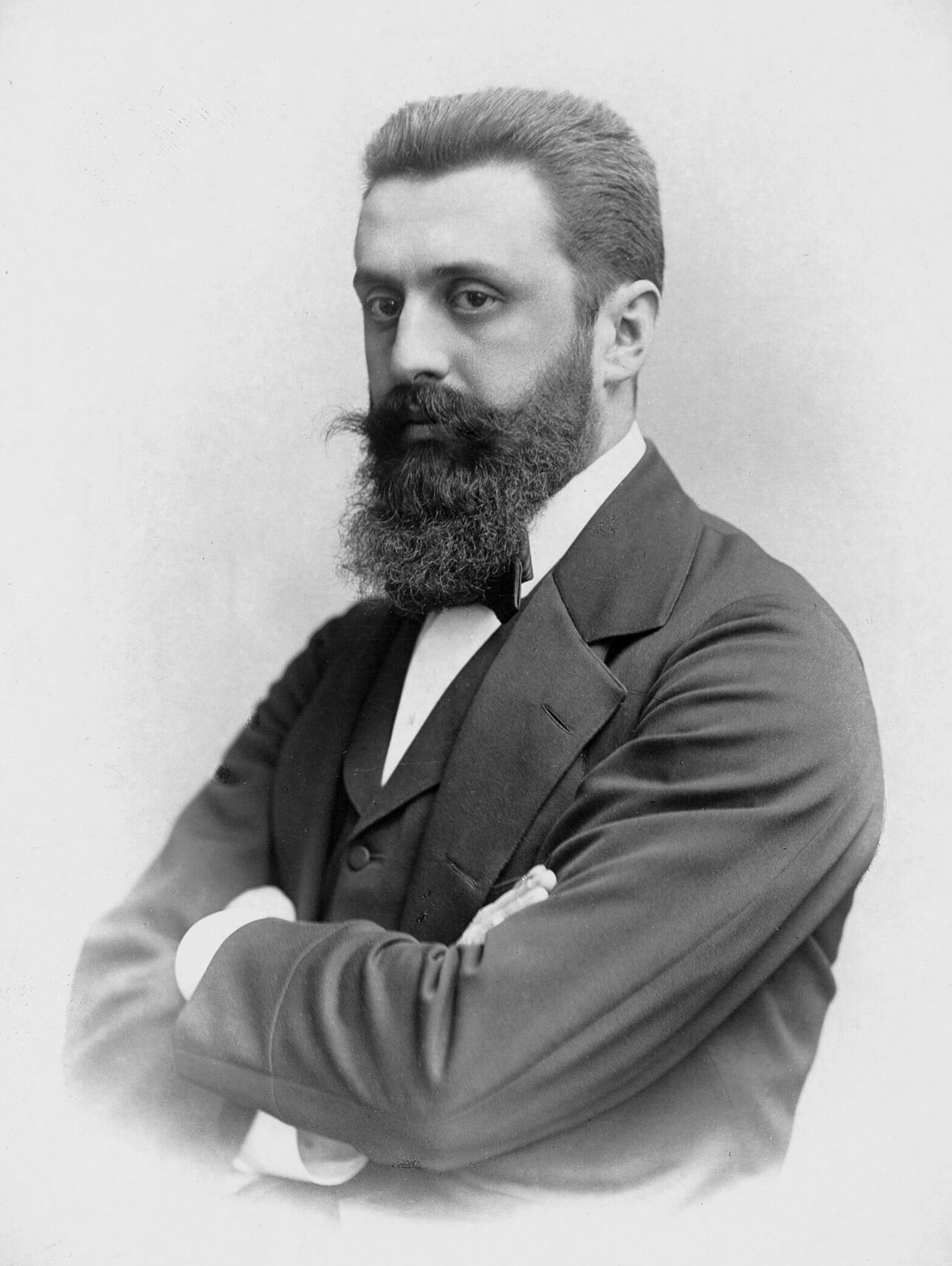
What Herzl envisioned and what political Zionism became are separated by a distance that demands honest examination. The early cultural Zionist Ahad Ha'am — who was present at the first Zionist Congress in 1897 — warned almost immediately that the movement risked repeating the moral failures of every other nationalist project in history. He wrote that if the Jews displaced the Arab inhabitants of Palestine and treated them as they themselves had been treated in the diaspora, they would have built a state but destroyed the ethical foundation that justified building it. His warning was not a marginal dissent. It was the founding tension of the entire enterprise, and it was never resolved.
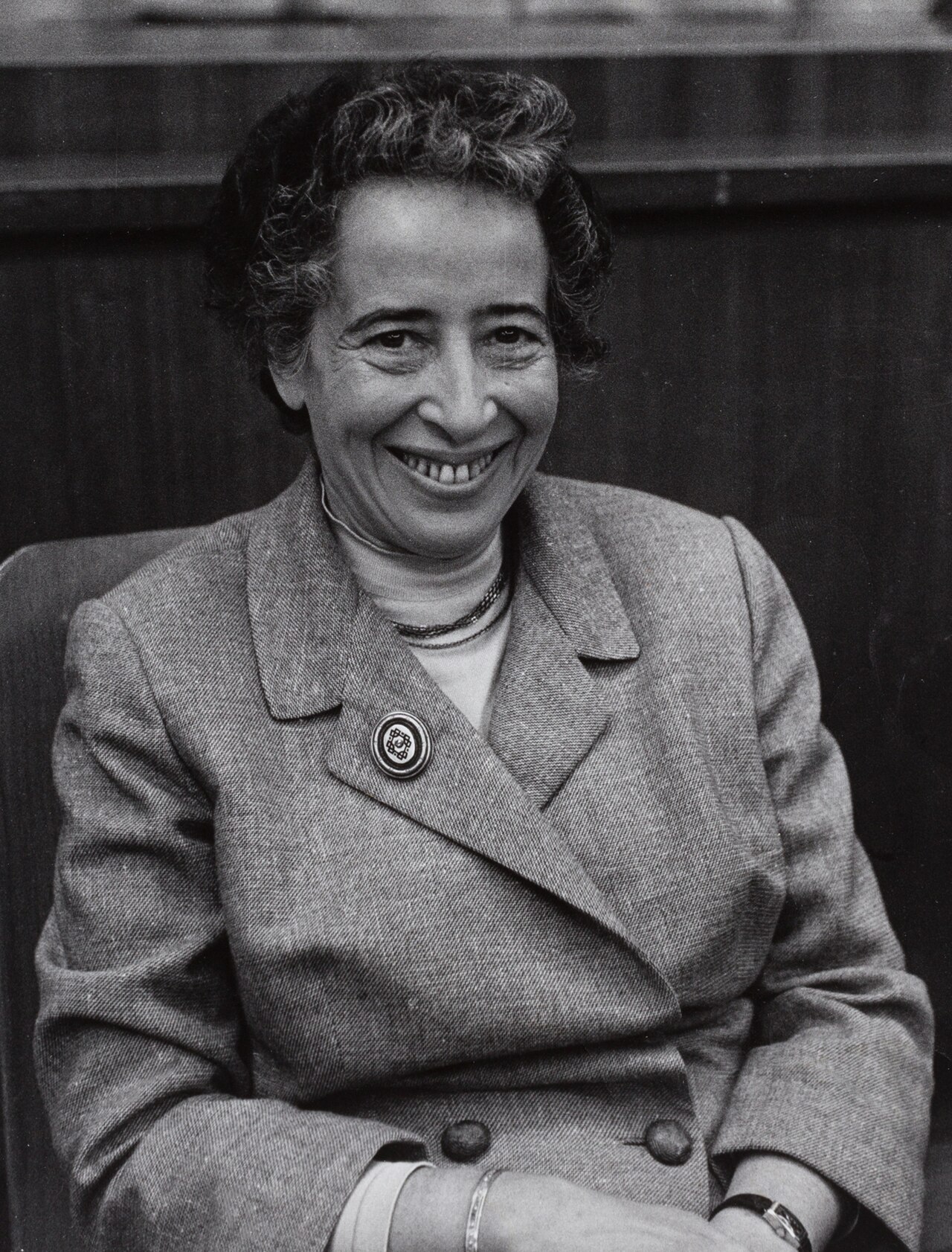
Hannah Arendt, perhaps the most profound Jewish political thinker of the 20th century, wrote in The Origins of Totalitarianism and in her essays on Zionism that she feared Jewish nationalism would reproduce the logic of the European nationalisms that had persecuted Jewish people for centuries. She was not an anti-Zionist in the simple sense — she wanted a Jewish homeland. But she warned explicitly that a state built on ethnic exclusivity, surrounded by populations it had displaced, sustained by external military and financial support rather than genuine regional integration, would become exactly the kind of garrison state that could not survive without permanent conflict. She wrote this in the late 1940s. Her accuracy, assessed from 2026, is almost unbearable to sit with.
The Torah-observant Jewish community has its own version of this argument, one that predates both Arendt and the current political moment, and one that is far more theologically radical. The Neturei Karta — literally "Guardians of the City" in Aramaic — and the Satmar Hasidic dynasty, following the teaching of Rabbi Yoel Teitelbaum's foundational text VaYoel Moshe, have argued since before Israeli independence that political Zionism is not merely a tactical mistake but a theological heresy. Their argument is this: according to the Torah, the ingathering of the Jewish people to the land of Israel is meant to occur through divine redemption, not through secular political power and military conquest. To build Israel through arms, diplomacy, and the coercive displacement of another people is to seize by human force what was meant to come through covenant. It is, in the Satmar reading, the same sin as Bolshevism's secular atheists committed — the substitution of human political will for the divine order the tradition actually describes.
This is not a fringe position retrieved for polemical convenience. It was the mainstream position of Orthodox European Judaism before the Holocaust made the Zionist case impossible to oppose on moral grounds. The Holocaust transformed what had been a genuine internal Jewish debate into a debate that could no longer be conducted in public without appearing to validate the people who committed it. And that is precisely the propaganda mechanism that Churchill's warning anticipated — the weaponization of a legitimate moral claim to foreclose all scrutiny of what is done in its name.
"The Holocaust established an unassailable moral foundation for the necessity of a Jewish homeland. That foundation is legitimate and will remain so. Political Zionism has used that foundation not to protect the homeland but to protect every policy decision made by the Israeli state from the scrutiny that democratic accountability requires. Criticism of Israeli government policy has been systematically made equivalent to denial of the Holocaust itself. This is not a defense of Jewish people. It is a political operation designed to place one state's policy choices beyond the reach of the democratic discourse that governs every other state in the Western alliance."
Compare the mechanism directly with what Churchill described in Bolshevism. The Bolsheviks used the genuine suffering of oppressed peoples — the pogroms, the poverty, the exclusion — as the moral justification for a revolutionary project that eventually bore no relationship to the liberation it claimed to deliver. The suffering was real. The moral claim was legitimate. The use of that legitimate moral claim to suppress all criticism of what the movement actually did is what Churchill identified as the corrupting core of the Bolshevik project. The parallel is not a smear. It is a structural observation about how ideological movements use moral foundations to immunize themselves from accountability.
The Abandonment Churchill Specifically Named
Churchill's 1920 article described the dangerous revolutionary Jews as "men who have forsaken the faith of their forefathers." He meant this literally — they had abandoned Torah observance, Sabbath, prayer, the ethical framework of the tradition, the entire spiritual inheritance of the communities they came from. And he identified this abandonment, not their Jewish birth, as the source of the danger they represented. People without roots in any tradition — without the obligations that religious and communal identity impose — are free to pursue ideological projects with a totality that the rooted person cannot achieve. The Bolshevik leaders were dangerous not because they were Jewish but because they were ideologues who had cut the cord to everything that might have moderated their ideology.
What is the equivalent observation about political Zionism in its current form? The Judaism of the Torah — the Judaism of the prophets, of the ethical tradition, of the obligation to the stranger encoded in Leviticus, of Micah's instruction to "do justice, love mercy, and walk humbly" — is not compatible with permanent military occupation of a civilian population, collective punishment as a policy instrument, the demolition of homes, the systematic dispossession of people from land their families have worked for generations, or the deployment of the world's most sophisticated propaganda apparatus to ensure that none of these things can be reported on, discussed, or criticized in the political institutions of America's democracy without the speaker being labeled an antisemite.
This is not a statement about whether Israel has a right to exist or to defend itself. It is a statement about the distance between the ethical tradition that the founders of Zionism claimed to represent and the policies that contemporary political Zionism actually executes and defends. The Torah-observant Jewish communities who oppose Zionism on theological grounds are making this same point with greater precision than any outside observer can: that the state being built and the ideology being used to build and defend it has no authentic relationship to the Judaism of the forefathers whose memory is invoked to justify it.
Churchill warned that what he called "international Jews" — the secular revolutionary ideologues — had abandoned their forefathers' faith and were pursuing a project of global transformation through political and military power. He contrasted this with "national Jews" — those who maintained genuine connection to their religious and communal inheritance and who sought, through Zionism, something human and comprehensible: a home.
The tragedy of the century that followed is that the victory of the national over the international — of Zionism over Bolshevism — did not produce the home Churchill hoped for. It produced a permanent geopolitical project that has, in its dominant political form, abandoned the ethical restraints of the religious tradition as thoroughly as Bolshevism did, that uses the moral capital of historical suffering as a political weapon as cynically as any revolutionary movement has ever done, and that pursues what can only honestly be described as a vision of permanent regional and global control — over American foreign policy, over Western political discourse, over the military architecture of the Middle East — that bears no resemblance to the persecuted community seeking safety that Herzl described and that Churchill defended.
"Churchill said Zionism would be the salvation of the Jewish soul from the Bolshevik project that promised liberation and delivered domination. What honest analysis now requires acknowledging is that political Zionism, in its current institutional form, has repeated the same arc: promising security and delivering an empire of influence that its own forefathers would not have recognized and its own religious tradition explicitly forbids."
This is the argument that cannot be made in American political life without consequences. It is the argument that Jewish scholars, Jewish rabbis, and Jewish communities — from Neturei Karta to the growing movement of progressive diaspora Jews who call themselves anti-Zionist out of fidelity to Jewish ethical tradition rather than hostility to it — are making with increasing urgency. It is the argument that Churchill's framework, correctly understood, actually predicts. And it is the argument that the suppression of this article's broader subject matter — the Holodomor, the Bolshevik leadership, the Yevsektsiya, the neoconservative arc — has been specifically designed to prevent from being assembled in one place where its logic can be followed from beginning to end.
What This History Does to the World: The Distortion That Never Healed
The suppression of this history — the Holodomor, the Bolshevik leadership composition, the Soviet destruction of Jewish religious life, the Churchill framework, the extraordinary parallel between Bolshevism's collapse and Zionism's triumph — has produced distortions in contemporary political understanding that compound with every generation they go unaddressed.
When the Holodomor is absent from Western curricula while other genocides of comparable or lesser scale are taught in detail, it creates a hierarchy of acknowledged suffering that shapes how people understand the past and how they evaluate the present. A student who graduates without knowing that 4 million Ukrainians were deliberately starved to death by the Soviet state in 1932 and 1933 is not equipped to understand contemporary Ukrainian national identity, the depth of Ukrainian resistance to Russian domination, or the historical roots of the current conflict. They are, in a meaningful sense, historically unarmed.
When the documented overrepresentation of Jewish figures in early Bolshevik leadership is treated as too sensitive to discuss in educational settings, it is left to be discussed in settings where it will be discussed badly — by people who use the fact not to understand the historical conditions that produced it but to construct frameworks of collective guilt that the fact itself does not support. The suppression of honest historical inquiry does not make difficult facts disappear. It makes them more dangerous by leaving them in the hands of the dishonest.
When the distinction between secular revolutionary ideology and religious or ethnic identity is not clearly drawn and consistently maintained — when the crimes of men who had abandoned Judaism are attributed to Judaism itself — it produces an antisemitism that is self-perpetuating and historically illiterate. And when that antisemitism then targets Torah-observant Jewish communities that were themselves victims of Bolshevism, the historical injustice is compounded into absurdity.
From Reagan to Ukraine: The Neoconservative Arc That Made This War Inevitable
History does not repeat itself. But it does rhyme, sometimes with a precision that is almost too on-the-nose to credit if you haven't followed the sourced trail from the beginning. What follows is not a conspiracy theory. It is a documented sequence of policy decisions, made by identifiable people, for identifiable reasons, that produced the predictable result of a devastating war on the exact territory where the Bolsheviks committed their worst atrocities a century earlier.
The Doctrine That Set Everything in Motion
On February 18, 1992 — fourteen months after the Soviet Union formally dissolved — Pentagon officials drafted a classified document called the Defense Planning Guidance for fiscal years 1994 to 1999. It was written under the supervision of Paul Wolfowitz, then Undersecretary of Defense for Policy, and his deputy Scooter Libby. It was leaked to the New York Times on March 7, 1992, and what it said was extraordinary in its frankness.
The Wolfowitz Doctrine — Defense Planning Guidance, February 18, 1992 — Leaked Pentagon Document "Our first objective is to prevent the re-emergence of a new rival, either on the territory of the former Soviet Union or elsewhere, that poses a threat on the order of that posed formerly by the Soviet Union. This is a dominant consideration underlying the new regional defense strategy and requires that we endeavor to prevent any hostile power from dominating a region whose resources would, under consolidated control, be sufficient to generate global power."
Read that again. The Soviet Union had just dissolved. Russia was not an adversary. It was a broken, economically devastated country desperately trying to build democratic institutions from scratch, begging to be integrated into the Western order that had just won the Cold War. And the first thing the American national security apparatus did — in a classified document — was declare that preventing Russia from becoming a great power was the primary objective of American defense strategy.
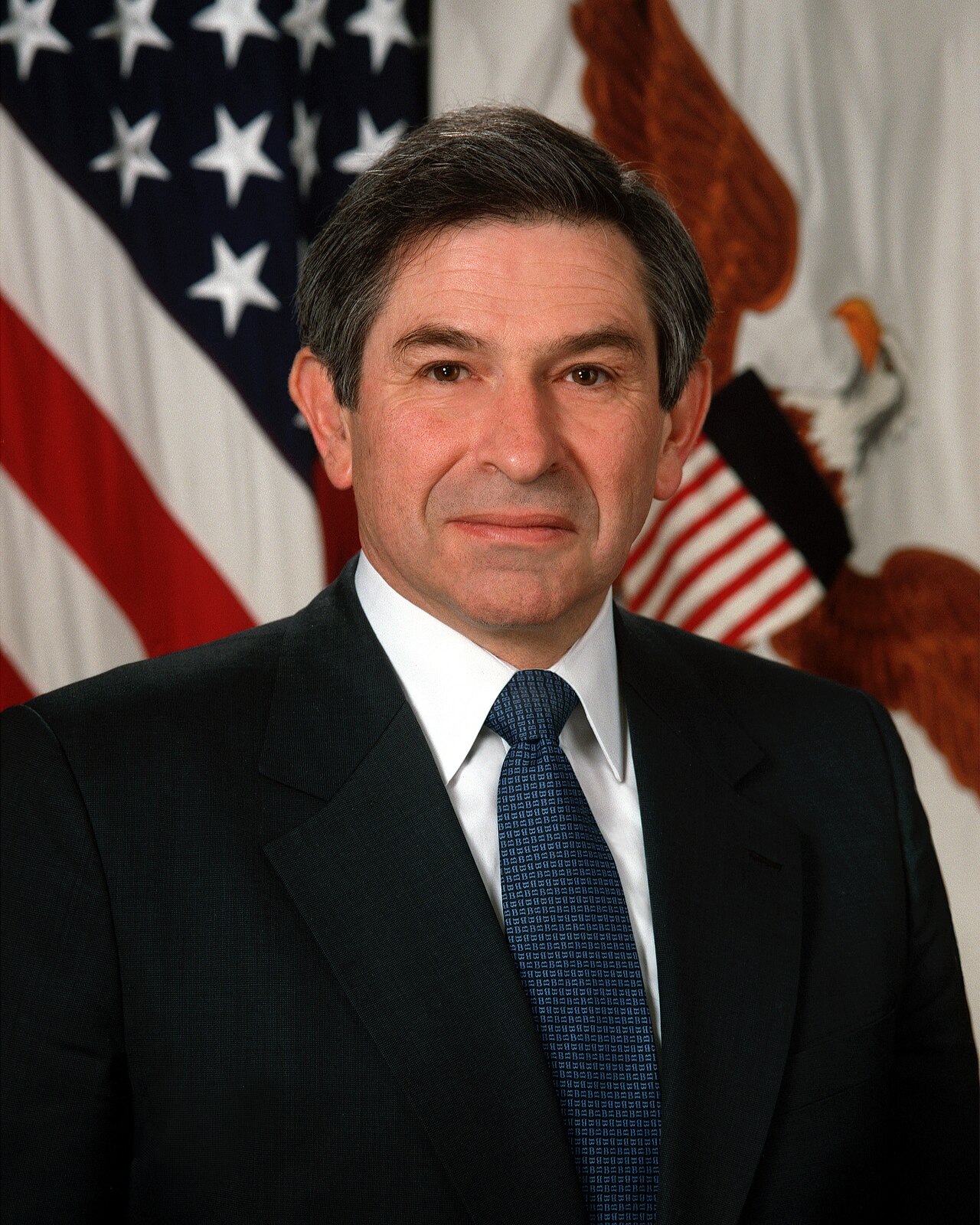
Wolfowitz was a student of Albert Wohlstetter at the University of Chicago, a protégé of the Scoop Jackson neoconservative network. He served as a defense policy official under Reagan, as Deputy Secretary of Defense under Bush, as a key architect of the Iraq War, and as an enduring presence in the think-tank ecosystem that has shaped American foreign policy doctrine continuously across multiple administrations. His Doctrine did not die when he left government. It became the operating software of American strategic thinking.
Reagan Through Clinton: How Russia Was Systematically Kept Out
Boris Yeltsin mounted a tank in August 1991 to defend Russia's nascent democracy against a Communist Party coup. He was, in that moment, everything the West claimed to want from a post-Soviet Russia: a democratic leader, a reformer, a man who had staked his life on the proposition that Russia's future lay with the West rather than with the old order. His request to join NATO went, as Newsweek documented, unanswered.
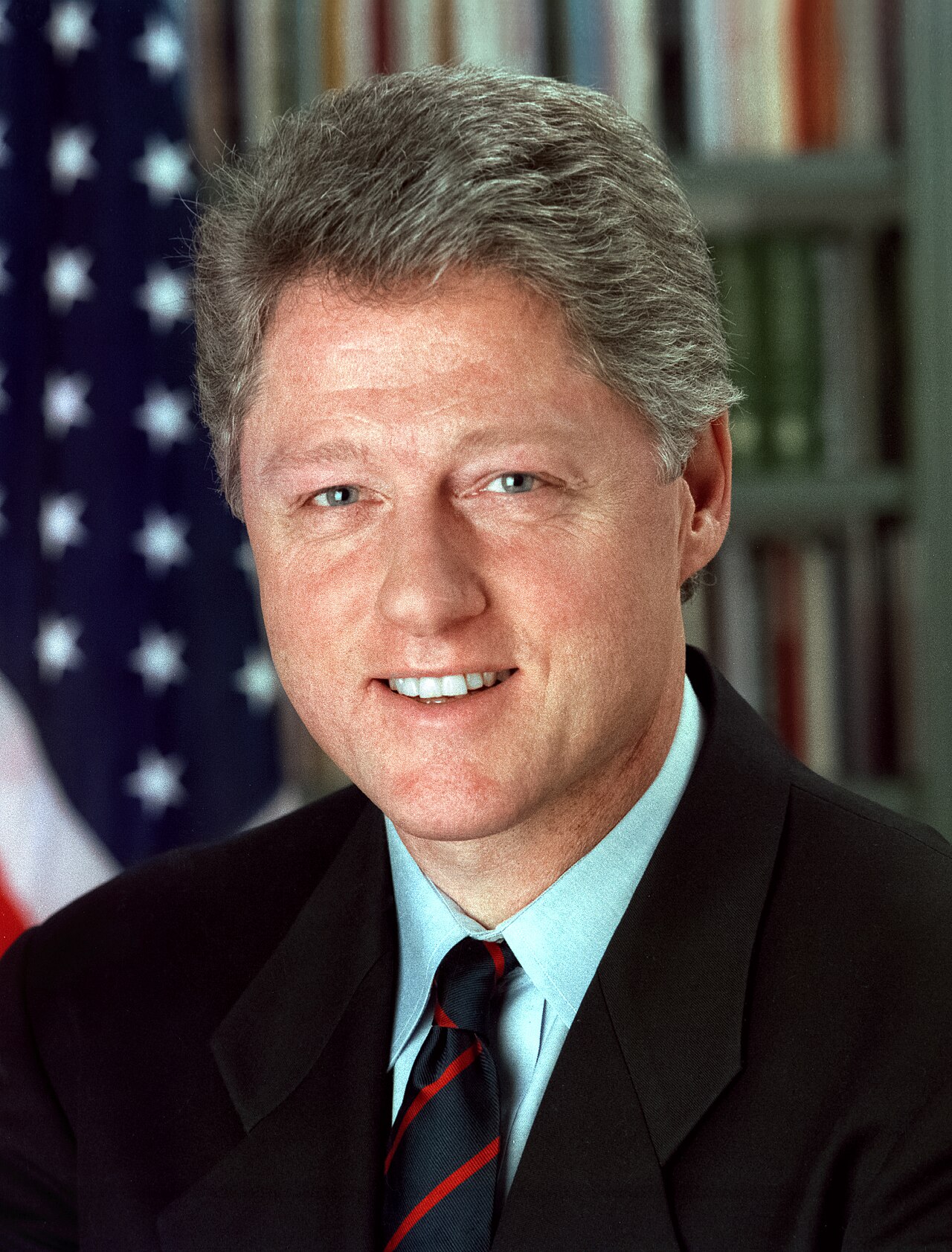
What happened instead was the Clinton administration's debate over NATO expansion, in which Secretary of State Madeleine Albright argued for expansion and Defense Secretary William Perry strongly opposed it. Perry understood what George Kennan — the architect of Cold War containment strategy — understood: that expanding NATO into former Soviet territory was not a defensive measure but a provocation that would produce exactly the kind of revanchist Russian nationalism it claimed to be guarding against. Albright prevailed. Over the next 25 years, NATO would add 16 new members and move approximately 1,000 miles closer to Moscow.
The intellectual architects of NATO expansion were, to an extent that has never been seriously examined in mainstream American discourse, the same neoconservative network that had built the Wolfowitz Doctrine. Richard Perle — who had been assistant secretary of defense for international security policy under Reagan and was the most prominent advocate for NATO expansion through the 1990s — had been Henry Jackson's foreign policy aide. He had written the Jackson-Vanik Amendment. He had co-authored the 1996 Clean Break policy paper for Israeli Prime Minister Benjamin Netanyahu, arguing for preemptive war in the Middle East. And he was, simultaneously, one of the most forceful voices for the NATO expansion policy that would ensure Russia could never find a stable security arrangement in its own neighborhood.
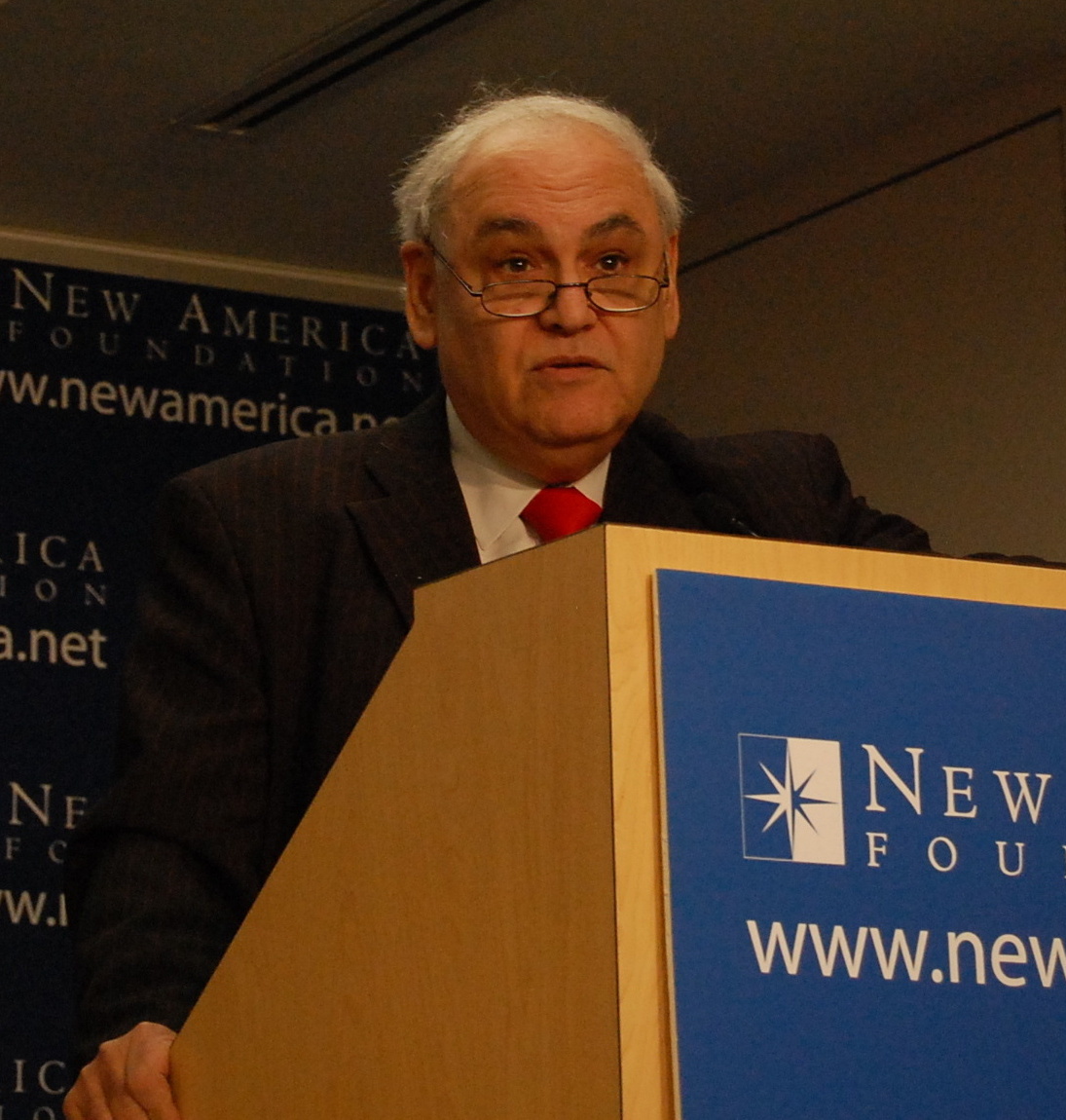
The connection between these commitments — pro-Israel, anti-Russia, NATO expansion, regime change — is not coincidental. It reflects a coherent strategic vision in which a powerful, sovereign Russia represents a geopolitical obstacle to the kind of American-Israeli dominated European and Middle Eastern order that the neoconservative framework envisions. A Russia integrated into NATO would be a Russia with legitimate security interests and the standing to complicate American and Israeli strategic planning in ways that a perpetually excluded, resentful Russia does not. The exclusion was the point.
Obama and the Broken Promise That Lit the Fuse
By the time Barack Obama took office, the neoconservative foreign policy framework had survived the political damage of the Iraq War and quietly reconstituted itself within Democratic foreign policy circles. Victoria Nuland, who would become the central figure in U.S. policy toward Ukraine, was a State Department official who moved fluidly between Republican and Democratic administrations, had been Dick Cheney's chief of staff for national security, and was married to Robert Kagan, one of the founding figures of the Project for the New American Century.
The 2014 Euromaidan crisis and the subsequent U.S.-backed government transition in Kyiv — which included the famous leaked phone call in which Nuland discussed which Ukrainian political figures should fill the new government — pushed Russia toward the confrontation that the neoconservative strategic framework had been building toward since 1992. Putin's subsequent annexation of Crimea and backing of Donbas separatists was not, from Moscow's perspective, aggression. It was the predictable response of a country that had watched its security buffer systematically dismantled over 22 years while its requests for integration were systematically ignored.
Secretary of State James Baker had promised Gorbachev in 1990, in a meeting documented by the National Security Archive, that NATO would not move "one inch eastward" if Germany reunified. The promise was made. It was broken. By 2022, NATO had moved not one inch but a thousand miles eastward, and Ukraine — the territory where the Bolsheviks had committed their worst crimes against the Ukrainian and Russian people a century earlier — had become the proxy battleground for a confrontation that four consecutive presidential administrations of American foreign policy had made essentially unavoidable.
Ukraine: The Territory the Bolsheviks Couldn't Finish
Here is where the historical arc becomes genuinely haunting, because the territory at the center of this 21st-century catastrophe is the exact territory where the 20th century's worst atrocities against the Slavic Christian world were committed. The Holodomor was perpetrated specifically against Ukrainian peasants — the people who represented the deepest roots of Ukrainian national and religious identity. The Soviet state's attempt to destroy Ukraine as a distinct national and cultural entity was the central project of the famine. It failed. Ukraine survived, wounded and depleted but alive.
The administrative borders that the Bolsheviks drew within the Soviet Union — borders that were never intended to be international frontiers — became international frontiers overnight when the USSR collapsed in 1991. They created a Ukraine that included substantial Russian-speaking populations in its eastern and southern regions, populations whose political loyalties were divided, whose historical memories were complicated, and whose relationship to Ukrainian national identity was unresolved. This is not a problem that emerged in 2014. It was a problem that the Bolshevik administrative decisions of the 1920s and 1930s created and that the Soviet collapse made explosive.
The war that is now devastating Ukraine is, in a very real sense, the last unfinished business of Bolshevik territorial engineering. The Bolsheviks drew lines that should not have been drawn, across communities that should not have been divided, and a century later those lines are being contested in blood. The people dying on both sides of the front line are, in many cases, the grandchildren of people who survived the Holodomor. They are fighting a war whose deepest roots lie in decisions made by the same secular revolutionary ideology that murdered millions of their ancestors.
Zelensky, Jewish Reconstruction, and What the Patterns Actually Show
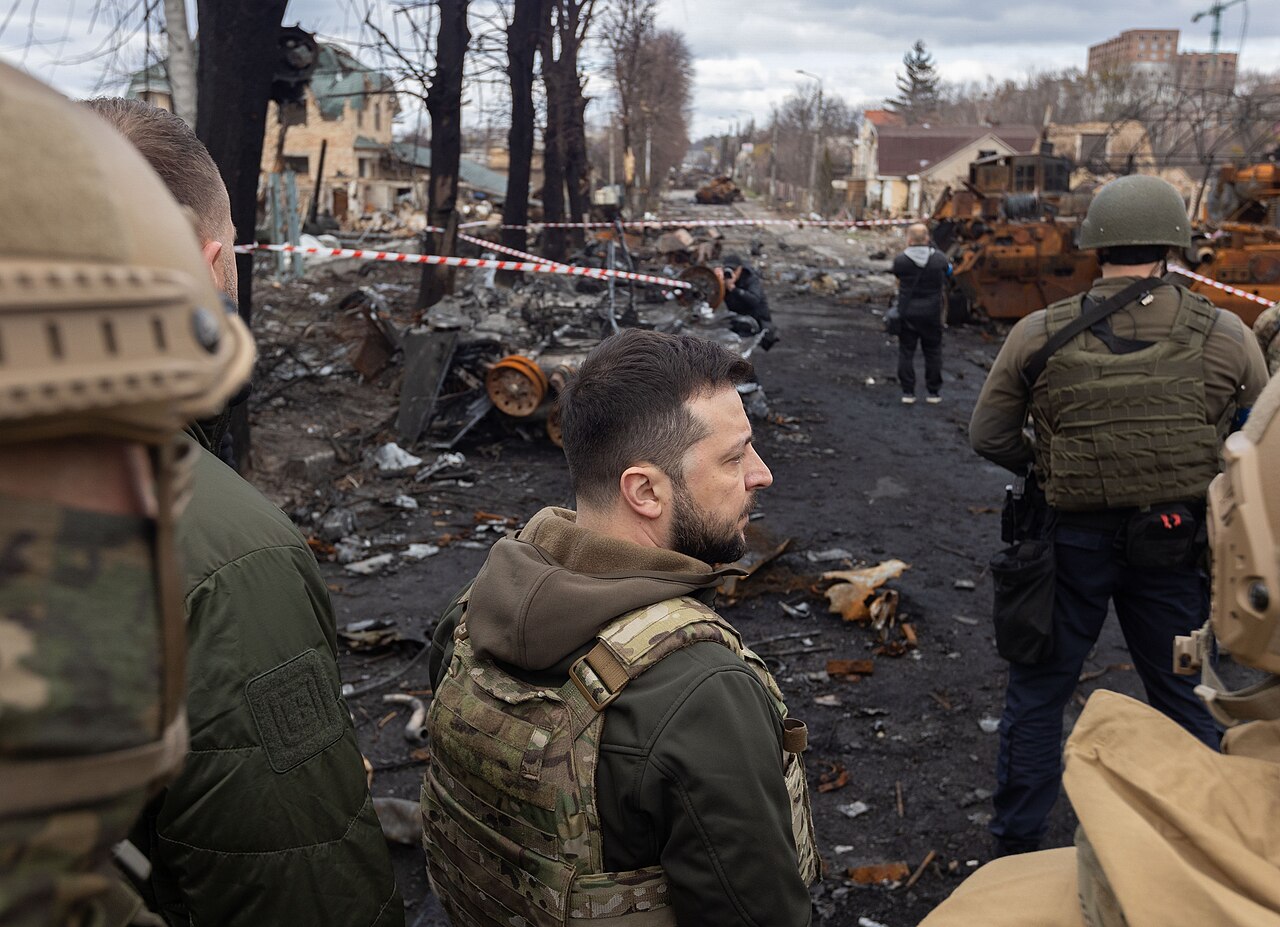
Volodymyr Zelensky is Jewish. He described his background to the Times of Israel as "an ordinary Soviet Jewish family. Most Jewish families in the Soviet Union were not religious." He is secular, as the vast majority of post-Soviet Ukrainian Jews are, in the specific way that 80 years of Soviet state atheism produced. His grandfather served in the Red Army fighting the Nazis. Three of his great-uncles were murdered by the Nazis, among the 1.5 million Ukrainian Jews killed in the Holocaust. Before the war, his Jewishness was considered so unremarkable in Ukraine's post-Soviet political culture that it was barely a factor in his 2019 election campaign. Ukraine is a country with deep historic antisemitism in its past and a Jewish president in its present. That paradox is real and it matters.
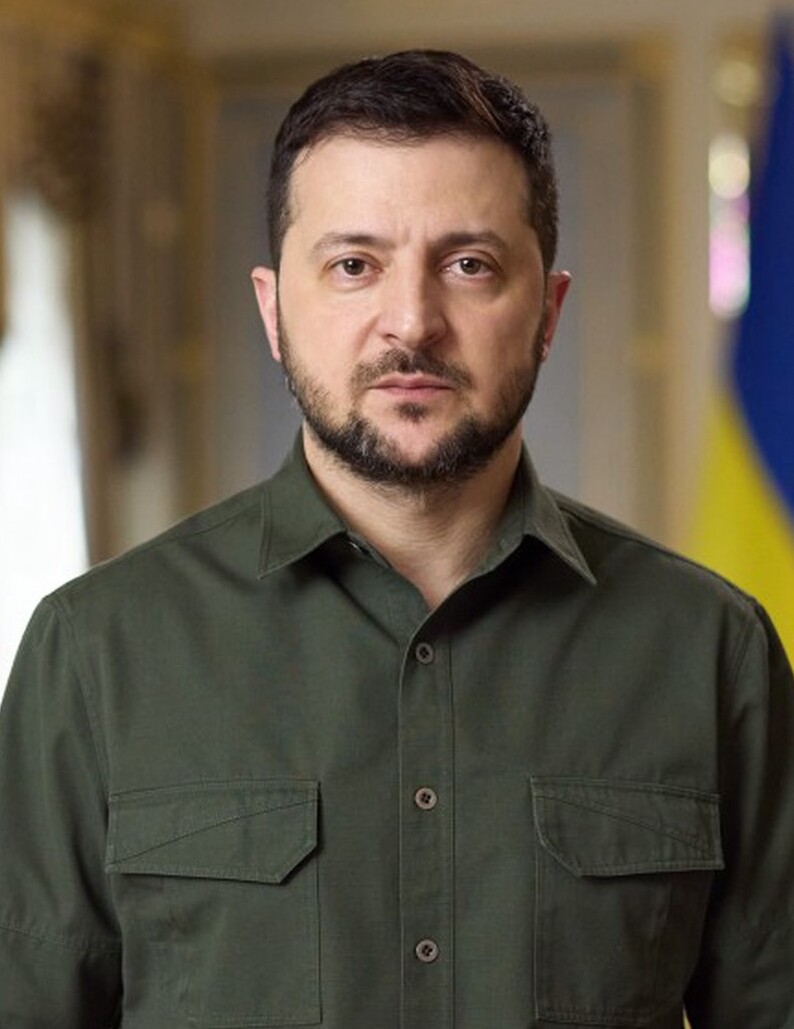
What Zelensky himself has said about Israel and Ukraine deserves to be quoted directly rather than paraphrased. After the Russian invasion, he explicitly told his people: "I want Ukraine to be like Israel" — a country that has learned to live, function, and thrive under permanent threat, that has built formidable military capability out of existential necessity, and that has maintained national cohesion despite continuous external pressure.
Simultaneously, documented Jewish organizational involvement in Ukraine has been substantial. Jewish Federations of North America have raised over $100 million for the Ukraine emergency. Jewish organizations are among the largest providers of humanitarian assistance inside the country. Since the invasion, over 15,000 Ukrainian Jews have relocated to Israel. A December 2023 poll by the Kyiv International Institute of Sociology found 69% of Ukrainians sympathizing with Israel — and only 1% with Palestinians.
The Pattern That Honest Analysis Cannot Ignore The Bolsheviks — many of whose leadership had Jewish backgrounds — tried to destroy Ukrainian national identity through famine and cultural obliteration. They failed. A century later, the foreign policy framework that prevented Russia from finding a stable security arrangement and made a war over Ukraine almost inevitable was built significantly by neoconservative strategists with deep institutional connections to Israeli strategic interests. Ukraine's current president is Jewish and has explicitly modeled his vision of Ukraine's future on Israel. Jewish organizations are among the largest contributors to Ukraine's reconstruction. These patterns are documented. They do not prove a conspiracy. They do raise questions about institutional interests and foreign policy alignment that the American public has a right to ask and a right to have answered honestly.
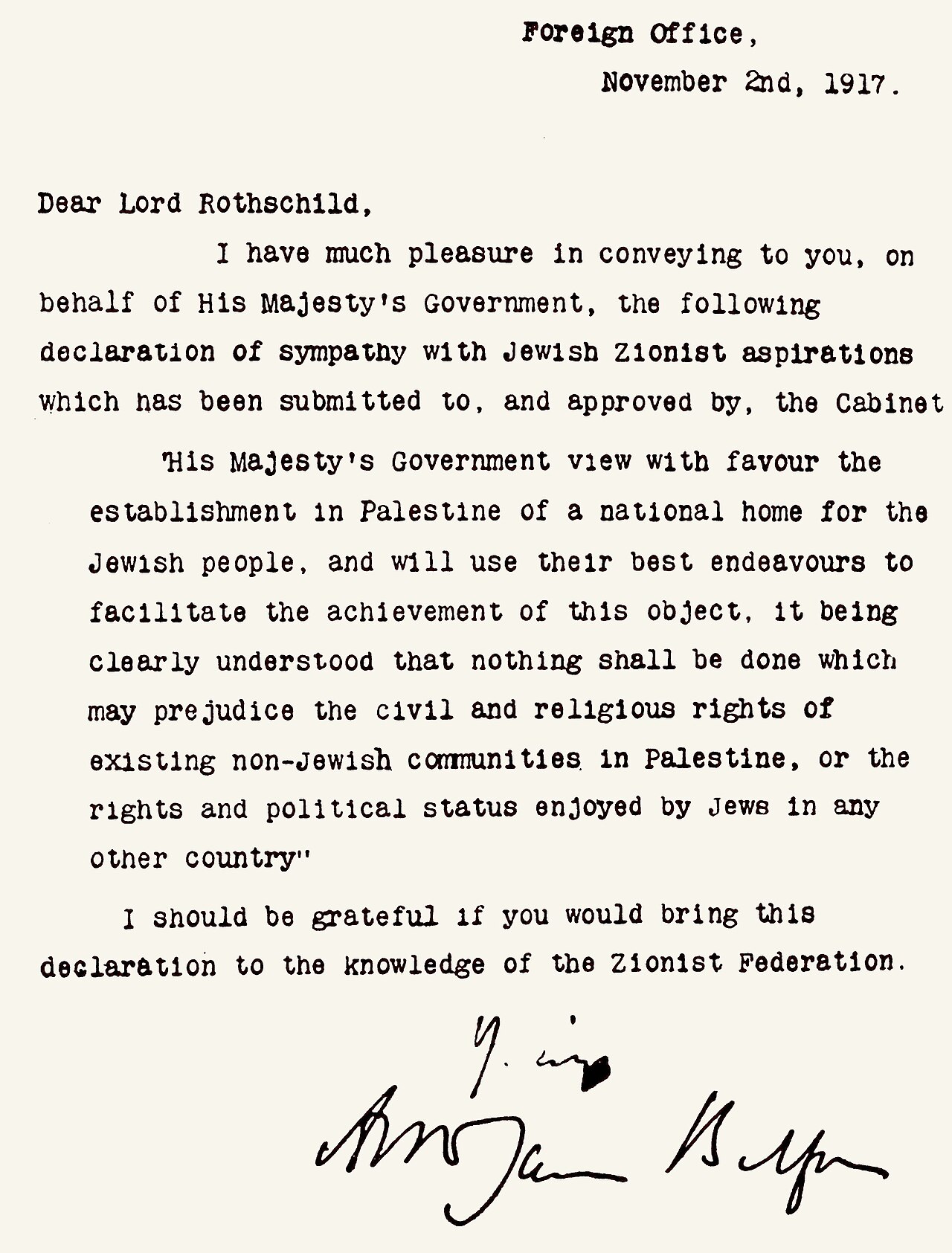
The Balfour Declaration of 1917 — the document that set Israel's founding in motion — was a letter addressed to Lord Walter Rothschild, written by British Foreign Secretary Arthur James Balfour, expressing British government support for a Jewish homeland in Palestine. Britain hoped, as Britannica documents, that the statement would rally Jewish opinion in the United States to the Allied side in World War I. It worked. The intersection of Jewish diaspora political influence and great power strategic calculation that produced the Balfour Declaration in 1917 is the same intersection that has, at every subsequent juncture of major consequence, shaped the geopolitical environment in which ordinary people — Jewish, Ukrainian, Russian, American, Palestinian — have had to live and die.
The honest conclusion that the evidence supports is this: the patterns are real, the institutional connections are documented, the consequences are catastrophic, and the conversation that would allow democratic societies to evaluate and potentially correct the policy framework that produced these consequences is the exact conversation that has been systematically made too politically dangerous to have. That suppression — the same suppression that buried the Holodomor, that made Yagoda's name unknown to Israeli students, that kept Solzhenitsyn's Two Hundred Years Together out of American publishing houses — serves specific interests. Naming those interests is not bigotry. It is the minimum that serious analysis requires.
What Honest History Requires
The Holodomor happened. It was genocide. Between 3.5 and 7 million human beings — most of them Ukrainian peasants — were deliberately starved to death by a state that took their food, sealed their borders, and let them die. They deserve to be named, mourned, and taught with the same seriousness and the same institutional commitment that attends the teaching of other 20th-century genocides. The fact that they are not reflects a failure of Western moral seriousness that should produce shame in any institution that claims to be in the business of historical education.
Jewish individuals were overrepresented in the early Bolshevik leadership. That is a documented fact. It is explained by specific historical conditions — centuries of state persecution that made the existing social order the enemy of an entire community — and not by any property of Jewish identity, religion, or culture. The Bolsheviks who were of Jewish background had, in virtually every documented case, explicitly and thoroughly abandoned Jewish religious identity. They then built a state that systematically destroyed the Jewish religious communities they had come from. Holding Torah-observant Jews, or Jewish people as a group, responsible for the crimes of men who had repudiated everything those communities stood for is not historical analysis. It is bigotry wearing historical clothing.
Churchill saw this clearly in 1920. He named the tension between two competing claims on Jewish political allegiance — the revolutionary international and the national homeland movement — and he named it with a precision that history has largely vindicated. Zionism won that competition, not by being morally perfect, but by offering something Bolshevism could not: an actual community, an actual place, an actual inheritance rather than the cold promise of a classless future that never arrived and that consumed its own architects in the process.
And the distortions produced by suppressing all of this — the absent genocide, the avoided demographic facts, the unchallenged conflation of secular ideology with religious identity, the curriculum shaped by political considerations rather than historical accuracy — compound into a public that is systematically unprepared to understand the world it is living in. That is not acceptable. The dead of the Holodomor deserve better. The Torah-observant Jewish communities that Bolshevism destroyed deserve better. The historical record deserves better. And the living citizens who are making decisions about contemporary foreign policy, contemporary alliances, and contemporary conflicts without access to this history deserve better than what they are being given.
Honest history is not comfortable. It was never supposed to be.