Every significant political realignment in American history has arrived before it had a name. The Progressives of the early 20th century were reformers and agitators and muckrakers before anyone called them Progressives. The neoconservatives were disillusioned liberals and Cold War hawks before Irving Kristol gave the movement its label and its intellectual architecture. Naming a movement is not merely descriptive. It is constitutive. It creates the category that allows people to recognize themselves in each other, to cohere around a set of shared commitments, and to build something durable out of what was previously just diffuse discontent. Something is coalescing in American politics right now that does not yet have a proper name. This article is an attempt to give it one — and to explain why it matters.
Something Is Shifting and Nobody Has Named It Yet
The numbers, when you actually look at them, are startling. A December 2025 poll from the IMEU Policy Project and YouGov surveyed 1,287 Republicans and found something that would have been considered nearly impossible a decade ago: a majority of Republican voters under 45 said they would prefer to support a candidate who reduces taxpayer-funded weapons to Israel in the 2028 Republican presidential primary. Fifty-one percent. A majority also opposed renewing the current $38 billion, ten-year weapons agreement between the United States and Israel. More than half opposed entering a proposed $76 billion, 20-year agreement currently being negotiated.
A March 2025 Pew survey found that negative views of Israel among Republicans under 50 rose from 35% in 2022 to 50% in 2025. A fifteen-point shift in three years. Megyn Kelly, not exactly a progressive firebrand, said publicly at AmericaFest: "Charlie was with young people every day for a living, and in particular, young Republicans. And he was seeing what I was seeing in my neck of the conservative woods, which was: this party is changing on the issue of Israel."
The Polling Numbers That Changed Everything 51% of Republicans under 45 now prefer reducing weapons aid to Israel in the 2028 primary (IMEU/YouGov, Dec 2025). Negative views of Israel among Republicans under 50 jumped 15 points from 2022 to 2025 (Pew). 80% of young Americans say both parties do such a poor job that voters need more choices (GenForward, 2025). 19% trust the federal government most or all of the time (Harvard IOP, Fall 2025). Only 13% believe the country is headed in the right direction.

But this shift is not only about Israel. It is a symptom of something deeper. The Harvard Kennedy School's Institute of Politics Youth Poll found that 40% of young Americans in fall 2025 volunteered negative descriptors for both parties simultaneously. Only 19% of young Americans trust the federal government to do the right thing most or all of the time. Just 13% believe the country is headed in the right direction. These are not partisan numbers. They are civilizational numbers. They describe a generation that has concluded, with considerable evidence to support the conclusion, that the existing political framework is not capable of addressing the problems it has created.
What is emerging is not nihilism, though it can look like it from the outside. It is something closer to a demand for honesty. A refusal to accept that political identity requires accepting the whole package, tribal loyalty intact, questions forbidden. A generation of primarily conservative-leaning young Americans who want to keep what is genuinely worth keeping in the conservative tradition while releasing what has been corrupted, captured, or simply proven wrong by the evidence of their own lived experience.
Who They Actually Are: The Portrait
Before naming this movement, it is worth attempting an honest portrait of the people inside it, because they are being mischaracterized from every direction simultaneously — and it is doing real damage to the possibility of understanding what is actually happening.
They are not antisemites. The conflation of skepticism toward Israeli foreign policy with hatred of Jewish people is a rhetorical weapon deployed specifically to prevent the scrutiny that American national interest requires. These young conservatives are making a distinction that is elementary to anyone operating in good faith: you can question the terms of a foreign alliance without hating the people who live in the allied country. They apply this distinction consistently. Their criticism of Saudi Arabia does not mean they hate Arabs. Their criticism of China does not mean they hate Chinese people. Their criticism of the terms of the U.S.-Israel relationship does not mean they hate Jewish people. The accusation of antisemitism, deployed automatically whenever Israel policy is questioned, is itself an intellectual form of corruption that this generation is, to its credit, increasingly resistant to.
They are not isolationists. The word gets thrown at anyone who questions military interventionism as though withdrawal from the world and withdrawal from pointless wars are the same thing. They are not. You can believe in robust American engagement through trade, diplomacy, cultural exchange, and selective military deterrence while believing that funding permanent wars in foreign countries, fusing your military infrastructure with a foreign state's armed forces, and allowing foreign lobbying organizations to shape your legislative agenda is a categorically different and categorically unacceptable thing.
They are not simply populists. Populism is an emotional category. It describes a style more than a set of commitments. What distinguishes this emerging movement from mere populism is that its skepticism of institutions is reasoned rather than reflexive. These are people who have read the documents, looked at the money, traced the influence, and arrived at their conclusions through something that resembles actual inquiry. That is fundamentally different from the tribal rage that populism tends to produce.
What they are is something that does not have a clean name in the current political vocabulary. And the absence of a name is not trivial. It means they cannot easily cohere. It means their energy gets absorbed into existing political structures that do not represent their actual commitments. It means the movement remains diffuse and susceptible to capture by bad-faith actors on every side who want to claim their energy without honoring their actual values.
Charlie Kirk and the Generation That Refused to Forget
No single figure captures the internal contradictions of this generational shift more precisely than Charlie Kirk. The founder of Turning Point USA has constructed what is arguably the most consequential conservative youth organization in American political history. AmericaFest fills arenas. The TPUSA campus network spans hundreds of universities. His podcast reaches millions of listeners every week. For a generation of young right-leaning Americans, Kirk was not merely a media commentator. He was a trusted voice in a landscape where every other trusted voice had, at some point, revealed itself to be something other than what it claimed.
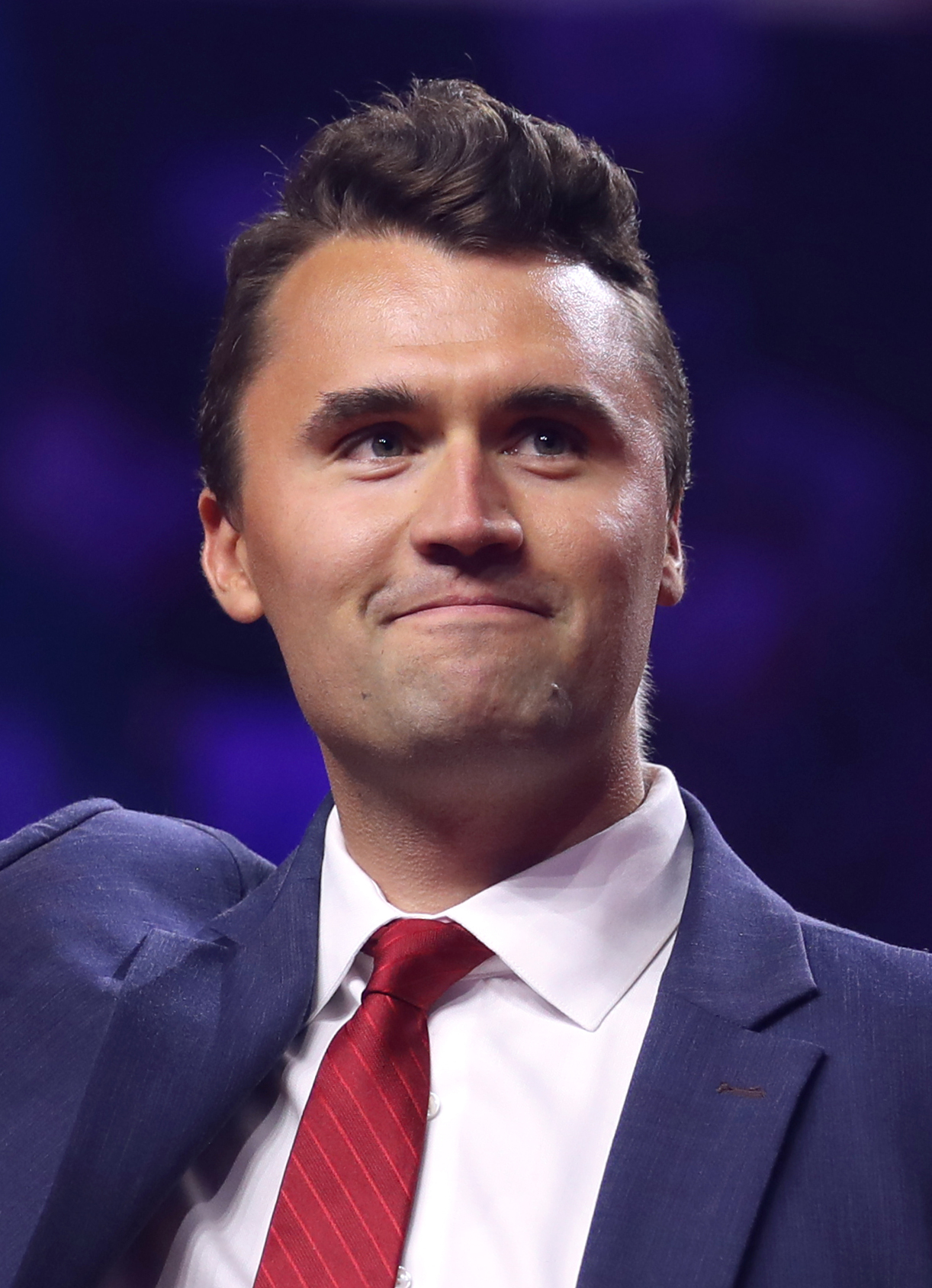
What happened next — the evolution of that trust, and what it produced — is one of the most instructive and under-analyzed stories in contemporary American politics.
For years, Kirk was among the most reliable voices for unconditional American support of Israel. He wore his Christian Zionism openly and defended it without qualification. He pushed back hard against any suggestion that AIPAC's influence in American domestic politics deserved serious scrutiny. He was, in this respect, entirely aligned with the neoconservative consensus that had dominated Republican foreign policy thinking for three decades. Then something shifted. As the war in Gaza generated footage and documentation that became increasingly difficult to rationalize, as his own polling and audience feedback revealed that the young conservatives who filled his venues were moving in a direction his public positions had not yet acknowledged, Kirk began — carefully at first, then with increasing directness — to say what his viewers were already saying. He named AIPAC's financial leverage over electoral outcomes. He questioned whether unconditional military support served identifiably American interests. He started using language about the relationship between American foreign policy and foreign lobbying that would have been treated as disqualifying in his earlier career.
The institutional response was immediate, targeted, and entirely predictable. Conservative media figures who had been collaborators and allies challenged him on air. Donor pressure arrived through the usual channels. The social enforcement mechanisms of the conservative establishment — the quiet withdrawal of platforms, the orchestrated criticism, the suggestion that he had crossed a line that did not officially exist but everyone understood — were brought to bear with particular intensity. Kirk was told, in the various currencies that institutional power uses to communicate, that there were questions he was permitted to raise in public and questions he was not. The foreign policy consensus that had shaped Republican orthodoxy for thirty years was not, apparently, open for reconsideration.
His audience watched every move of it. And what they saw confirmed, with a clarity that no amount of framing could obscure, exactly what they had already begun to believe: that the institutional pressure applied to prevent certain questions from being asked in public is itself the most important evidence that those questions deserve answers.

On July 13, 2024, at a campaign rally in Butler, Pennsylvania, a gunman opened fire on Donald Trump as he addressed a crowd of tens of thousands. Trump survived. One attendee was killed. Two others were critically injured. The shooter, a 20-year-old named Thomas Matthew Crooks, was eliminated by Secret Service seconds after firing eight rounds from a rooftop with a direct sightline to the stage — a rooftop that law enforcement had been warned about and left unguarded.
Young Americans watched it happen in real time. The footage circulated within minutes — the crack of gunfire, Trump dropping behind the podium, the chaos sweeping through the crowd, and then the image that would define the political atmosphere of the year that followed: Trump rising, blood on his face and ear, fist raised toward the crowd, a visceral symbol of survival and defiance that no campaign team could have staged. The image went everywhere instantly. It became one of the defining visuals of the decade before the rally had even ended.
What followed in the days and weeks after Butler was a phenomenon that deserves honest documentation, because it shaped the political psychology of a generation in ways that have been almost entirely ignored by the media institutions that claim to cover American politics. The documented security failures were extraordinary — multiple confirmed reports of the shooter surveilling the venue hours before the event, multiple confirmed reports of law enforcement personnel being made aware of a suspicious individual, a roof with an unobstructed sightline to the stage left unpatrolled. The official explanations that followed satisfied almost no one who examined them with any care. And in the information environment that young Americans actually inhabit — not cable news, not major newspapers, but independent podcasts, social media, and primary source documentation that anyone with a browser can access — the questions multiplied faster than any institution could manage.
"A Harvard Institute of Politics survey found that 50% of young Republicans believed there was more to the Butler shooting than official accounts acknowledged. Their specific theories varied. Their underlying conviction — that the institutions responsible for transparency were not being transparent — was both widespread and, given what the documented record showed, not unreasonable."
This is documented territory. The specific theories that circulated varied widely in plausibility and in the nature of their claims. What matters for the purposes of this article is not any particular theory but the underlying conviction that produced them — the belief, shared by a majority of young Republicans surveyed, that the gap between what institutions said had happened and what had actually happened was significant. And it matters to understand why that conviction was not simply paranoia. It was the conclusion of a generation that had already, through documented and verifiable cases, learned that the gap between institutional claims and institutional realities can be catastrophic.
They had watched foreign lobbying organizations with primary allegiance to a foreign state shape American legislative outcomes while presenting themselves as advocates for shared American values. They had watched think tanks funded by foreign-aligned donors be cited as authoritative sources of independent American strategic analysis with no disclosure of the underlying financial relationships. They had watched a pattern in which the institutional media's reaction to questions about these relationships was not engagement but accusation — not the honest examination of documented influence, but the deployment of the word "antisemitism" as an automatic response to any scrutiny, regardless of its merit, to end the conversation before it could produce inconvenient conclusions.
And then they watched a 20-year-old walk to within 130 meters of a presidential candidate speaking to a crowd of tens of thousands, with documented prior warnings, and be permitted to fire eight rounds before being stopped.
"Butler did not create their skepticism. It confirmed it. The anger that followed was not manufactured. It was the reaction of a generation that had already been taught, by verifiable evidence, that institutions lie — and that the people who ask the wrong questions pay a price for it."
The connection to Charlie Kirk is this: the audience that watched Kirk's evolution on Israel and foreign policy also watched Butler. The audience that watched the institutional machinery apply pressure to Kirk for asking questions that his viewers were already asking also watched the institutional machinery apply its usual techniques to the questions being raised about July 13th. And when Kirk — on his platform, to his audience — declined to perform the reassurance that the institutional consensus was demanding, and refused to foreclose questions that had not been adequately answered, his credibility with that audience deepened rather than diminished.
Because he was doing what they had come to value above almost anything else in a public figure: refusing to pretend to certainty he did not have, declining to perform the dismissiveness that institutional loyalty requires, and treating the people in his audience as adults who could be trusted to examine evidence and reach their own conclusions. In an environment where institutional dishonesty had become so normalized as to be almost invisible, that kind of honesty — genuinely costly, not costless — is the only form of trust that holds. And it is the only form of trust that the Sovereign Realist generation, shaped by everything described in this article, will ever accept.
What Broke the Old Conservatism
To understand what this new movement is reaching for, you have to understand what it is departing from. And what it is departing from is a conservatism that was captured, in the 1970s and 1980s, by a set of commitments that were never authentically conservative at all.
The neoconservatives who shaped American foreign policy from the Reagan era through the Bush administration were not conservatives in any meaningful philosophical sense. They were former liberals, Trotskyist internationalists in some cases, Cold War hawks whose primary commitment was to the use of American power as an instrument of global transformation. They believed, with a fervor that bordered on religious, that American military force could and should remake the political architecture of other societies. This is not conservatism. This is the exact opposite of conservatism.
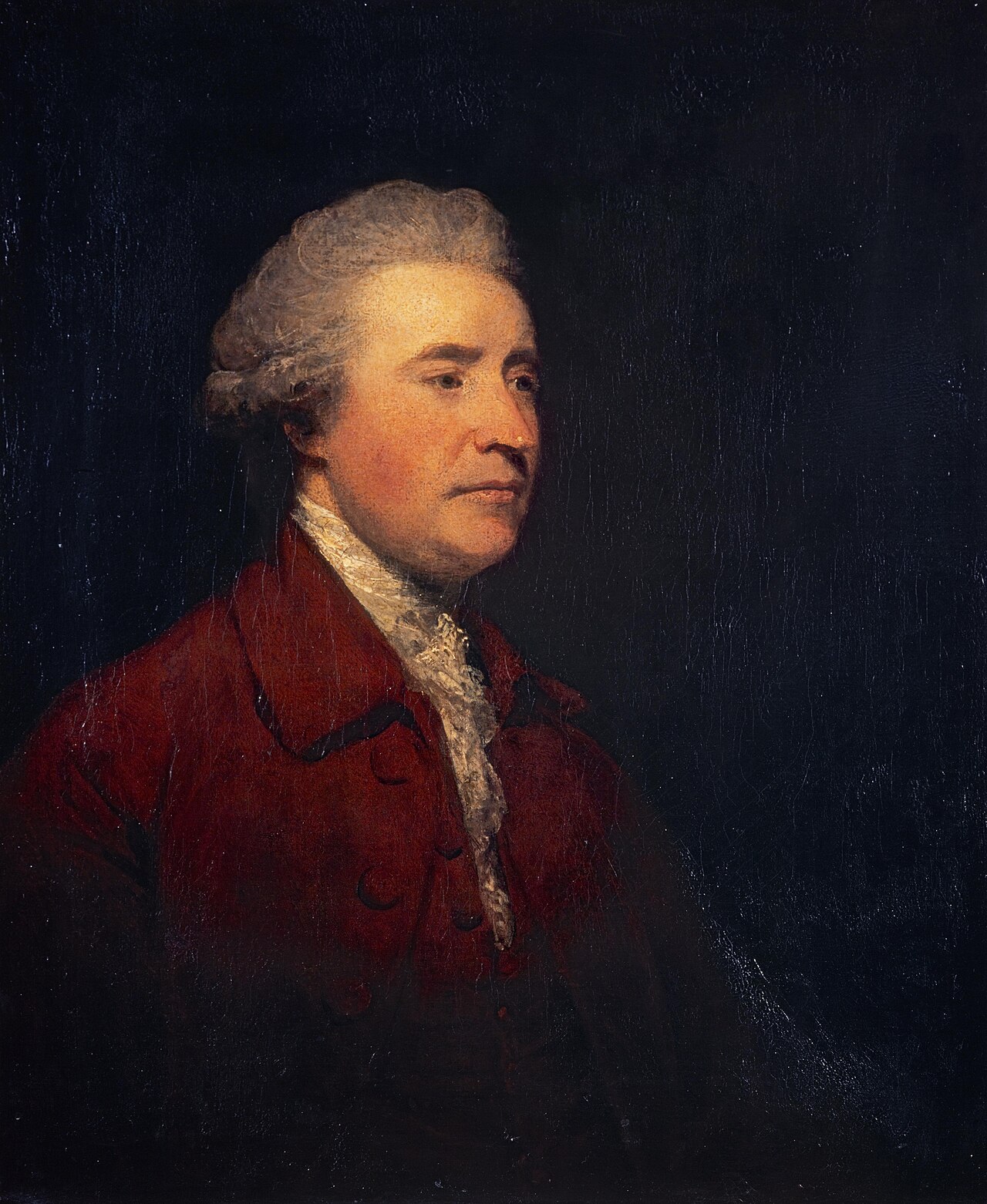
Edmund Burke, the intellectual father of the conservative tradition, spent his entire career arguing against exactly this kind of ideologically-driven interventionism. The French Revolution, which he opposed so vehemently, was precisely the project of remaking society from above according to abstract ideological principles. The neoconservatives were Burkean conservatives in the way that Robespierre was a Burkean conservative.
"It is with infinite caution that any man ought to venture upon pulling down an edifice which has answered in any tolerable degree for ages the common purposes of society, or on building it up again without having models and patterns of approved utility before his eyes."
— Edmund Burke, Reflections on the Revolution in France, 1790. Burke's warning against ideological transformation of complex societies — a warning the neoconservatives who shaped post-Cold War American foreign policy demonstrably ignored.
The evangelical Christian Zionism that fused with neoconservatism to produce the foreign policy consensus of the George W. Bush era was also not a traditional conservative position. Treating the geopolitical interests of a foreign state as a theological obligation of American Christians is a relatively recent doctrinal invention, largely traceable to the Scofield Reference Bible published in 1909 and the dispensationalist theology it popularized. A 2025 survey by Infinity Concepts and Grey Matter Research found that only 29% of evangelical Christians under 35 now believe that Jews are the chosen people in a theological sense that creates political obligations, compared to 50% or higher in all older age brackets. The doctrinal foundation of Christian Zionism is eroding among the very generation it was supposed to capture.
What remained after the neoconservative and Christian Zionist layers were added to conservatism was a hollowed-out shell. The authentic Burkean commitments — to organic social evolution, to the wisdom embedded in inherited institutions, to the prudence that resists abstract ideology, to the priority of national interest honestly assessed — were replaced by a set of foreign policy commitments that served specific interest groups while being presented as universal American values. The young conservatives turning away from this package are not abandoning conservatism. They are attempting to recover it.
The Philosophical Tradition They Are Reaching For Without Knowing It
Here is something remarkable: the emerging political sensibility of these young conservatives is, philosophically, a synthesis of two traditions that are almost never combined and that most people assume to be opposed. It draws simultaneously on classical conservatism in the Burkean tradition and on American pragmatism in the tradition of Charles Sanders Peirce, William James, and John Dewey.
The Burkean Root
Edmund Burke did not distrust reason. He distrusted what he called "abstract reason" — the tendency of ideologues to construct beautiful, internally consistent systems of thought and then attempt to impose them on the messy, contingent, historically particular reality of actual human societies. His conservatism was not a defense of the status quo for its own sake. It was a defense of the wisdom embedded in evolved social arrangements against the arrogance of any single generation's determination to remake the world according to its own theories.
Burke's insight was that institutions, traditions, and inherited social practices contain knowledge that is not fully articulable. They are the accumulated product of countless generations of trial and error, encoded not in books but in habits, customs, laws, and relationships. To discard that accumulated wisdom in favor of a theoretical scheme — however elegant — is to throw away information that took centuries to acquire in exchange for ideas that have never been tested against reality.
The Pragmatist Complement
American pragmatism, developed by Peirce, James, and Dewey in the late 19th and early 20th centuries, arrived at a strikingly similar conclusion from a completely different direction. Where Burke approached political wisdom through the lens of tradition and accumulated historical experience, the pragmatists approached it through the lens of scientific inquiry and experimental method.
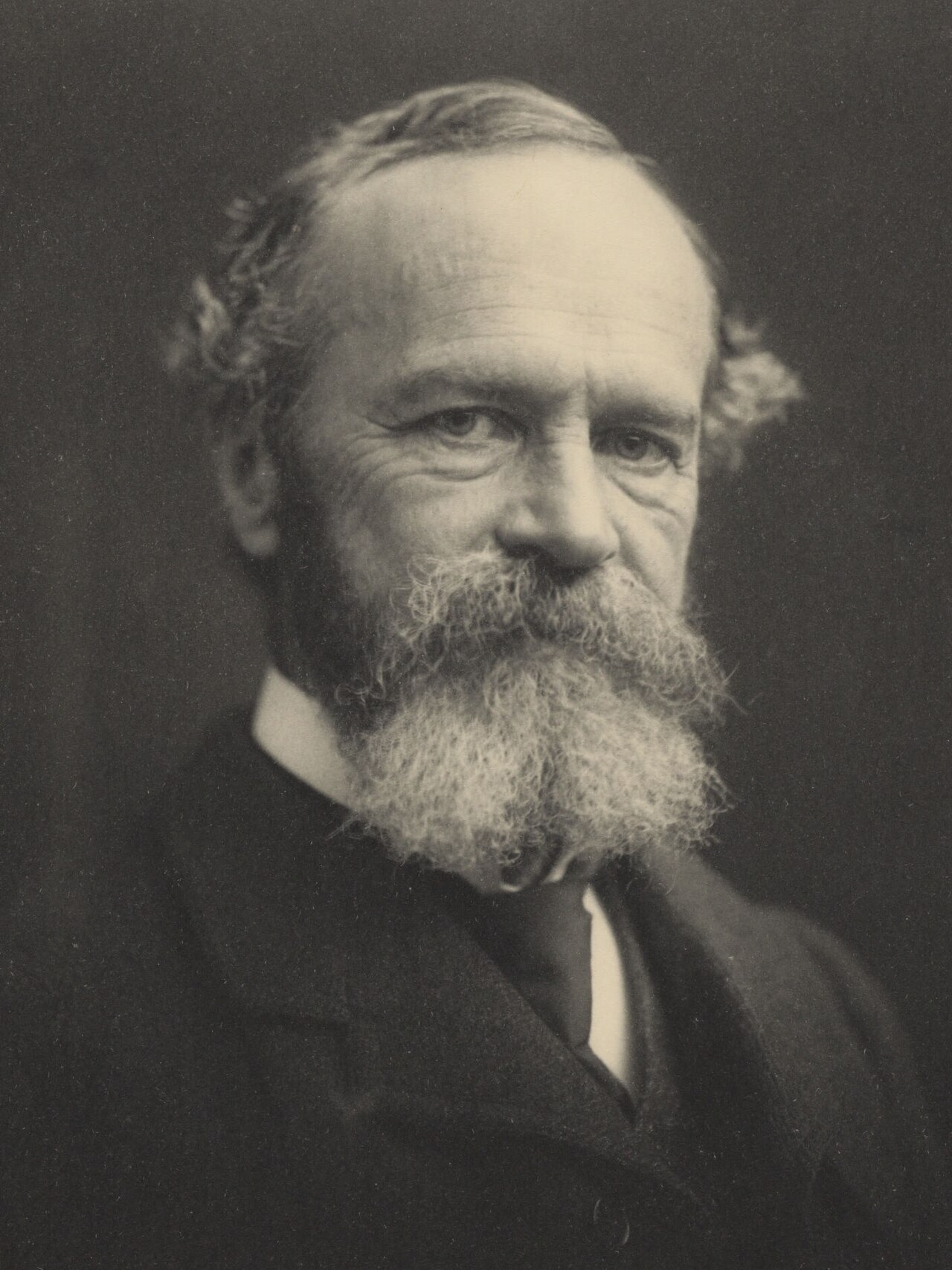
William James asked, of any idea or belief: "What concrete difference will its being true make in one's actual life? What in short is the truth's cash value in experiential terms?" This is not cynicism or a reduction of everything to material interest. It is a demand for honesty about consequences. Ideas that sound beautiful but produce terrible outcomes are not good ideas. They are bad ideas wearing beautiful clothing.
"The pragmatic method is primarily a method of settling metaphysical disputes that otherwise might be interminable. If a dispute is serious, we ought to be able to show some practical difference that must follow from one side or the other's being right."
— William James, Pragmatism, 1907. Applied to foreign policy: if the claim that Israel is America's unconditional ally were true, what concrete difference should that make in practice? And does the actual practice match the claim?
John Dewey extended pragmatism into explicitly political territory. His vision of democracy was not a set of procedures or institutions but a way of life — a commitment to open inquiry, to treating social problems as problems to be solved through the same experimental methods that science applies to physical problems, and to the perpetual willingness to revise conclusions in light of new evidence. Dewey's democracy was deeply hostile to dogma of any kind. His was the politics of the permanent question mark.
The synthesis these two traditions produce is something like this: respect for inherited institutions and evolved social wisdom, combined with rigorous empirical honesty about when those institutions are producing harmful outcomes, combined with the willingness to revise commitments — including deeply held ones — when the evidence demands revision. This is not relativism. It has deep roots and genuine convictions. But those convictions are held as working hypotheses rather than sacred dogmas. They can be argued with. They can be updated. They respond to evidence.
This is precisely the political sensibility that the emerging generation of young conservatives is groping toward, often without the philosophical vocabulary to articulate it. They are Burkean pragmatists before they know what that means.
What the Founders Actually Said
The emerging movement also has a direct lineage to the founding generation of American political thought that the neoconservative consensus has thoroughly obscured. George Washington's Farewell Address, delivered in 1796, contains a passage so directly relevant to the present moment that reading it feels almost eerie.

"A passionate attachment of one nation for another produces a variety of evils. Sympathy for the favorite nation, facilitating the illusion of an imaginary common interest in cases where no real common interest exists, and infusing into one the enmities of the other, betrays the former into a participation in the quarrels and wars of the latter without adequate inducement or justification."
— George Washington, Farewell Address, 1796. Washington's warning against "passionate attachment" to any foreign nation reads, in 2026, as a direct description of the AIPAC-shaped American relationship with Israel and of the neoconservative foreign policy framework more broadly.
Washington was not an isolationist. He was a realist. He understood that genuine national interest and genuine friendship with other nations required honest assessment, not romantic attachment. He understood that the nation that allows its foreign policy to be captured by passionate identification with a foreign state's interests will eventually be led into conflicts that serve that foreign state rather than its own citizens.
Eisenhower's 1961 Farewell Address, with its famous warning about the military-industrial complex, is equally relevant. Eisenhower was warning precisely against the mechanism by which defense contractors, think tanks, and advocacy organizations with specific material interests in perpetual conflict would capture the policy process and make permanent war the structural baseline of American foreign policy. This is not a left-wing critique. It is the parting wisdom of a five-star general and two-term Republican president.

The young conservatives who are asking hard questions about why the United States is embedding its military infrastructure into a foreign country through Section 224 of the NDAA are doing exactly what Eisenhower called on Americans to do. The warning came from a Republican. The courage to heed it is coming from young Republicans. The arc is longer than it looks.
How Conservatism Lost Its Philosophical Spine
The story of how the authentic conservative tradition was displaced by the neoconservative consensus is, at its core, a story about institutional capture.
The think tanks that shape conservative foreign policy — the American Enterprise Institute, the Washington Institute for Near East Policy, the Foundation for Defense of Democracies — are not neutral intellectual institutions. They are funded by specific donors with specific interests, and their intellectual output consistently reflects those interests. The Foundation for Defense of Democracies, to take one example, was co-founded with direct involvement from major AIPAC donors and has maintained consistent ideological alignment with Israeli government positions across multiple changes in Israeli government. It is treated in Washington as an authoritative source of national security analysis. It is, in practice, a foreign-aligned advocacy organization that has successfully positioned itself as an independent research institution.
The conservative media ecosystem reinforced this institutional capture. For decades, questioning Israeli policy on conservative media meant career consequences. Mark Levin lashing out at J.D. Vance's staff members for their perceived sympathy with Tucker Carlson's skepticism of Israel in 2025 was a public example of the enforcement mechanism. The social cost of heterodox foreign policy positions within the conservative movement had been calibrated specifically to make such positions too expensive to hold publicly. The young conservatives departing from that consensus are doing so in significant part because the social media environment has reduced the effectiveness of those enforcement mechanisms. You can build an audience on your own terms now. You do not need the institutional gatekeepers' permission.
"They are not abandoning conservatism. They are attempting to recover it from the people who claimed it while systematically dismantling what made it worth claiming."
There is also a deeper philosophical collapse underneath the institutional one. Russell Kirk, whose 1953 book The Conservative Mind gave postwar American conservatism its intellectual framework, grounded conservatism in six core canons: belief in a transcendent moral order, appreciation for the variety and complexity of human existence, conviction that civilized society requires orders and classes, connection between property and freedom, faith in prescription and distrust of abstract theories, and recognition that change and reform are not identical. Not one of these canons supports permanent military entanglement with a foreign state. Not one supports the use of American military power to remake Middle Eastern societies according to a geopolitical theory developed in Israeli security think tanks. Kirk's conservatism is about prudence, limitation, and the recognition of human fallibility. The neoconservative project was about exactly the opposite.
The Name: Sovereign Realists
Sovereign Realists. Not neoconservatives. Not paleoconservatives. Not libertarians. Not the alt-right. Not populists. Something genuinely new — rooted in the oldest and best of the American political tradition, honest about the present, and willing to go wherever the evidence leads.
The name requires unpacking because each word carries specific weight.
Sovereign speaks to the foundational commitment: that the United States of America is a self-governing republic whose policies — foreign and domestic — should be determined by its own citizens in service of its own interests, accountable to its own democratic processes. Not sovereign in a way that precludes alliances or international engagement. Sovereign in a way that precludes having those alliances shaped by foreign lobbying organizations, foreign intelligence pipelines, and foreign-aligned think tanks that have successfully positioned themselves as the authoritative voices of American national interest.The word sovereign also carries the Burkean resonance of inheritance — of a political tradition passed down through generations, earned through sacrifice, embodied in institutions that deserve the respect that earned authority commands. Sovereign Realism is in this sense a project of recovery as much as it is a project of innovation.
Realist carries the weight of the philosophical traditions described above. It means that policy should be evaluated by its consequences, not by the elegance of its theoretical justification. It means that a relationship described as an unconditional alliance should be examined against the actual record of that relationship and held to the same standards as any other relationship. It means that the question "what actually works, for actual Americans, in the actual world?" takes priority over the question "what does this ideological framework require?"The Ten Tenets of Sovereign Realism
1. America First Means America First
Not a foreign country first, not a foreign-aligned lobbying organization first. American foreign policy serves American citizens. Every alliance, every commitment, every dollar of foreign military assistance gets evaluated against that standard — without exception and without sentiment overriding judgment.
2. Equal Standards, Always
The framework applied to Chinese technology, Russian interference, and Saudi lobbying applies to Israeli technology, Israeli intelligence operations, and AIPAC with identical rigor. One standard. Applied everywhere. No exceptions for historical sentiment or religious narrative.
3. Evidence Over Doctrine
Policies are judged by their consequences, not by their ideological pedigree. A policy that sounds conservative but produces outcomes that harm American citizens is a bad policy. Results govern. Always.
4. Bipartisan on Reality
Democrats are not the enemy. The enemy is bad outcomes, captured institutions, and foreign interests that exploit partisan division to advance agendas that serve neither side. Genuine common ground — not performative bipartisanship — is a civic obligation.
5. Institutional Integrity
Inherited institutions — constitutional government, separation of powers, civilian control of the military, an independent judiciary — deserve respect because they embody accumulated political wisdom. They also deserve honest critique when they are captured by interests that corrupt their function.
6. Transparency in Foreign Influence
Any organization whose primary function is advancing a foreign government's interests in American domestic politics should be registered as a foreign agent, regardless of how politically sensitive that designation is. FARA enforcement is not optional.
7. Technology Sovereignty
The standards applied to foreign technology penetrating American infrastructure — the Huawei standard, the TikTok standard — apply universally. An Israeli cybersecurity company sitting inside 98% of Fortune 500 infrastructure demands the same scrutiny as a Chinese telecom company in 5G networks.
8. The Prudence of Restraint
Military force is an instrument of last resort for the defense of actual American interests, not an instrument of foreign policy transformation. Eisenhower was right. Washington was right. The neoconservatives were catastrophically wrong. Prudence is not weakness. It is the hardest and rarest form of strength.
9. Dialogue as Civic Duty
The willingness to genuinely engage with people who hold different views — not to perform tolerance, but to actually listen for what is true in what they are saying — is not a political strategy. It is a moral obligation of citizenship in a self-governing republic.
10. Philosophy Over Tribalism
Political identity built on team loyalty without philosophical foundation is not conservatism. It is not anything. A political philosophy worth holding is one that provides genuine guidance when the question is hard and the tribal answer is wrong.
The Bipartisan Possibility
One of the most genuinely unusual features of the emerging Sovereign Realist sensibility is its openness to what most political commentary treats as impossible: genuine, substantive engagement across partisan lines on the questions that actually matter.
This is not the performative bipartisanship of establishment politics, in which both parties agree to defer to the same set of donor interests while staging theatrical disagreements about everything else. It is something more demanding and more interesting: the recognition that the problems facing America right now — foreign policy captured by foreign lobbying, critical infrastructure controlled by foreign-aligned technology companies, a political process corrupted by money that does not represent the interests of ordinary citizens — are not problems that sort neatly onto a left-right axis.
A progressive Democrat and a Sovereign Realist conservative will disagree, sometimes sharply, about domestic economic policy, about the role of government in social life, about any number of questions where genuine values differences produce genuinely different conclusions. Those disagreements are real and should be respected rather than papered over.
But on the core question of whether American foreign policy should be determined by American citizens rather than foreign lobbying organizations, there is no inherent left-right divide. Bernie Sanders and Thomas Massie have reached similar conclusions about AIPAC from completely different philosophical starting points. The progressive critique of Israeli military assistance has been building for years. The nationalist conservative critique is now following. The two traditions are arriving at the same empirical observation from different philosophical directions. That convergence is politically significant and practically actionable in ways that neither side has fully recognized.
The Convergence Point A progressive who believes that American military aid fuels civilian casualties and violates human rights norms, and a Sovereign Realist conservative who believes that American military aid serves a foreign government's interests rather than America's, arrive at the same policy conclusion through completely different philosophical routes. The willingness to act on that convergence without requiring the other side to adopt your whole philosophical framework is what genuine pragmatic bipartisanship looks like.
John Dewey would have recognized this moment. His political philosophy was built on exactly this kind of convergence: the idea that shared problems create the possibility of shared inquiry that transcends ideological starting points, and that democratic self-governance requires the willingness to follow the inquiry wherever it leads, even when the destination is inconvenient to prior commitments. Democracy, Dewey wrote, is not merely a form of government. It is a way of living together that treats every significant question as genuinely open and every answer as provisional. The Sovereign Realists, at their best, embody this.
A Generation That Could Save the Republic — If It Stays Honest
The political generation being named here carries an enormous responsibility and an enormous risk simultaneously. The responsibility is obvious: they are inheriting a republic whose founding wisdom has been systematically corrupted, whose foreign policy has been captured, whose institutional integrity has been degraded, and whose philosophical foundations have been hollowed out by decades of ideological tribalism. Recovering those foundations is genuinely difficult work, and it requires the kind of sustained intellectual seriousness that the attention economy is specifically designed to prevent.
The risk is equally obvious. A movement built on the rejection of false consensus can drift, without philosophical grounding, into mere contrarianism. The critique of foreign influence, deprived of the ethical framework that makes it a principled position rather than a resentment, can curdle into something ugly. The history of 20th-century nationalism is a reminder that the distance between principled sovereignty and ethnic hatred is shorter than it appears from the outside and requires constant vigilance to maintain. The Sovereign Realist tradition must be explicitly and genuinely committed to the principle that what is being protected is the American republic and the self-governance of its citizens — all of its citizens — rather than any particular demographic composition of that citizenry.
Burke said that a state without the means of some change is without the means of its conservation. The wisdom embedded in the conservative tradition is not a static inheritance to be preserved unchanged. It is a living set of commitments that must be interpreted freshly in each generation against the specific challenges that generation faces. The challenge this generation faces is the systematic capture of American self-governance by foreign interests and the institutional corruption that has made honest public discourse about that capture structurally difficult to sustain.
Meeting that challenge requires exactly what the Sovereign Realist synthesis offers: the Burkean respect for the hard-won wisdom of American constitutional self-governance, the Jamesian insistence on evaluating ideas by their actual consequences, the Deweyan commitment to treating democracy as an ongoing experiment rather than a settled inheritance, and the founding generation's clarity about what foreign entanglement actually costs a republic that was built, at enormous sacrifice, to be free of it.
Washington warned us. Eisenhower warned us. Burke warned us. James and Dewey showed us how to think about it. The young conservatives who are departing from the neoconservative consensus are not discovering something new. They are rediscovering something old and true that their own political tradition obscured from them for fifty years. The question now is whether they will build something worthy of what they have found — or whether the movement will be captured, as so many movements before it have been captured, by interests that recognize its energy without honoring its actual values.
That is not a question that can be answered by naming the movement. It can only be answered by what the people inside it do next.